
About Nicolas Tindal
Lived 1688 – 1774 (aged 85). Nicolas Tindal was a British historian, translator and priest.
Nicolas Tindal (1687 – 27 June 1774) was the translator and continuer of the History of England by Paul de Rapin. Very few comprehensive histories existed at the time and Tindal wrote a three-volume 'Continuation', a history of the Kingdom from the reigns of James II to George II. Tindal was Rector of Alverstoke in Hampshire, Vicar of Great Waltham, Essex, Chaplain of Greenwich Hospital and a Fellow of Trinity College, Oxford.
Background
Tindal's father, John Tindal, the Rector of Cornwood, Devon and Vicar of St Ives, Cornwall, was the brother of Matthew Tindal, the eminent deist and author of 'Christianity as Old as the Creation'. A near relation of Thomas, 1st Lord Clifford, Lord High Treasurer of Charles II, the Tindal family were derived from Baron Adam de Tindale, a tenant in chief of Henry II.
Tindal went up to Exeter College, Oxford, where he took an MA degree in 1713. From Oxford, he took up his rectory in Hampshire and was later appointed a Fellow of Trinity. When Tindal mastered the French language is unclear, although he was the first member of his family to bear the French spelling of his name - a very popular one amongst his descendants. However, he first engaged in his life's work of historical translation with the publication, in monthly numbers, of his translation (from the French of Antoine Augustin Calmet) of the "Dissertation of the Excellency of the History of the Hebrews above that of any other Nation, wherein are examined the Antiquities and History of the Assyrians, Chaldans, Egyptians, Phoeninicans, Chinese &c. with the Peopling of America... Written in French by R. P. D'Augustin Calmet", which appears to have been a considerable undertaking.
'History of England' & the 'Continuation'
Tindal's great work was his thirteen volume translation of Rapin's History, which was first published in 1727.
A product of the Hardwicke circle (with Thomas Birch heavily involved), the Continuation (1744–47) appeared alongside opposition Country-Whig histories by William Guthrie and James Ralph—Guthrie’s General History of England (1744–51) to 1688, and Ralph’s The History of England, During the Reigns of King William, Queen Anne, and King George I (1744–46) for the post-Revolution period.
Rapin had finished his work at the death of James II, giving Tindal the opportunity of demonstrating his own historical abilities. His Continuation brought forward the works to the reign of George II. Tindal's work was much valued at the time, although not without controversy. Some had questioned the authorship of the Continuation; although there is no evidence to support those contentions and his many other works and literary style point to his pen.
Other works and life
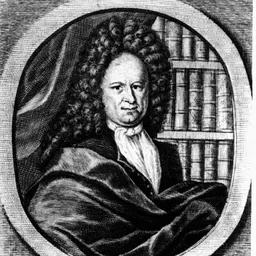
An engraving based on Knapton's portrait.. The Tindal arms shown are those of Deane, whom the Tindal/Tyndale family represent, together with the ancient crest of Tyndale
Tindal continued his translations with that of Prince Cantemir's History of the Othman Empire' (sic) in 1734. The 'Guide to Classical Learning, or Polymetis abridged, for Schools', of which he was editor, was a rare classical text-book which remained of importance throughout the century. Whether Tindal was ever repaid the 2000 guineas of which he had been defrauded is unclear, though Alexander Pope declaimed: Let Budgell charge low Grub-street on my quill, And write whate-er he please, except my Will.
Tindal himself was recorded as saying of Garrick that 'The deaf hear him in his action, and the blind see him in his voice.'.
Tindal's long association with Greenwich Hospital and the Naval Office is commemorated by a portrait by George Knapton, now in the collection of the National Maritime Museum, Greenwich From this was taken the engraving that illustrates this article.
Family
Tindal's son, Capt George Tindal, RN, purchased Coval Hall, Chelmsford, during Tindal's lifetime, where the family were based for some generations. His great grandson, Sir Nicolas Conyngham Tindal, was Lord Chief Justice of the Common Pleas from 1829 - 1843.
Legacy
The authors of the ninth volume of the Cambridge History of English and American Literature conclude that
Don’t just read it —
keep it.
Full-length biographies made to live with: read them, listen on the way to work, watch them tonight.
- E-book
- Audio
- Video
Instant download · yours to keep · every purchase keeps this site free
Important facts
People in Nicolas Tindal's life
Named in this biography and alive at the same time

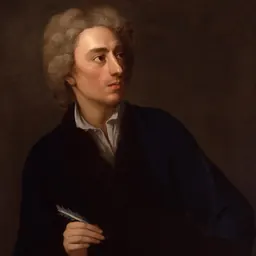
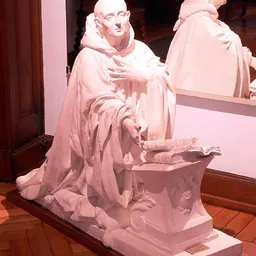
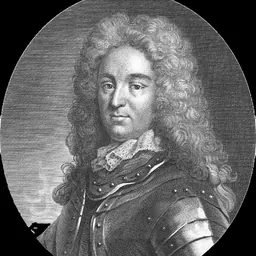




Related people
Same field, nearest in time
Contemporaries
People whose lives overlapped Nicolas Tindal's


Frequently asked questions
Who was Nicolas Tindal?
British historian
When was Nicolas Tindal born?
Nicolas Tindal was born on 25 November 1688 in Plymouth.
When did Nicolas Tindal die?
Nicolas Tindal died on 27 June 1774 in Greenwich.
What was Nicolas Tindal's occupation?
Nicolas Tindal was a historian, translator and priest.
What nationality was Nicolas Tindal?
Nicolas Tindal was British.
Sources & further reading
Cite this page
APA: Biography.guide. (2026). Nicolas Tindal. https://biography.guide/nicolas-tindal/
MLA: "Nicolas Tindal." Biography.guide, https://biography.guide/nicolas-tindal/.
Chicago: "Nicolas Tindal." Biography.guide. https://biography.guide/nicolas-tindal/.
Data last updated: 2026-09-20 · Spot an error? Report a correction.
Page generated 2026-09-27 05:03 UTC