
About John Potter
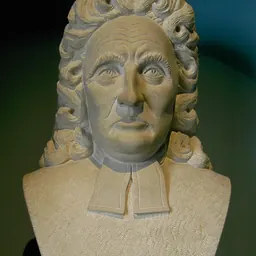
Lived 1674 – 1747 (aged 72–73). John Potter was a British historian, anglican priest, theologian and archbishop.
John Potter (c. 167410 October 1747) was Archbishop of Canterbury from 1737 to 1747.
Life He was the son of a linen draper at Wakefield, Yorkshire. At the age of fourteen he entered University College, Oxford, and in 1693 he published notes on Plutarch's De audiendis poetis and Basil's Oratio ad juvenes. In 1694 he was elected fellow of Lincoln College, Oxford and in 1697 his edition of Lycophron appeared. It was followed by his Archaeologia graeca (2 vols. 8vo, 1697–1698), the popularity of which endured till the advent of Dr William Smith's dictionaries. A reprint of his Lycophron in 1702 was dedicated to Graevius, and the Antiquities was afterwards published in Latin in the Thesaurus of Gronovius.
Besides holding several livings he became, in 1704, chaplain to Archbishop Tenison, and shortly afterwards was made Chaplain-in-Ordinary to Queen Anne. From 1708 he was Regius Professor of Divinity and canon of Christ Church Cathedral, Oxford. He married Elizabeth Venner in St. Paul's Cathedral in 1709. She being a granddaughter of Thomas Venner, a Fifth Monarchy man hanged as a traitor. In 1715 he became Bishop of Oxford. In the same year appeared his edition of Clement of Alexandria. In 1707 he published a Discourse on Church Government, and he took a prominent part in the controversy with Benjamin Hoadly, Bishop of Bangor. Even though Potter was a notable Whig, he was a High Churchman and had opposed Hoadly. Bishop Potter also ordained John Wesley a deacon in the Church of England in September 1725, and ordained him a priest in 1728.
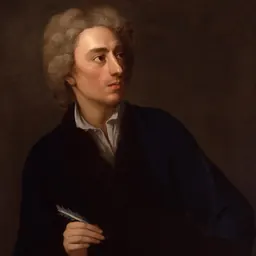
In January 1737 Potter was unexpectedly appointed to succeed William Wake in the see of Canterbury. While in that seat, he continued to represent a High Church position, but he was also ineffective at restoring the Convocation. Alexander Pope attacked him in the 1743 version of his The Dunciad (book II, 323).
Potter died on 10 October 1747. His Theological Works, consisting of sermons, charges, divinity lectures and the Discourse on Church Government, were published in three volumes.
He was buried in Croydon Minster in Surrey.
Arms
Don’t just read it —
keep it.
Full-length biographies made to live with: read them, listen on the way to work, watch them tonight.
- E-book
- Audio
- Video
Instant download · yours to keep · every purchase keeps this site free
Important facts
People in John Potter's life
Named in this biography and alive at the same time


Related people
Same field, nearest in time

Contemporaries
People whose lives overlapped John Potter's



Frequently asked questions
Who was John Potter?
Archbishop of Canterbury
When was John Potter born?
John Potter was born in 1674 in Wakefield.
When did John Potter die?
John Potter died on 10 October 1747 in London Borough of Lambeth.
What was John Potter's occupation?
John Potter was a historian, anglican priest, theologian and archbishop.
What nationality was John Potter?
John Potter was British.
Sources & further reading
· DBpedia: John Potter (bishop)
Cite this page
APA: Biography.guide. (2026). John Potter. https://biography.guide/john-potter-historian/
MLA: "John Potter." Biography.guide, https://biography.guide/john-potter-historian/.
Chicago: "John Potter." Biography.guide. https://biography.guide/john-potter-historian/.
Data last updated: 2026-09-20 · Spot an error? Report a correction.
Page generated 2026-09-27 05:20 UTC