
About Nicolas Auguste Tissot
Lived 1824 – 1907 (aged 83). Nicolas Auguste Tissot was a French cartographer, mathematician, university teacher and military officer.
Nicolas Auguste Tissot (; March 16, 1824 – July 14, 1907) was a French cartographer, who in 1859 and 1881 published an analysis of the distortion that occurs on map projections. He devised Tissot's indicatrix, or distortion circle, which when plotted on a map will appear as an ellipse whose elongation depends on the amount of distortion by the map at that point. The angle and extent of the elongation represents the amount of angular distortion of the map. The size of the ellipse indicates the amount that the area is distorted.
Biography Born in Nancy, Meurthe, France, Tissot was trained as an engineer in the French Army, from which he graduated as capitaine du génie. In the early 1860s he became an instructor in geodesy at the well-reputed Ecole Polytechnique in Paris. Around the same time, he indulged a research program meant to determine the best way of cartographic projection for a particular region and presented his findings to the French Académie des Sciences.
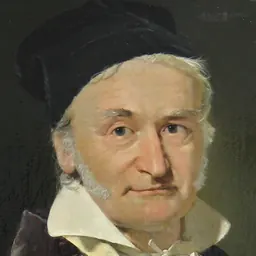
In the eighteenth century, the German cartographer Johann H. Lambert had enunciated a mathematical theory of map projections and of the attendant characteristics of distortions that any given projection involved. Carl Friedrich Gauss had also studied the subject before Tissot's contributions later in the nineteenth century.
Tissot's research in the mid-1850s on methods for finding good projections for particular regions led him to develop a projection that he saw as optimal. While not quite equal-area or conformal, his projection resulted in "negligible distortion for a very small region." Subsequently, his optimal projection was adopted by the geographic service of the French Army. While his first concepts regarding cartographic distortions developed in mid-century, it was only with the publication of Mémoire sur la représentation des surfaces et les projections des cartes géographiques in 1881 that the Tissot's Indicatrix became popular. In the book, Tissot argued for his method, reportedly demonstrating that "whatever the system of transformation, there is at each point on the spherical surface at least one pair of orthogonal directions which will also be orthogonal on the projection."
Tissot employed a graphical device he called the ellipse indicatrice or distortion circle. When plotted on a map it reveals the amount of distortion by the map at the particular point where the ellipse is plotted. He suggested that the angle and extent of the elongation of the distortion circle represented the amount of angular distortion of the map, while the size of the ellipse corresponded to the amount of distortion in area.
In a nineteenth-century cartographic context, in which professionals looked for ways to apply mathematical principles to the science of mapping and the map projection, Tissot's theory was favorably received, at least in continental Europe. Even in the more restrained Anglo-American academic world, a columnist of Science, a publication sponsored by the American Association for the Advancement of Science, hailed Tissot's method and encouraged his readers to study his work in the hope that such a study "will lead to the adoption of better projections than those which are at present in use." The legacy of Tissot’s method is still vivid today, as suggested by the authors of Map Projections for Europe, who argue that since Tissot’s famous analysis regarding distortion, the only major scientific development in the metric interpretation of deformation has been Eduard Imhof's Verzerrungsgitter, or deformation grid.
Tissot died in Voreppe, Isère on .
Don’t just read it —
keep it.
Full-length biographies made to live with: read them, listen on the way to work, watch them tonight.
- E-book
- Audio
- Video
Instant download · yours to keep · every purchase keeps this site free
Important facts
People in Nicolas Auguste Tissot's life
Named in this biography and alive at the same time
Related people
Same field, nearest in time



Contemporaries
People whose lives overlapped Nicolas Auguste Tissot's




Frequently asked questions
Who was Nicolas Auguste Tissot?
French cartographer (1824–1907)
When was Nicolas Auguste Tissot born?
Nicolas Auguste Tissot was born on 16 March 1824 in Nancy.
When did Nicolas Auguste Tissot die?
Nicolas Auguste Tissot died on 14 July 1907 in Voreppe.
What was Nicolas Auguste Tissot's occupation?
Nicolas Auguste Tissot was a cartographer, mathematician, university teacher and military officer.
What nationality was Nicolas Auguste Tissot?
Nicolas Auguste Tissot was French.
Sources & further reading
· Wikipedia: Nicolas Auguste Tissot
· DBpedia: Nicolas Auguste Tissot
Cite this page
APA: Biography.guide. (2026). Nicolas Auguste Tissot. https://biography.guide/nicolas-auguste-tissot/
MLA: "Nicolas Auguste Tissot." Biography.guide, https://biography.guide/nicolas-auguste-tissot/.
Chicago: "Nicolas Auguste Tissot." Biography.guide. https://biography.guide/nicolas-auguste-tissot/.
Data last updated: 2026-09-20 · Spot an error? Report a correction.
Page generated 2026-09-27 05:26 UTC