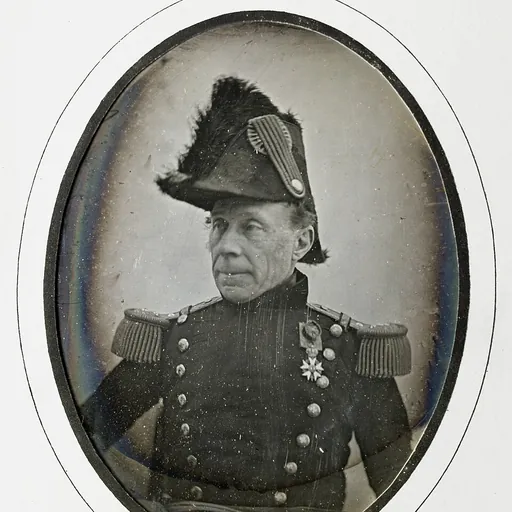
Guillaume Henri Dufour
Swiss army officer, bridge engineer and topographer
About Guillaume Henri Dufour
Lived 1787 – 1875 (aged 87). Guillaume Henri Dufour was a French and Swiss cartographer, civil engineer, politician, military personnel, urban planner and international Red Cross.
Guillaume Henri Dufour (; 15 September 178714 July 1875) was a Swiss military officer, structural engineer and topographer. He served under Napoleon I and held the Swiss office of General four times in his career, firstly in 1847 when he led the Swiss Confederation forces to victory against the Sonderbund. In 1864 Dufour presided over the First Geneva Convention which established the International Red Cross. He was founder and president (1838 to 1865) of the Swiss Federal Office of Topography.
Early life Dufour was born on 15 September 1787 in Konstanz, where his parents from Geneva were living in exile for their involvement in the Revolution of 1782. He was the son of Bénédict Dufour, a watchmaker, and Pernette Valentin. With his mindful approach in the Sonderbund War, Dufour not only prevented a collapse of the Confederation through intervention by foreign powers, but he also created a basis of reconciliation that enabled the cantons to agree on a common federal state already in 1848. His success, and the moderation with which he treated his vanquished fellow-countrymen, were acknowledged by a gift of 60,000 francs from the Federal Diet and various honours from different cities and cantons of the confederation. on 27 December 1856 due to the Neuchâtel Crisis, and in 1859 due to the Second Italian War of Independence.
In 1850 the mountaineer and topographer Johann Coaz served as his private secretary.
From 1861, he was the honorary president of the Swiss Geodetic Commission a commission of the Swiss Academy of Natural Sciences. This commission was created during the publication of the Dufour map, and its initial work contributed to the design of the Topographic Atlas of Switzerland. In 1861, Johan Jacob Baeyer proposed the creation of the Central European Arc Measurement, whose objective was to redetermine anomalies in the shape of the Earth using precise geodetic surveys combined with gravimetry. The aim was to figure out the geoid using gravimetric and leveling measurements to derive an accurate understanding of the Earth ellipsoid while taking vertical deflections into account.
In 1863 he was part of a committee with Gustave Moynier, Henry Dunant, Louis Appia and Théodore Maunoir that discussed Dunant's ideas for the creation of a voluntary care organization for the assistance of the wounded in battle. Dunant's vision and the committees work ultimately led to the foundation of the International Red Cross, presided by Dufour. The following year he presided over the international conference which framed the First Geneva Convention as to the treatment of the wounded in time of war.
Memorials
Memorials are at: Equestrian statue (1884) by Alfred Lanz, at Place Neuve, Geneva, erected by public subscription Two plaques on his birth house at Wessenbergstraße 14 (formerly Plattengasse), Konstanz, Germany Plaque at the building where he lived from 1826 to 1845 at Geneva Plaque at Château de Montrottier in Lovagny, France Plaque at 22, rue Saint-Victor, Carouge, commemorating its use as office of topography. Bronze bust, made by Fonderie Leuba, B. Brasseur, succ. at Army Training Center, Lucerne
His home from 1845–1875 at Rue de Contamines, Geneva, is preserved by a foundation.
Numerous cities and towns in Switzerland have streets named for him: rue du Général-Dufour in Geneva, La Chaux-de-Fonds; via Gen. Henri Dufour in Chiasso; rue du Général- Dufour/General-Dufour-Strasse in Biel/Bienne; Dufourstrasse in Aarau, Basel, Bern, Biberist, Lenzburg, Luzern, Rorschach, St. Gallen, Thun, Weinfelden, Wettingen, Wil, Zollikon, Zürich; via Dufour in Lugano. There is also Dufourplatz in Zollikon.
The general was depicted on the 20 francs note of the 1956 series of Swiss banknotes (in circulation 1956–1980).
The Dufourspitze (the highest mountain peak in Switzerland and second of Western Europe) in the Monte Rosa Massif is named after Dufour, to honour his cartographic achievements.
Don’t just read it —
keep it.
Full-length biographies made to live with: read them, listen on the way to work, watch them tonight.
- E-book
- Audio
- Video
Instant download · yours to keep · every purchase keeps this site free
Important facts
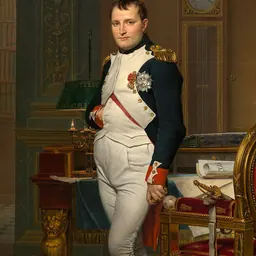
People in Guillaume Henri Dufour's life
Named in this biography and alive at the same time



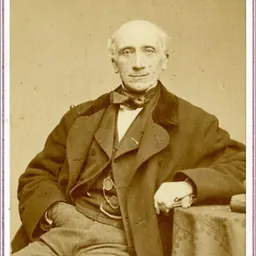


Related people
Same field, nearest in time
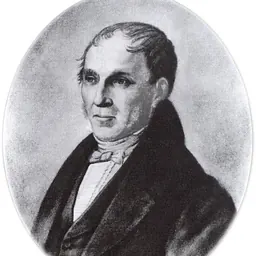
Contemporaries
People whose lives overlapped Guillaume Henri Dufour's


Frequently asked questions
Who was Guillaume Henri Dufour?
Swiss army officer, bridge engineer and topographer (1787-1875)
When was Guillaume Henri Dufour born?
Guillaume Henri Dufour was born on 15 September 1787 in Constance.
When did Guillaume Henri Dufour die?
Guillaume Henri Dufour died on 14 July 1875 in Eaux-Vives.
What was Guillaume Henri Dufour's occupation?
Guillaume Henri Dufour was a cartographer, civil engineer, politician, military personnel, urban planner and international Red Cross.
What nationality was Guillaume Henri Dufour?
Guillaume Henri Dufour was French and Swiss.
Sources & further reading
· Wikipedia: Guillaume Henri Dufour
· DBpedia: Guillaume Henri Dufour
Cite this page
APA: Biography.guide. (2026). Guillaume Henri Dufour. https://biography.guide/guillaume-henri-dufour/
MLA: "Guillaume Henri Dufour." Biography.guide, https://biography.guide/guillaume-henri-dufour/.
Chicago: "Guillaume Henri Dufour." Biography.guide. https://biography.guide/guillaume-henri-dufour/.
Data last updated: 2026-09-22 · Spot an error? Report a correction.
Portrait: Wikimedia Commons · author & licence
Page generated 2026-09-27 05:04 UTC