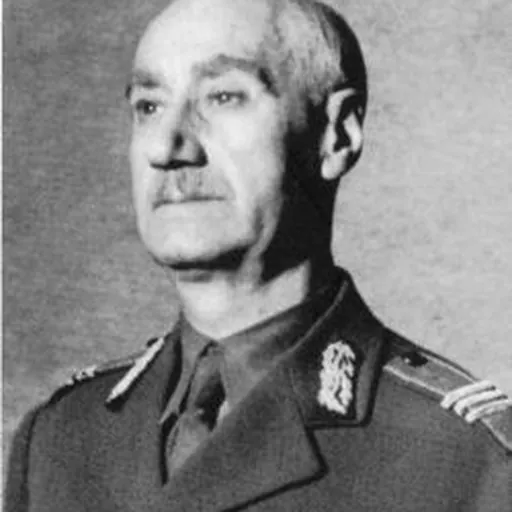
About Nicolae Rădescu
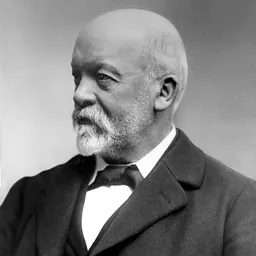
Lived 1874 – 1953 (aged 79). Nicolae Rădescu was a Romanian politician and military officer.
Second Balkan War and World War I In the summer of 1913 he saw action with the 1st Cavalry Division in the military campaign in Bulgaria during the Second Balkan War. He was promoted to major on 1 April 1916, and served in World War I during the Romanian Campaign of 1916 with the 5th Regiment Călărași, fighting against the German forces at the Carpathian mountain passes. For his bravery and skill at the Battle of Sălătrucu, in the Topolog Valley, he was awarded on 10 January 1917 the Order of Michael the Brave, 3rd Class. In April 1917 he was promoted to lieutenant colonel; he served as Chief of Staff for the 2nd Cavalry Division until 1 September 1918, and was promoted to colonel in April 1919. Upon presenting his resignation, he accused "profiteering politicians" and King Carol II's camarilla of commercializing military life.
That same month Rădescu joined the People's Party of Marshal Alexandru Averescu. In the mid-1930s, he became involved in nationalist politics; he supported a far right movement called Cruciada Românismului ("The Crusade of Romanianism"), aimed at the cultural "Romanization" of Germans and Hungarians in Transylvania. This short-lived movement was a splinter group of the Iron Guard, created by Mihai Stelescu. After Stelescu was assassinated in July 1936 by an Iron Guard death squad, Rădescu became a leader of the movement, which quickly faded afterwards. Because of his political stances and his opinions regarding the royal camarilla, he started being monitored by the secret police (Siguranța Statului).
World War II and the rise of Communism
After King Carol II abdicated in September 1940, Rădescu charged dictator Ion Antonescu with collaborating with the Nazis. As noted by ex-President Emil Constantinescu at a memorial ceremony, Rădescu opposed the advance of Romanian troops beyond the Dniester River after Bessarabia and Northern Bukovina had been recaptured in 1941 from the Soviet Union. In 1942, Rădescu wrote an article critical of the German ambassador Manfred Freiherr von Killinger and his constant intrusion in the internal affairs of Romania. He was interned as a political prisoner in the Târgu Jiu camp. On 23 August 1944, immediately after Antonescu's downfall in King Michael's Coup, Rădescu was released from prison. On 15 October he was appointed Chief of the Romanian General Staff at the insistence of the Soviet government, which favored him for his independence and his reputation as an ardent anti-fascist who was respected by the people. In a radio address later that day, Rădescu blamed the attack on Ana Pauker and Vasile Luca, calling them "hyenas" and "strangers without kin or God". The next day, the Communist Party orchestrated an unprecedented propaganda campaign against Rădescu. His son, Nicu, who had participated at the rally (he had been recruited into the Party in 1940), wrote an open letter to his father; the letter, published in Scînteia and România Liberă on 28 February, accused Rădescu of issuing the order to shoot peaceful demonstrators. Concomitantly, Vyshinsky arrived in Bucharest and demanded from King Michael the resignation of Rădescu; at the direction of Joseph Stalin, he warned that the Soviet Union would not allow Northern Transylvania to be returned to Romania if Rădescu were to remain prime minister. As a result of all these pressures, Rădescu resigned his position on 1 March.
On 6 March 1945, the first Communist-dominated government of Romania took office under the direction of Petru Groza. Over the next few years, the Communists completely consolidated their power.
Exile in the West One of the first decrees of the Groza government (issued on 7 March 1945) was to impose mandatory domicile for General Rădescu. Pursued by the Communist authorities, Rădescu sought refuge in the British legation, stayed there for about two months, and was then handed over to Romanian authorities, who had guaranteed his safety but placed him under house arrest. On 17 June 1946, he managed to flee on board a plane to the British Crown colony of Cyprus, where he was detained in a refugee camp by the authorities until the Paris Peace Treaties were signed in 1947.
Rădescu died of tuberculosis on 16 May 1953 in New York City; he was buried in the city's Calvary Cemetery. At the initiative of Prime Minister Mugur Isărescu, the remains of General Rădescu were brought back to Romania in 2000. Following the wishes expressed in his testament, he was reburied at the Orthodox Bellu Cemetery in Bucharest on 23 November 2000.
Don’t just read it —
keep it.
Full-length biographies made to live with: read them, listen on the way to work, watch them tonight.
- E-book
- Audio
- Video
Instant download · yours to keep · every purchase keeps this site free
Important facts
People in Nicolae Rădescu's life
Named in this biography and alive at the same time
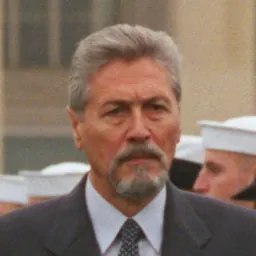



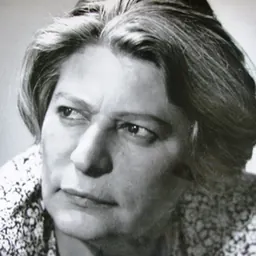
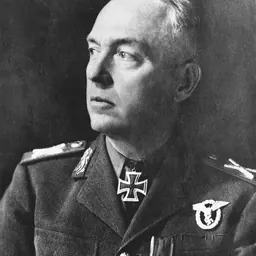

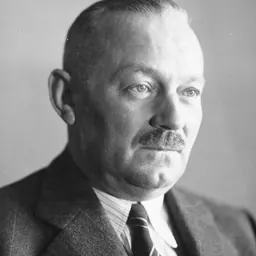
Related people
Same field, nearest in time




Contemporaries
People whose lives overlapped Nicolae Rădescu's
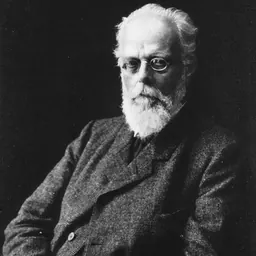
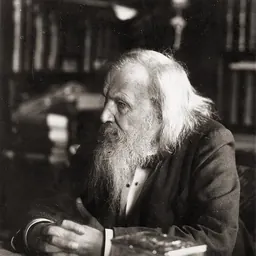
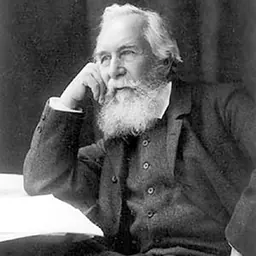

Frequently asked questions
Who was Nicolae Rădescu?
Prime Minister of Romania (1874-1953)
When was Nicolae Rădescu born?
Nicolae Rădescu was born on 30 March 1874 in Păușești-Otăsău, Călimănești.
When did Nicolae Rădescu die?
Nicolae Rădescu died on 16 May 1953 in New York City.
What was Nicolae Rădescu's occupation?
Nicolae Rădescu was a politician and military officer.
What nationality was Nicolae Rădescu?
Nicolae Rădescu was Romanian.
Sources & further reading
Cite this page
APA: Biography.guide. (2026). Nicolae Rădescu. https://biography.guide/nicolae-radescu/
MLA: "Nicolae Rădescu." Biography.guide, https://biography.guide/nicolae-radescu/.
Chicago: "Nicolae Rădescu." Biography.guide. https://biography.guide/nicolae-radescu/.
Data last updated: 2026-09-23 · Spot an error? Report a correction.
Portrait: Wikimedia Commons · author & licence
Page generated 2026-09-27 05:06 UTC