
About Nick Holonyak
Lived 1928 – 2022 (aged 93). Nick Holonyak was an American physicist, university teacher, inventor, engineer, electrical engineer and scientist, known for Diode laser and Light-emitting diode.
Early life and career Nick Holonyak Jr. was born on November 3, 1928, in Zeigler, Illinois, to Rusyn immigrants. The family moved to Glen Carbon, Illinois where his father worked in a coal mine. Holonyak was the first member of his family to receive any type of formal schooling.
Holonyak earned his bachelor's (1950), master's (1951), and doctoral (1954) degrees in Electrical Engineering from the University of Illinois. Holonyak was John Bardeen's first doctoral student there. In 1954, Holonyak went to Bell Telephone Laboratories, where he worked on silicon-based electronic devices. From 1955 to 1957, he served with the U.S. Army Signal Corps. The demonstration of red light emission from the diode inspired the article "Light of Hope – or Terror" in Reader's Digest. GaAsP was the material used for the first generation of commercial LEDs that came to market a few years later.
In 1963, Holonyak became a professor at the University of Illinois. In 1993, he was named the John Bardeen Endowed Chair Professor of Electrical and Computer Engineering and Physics. He investigated methods for manufacturing quantum dot lasers. He and Dr. Milton Feng ran a transistor laser research center at the university funded by $6.5 million from the United States Department of Defense through DARPA.
Ten of his 60 former doctoral students have developed new uses for LED technology at Philips Lumileds Lighting Company in Silicon Valley.
In 2006, the American Institute of Physics decided on the five most important papers in each of its journals since it was founded 75 years ago. Two of these five papers, in the journal Applied Physics Letters, were co-authored by Holonyak. The first one, co-authored with S. F. Bevacqua in 1962, announced the creation of the first visible-light laser diode.
Personal life Holonyak and his wife, Katherine, were married for over 60 years. He died on September 18, 2022, in Urbana, Illinois, at the age of 93.
Recognition Memberships Year Organization Type 1973 National Academy of Engineering Member 1984 National Academy of Sciences Member 2015 Optical Society Honorary Member
Awards Year Organization Award Citation 1973 IEEE IEEE Morris N. Liebmann Memorial Award "For outstanding contributions to the field of visible light emitting diodes and diode lasers." 1981 IEEE IEEE Jack A. Morton Award "For pioneering work in quantum well lasers and contributions to visible semiconductor lasers and light-emitting diodes." 1989 IEEE IEEE Edison Medal "For an outstanding career in the field of electrical engineering with contributions to major advances in the field of semiconductor materials and devices." 1992 Optical Society of America Charles Hard Townes Award "For his career in quantum electronics, particularly his contributions to semiconducting, light-emitting sources." 1993 National Academy of Sciences NAS Award for the Industrial Application of Science "For his profound impact on industry and on the daily lives of the people around the world through his prolific inventions in the area of semiconductor materials and devices, including practical light-emitting diodes." 1995 Japan Prize Foundation Japan Prize "Outstanding contributions to research and practical applications of light emitting diodes and lasers through pioneering achievements in the understanding of physical principles and in the process technology of intermetallic compound semiconductors." 2001 Optical Society of America Frederic Ives Medal "For pioneering work in the field of semiconductor lasers and LEDs." 2003 IEEE IEEE Medal of Honor "For a career of pioneering contributions to semiconductors, including the growth of semiconductor alloys and heterojunctions, and to visible light-emitting diodes and injection lasers." 2003 Global Energy Association Global Energy Prize "For his invention of the first semiconductor LEDs (light-emitting diodes) in the visible region of the light spectrum, and his role as founder of the new field of silicon electronics and micro-electronics for power applications." 2004 MIT Lemelson–MIT Prize 2014 Radio Club of America - RCA Sarnoff Citation "The Sarnoff Citation, established in 1973 by the Radio Club of America, recognizes exceptional contributions of a technical or non-technical nature to the advancement of electronic communication 2015 National Academy of Engineering Charles Stark Draper Prize "For the invention, development, and commercialization of materials and processes for light-emitting diodes (LEDs)." 2021 Queen Elizabeth Prize for Engineering Foundation Queen Elizabeth Prize for Engineering "For the creation and development of LED lighting, which forms the basis of all solid state lighting technology."
Many colleagues expressed their belief that Holonyak deserved the Nobel Prize for his invention of the GaAsP laser and LED. On this subject, he said: "It's ridiculous to think that somebody owes you something. We're lucky to be alive, when it comes down to it."
National awards Year Head of state Award Citation 1990 George H. W. Bush National Medal of Science "For his contributions as one of the Nation’s most prolific inventors in the area of semiconductor materials and devices, and for his role as research mentor while working at the forefront of solid-state science and technology." 2002 George W. Bush National Medal of Technology and Innovation "For contributions to the development and commercialization of light-emitting diode (LED) technology, with applications to digital displays, consumer electronics, automotive lighting, traffic signals, and general illumination."
Commemoration 1997: The Optical Society of America (now Optica) created the Nick Holonyak, Jr. Award in his honor. 2005: Inducted as a Laureate of The Lincoln Academy of Illinois and awarded the Order of Lincoln (the State's highest honor) by the Governor of Illinois in the area of Science. June 2006: Two of Holonyak's papers were chosen by the editors of Applied Physics Letters as among the five most important published since the journal's founding in 1962. November 9, 2007: Historical marker installed on the University of Illinois campus recognizing his development of the quantum-well laser. It is located on the Bardeen Engineering Quadrangle near where the old Electrical Engineering Research Laboratory used to stand. 2008: Inducted into the National Inventors Hall of Fame (Announced February 14, 2008) (May 2–3, 2008 at Akron, Ohio). September 2018: Village of Glen Carbon, Illinois, placed an honorary street sign on behalf of Holonyak, a former resident.
Don’t just read it —
keep it.
Full-length biographies made to live with: read them, listen on the way to work, watch them tonight.
- E-book
- Audio
- Video
Instant download · yours to keep · every purchase keeps this site free
Important facts
People in Nick Holonyak's life
Named in this biography and alive at the same time



Related people
Same field, nearest in time
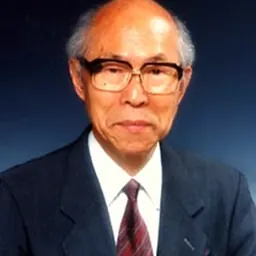


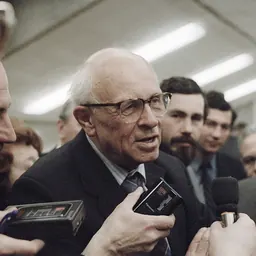
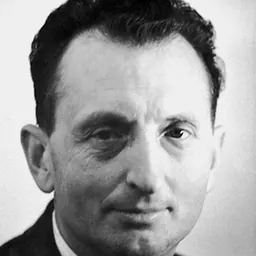
Contemporaries
People whose lives overlapped Nick Holonyak's


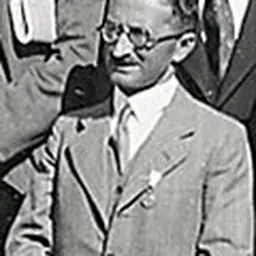

Frequently asked questions
Who was Nick Holonyak?
American physicist (1928–2022)
When was Nick Holonyak born?
Nick Holonyak was born on 3 November 1928 in Zeigler, United States.
When did Nick Holonyak die?
Nick Holonyak died on 20 September 2022 in Urbana.
What was Nick Holonyak's occupation?
Nick Holonyak was a physicist, university teacher, inventor, engineer, electrical engineer and scientist.
What was Nick Holonyak known for?
Nick Holonyak was known for Diode laser and Light-emitting diode.
What nationality was Nick Holonyak?
Nick Holonyak was American.
Sources & further reading
Cite this page
APA: Biography.guide. (2026). Nick Holonyak. https://biography.guide/nick-holonyak/
MLA: "Nick Holonyak." Biography.guide, https://biography.guide/nick-holonyak/.
Chicago: "Nick Holonyak." Biography.guide. https://biography.guide/nick-holonyak/.
Data last updated: 2026-09-20 · Spot an error? Report a correction.
Page generated 2026-09-27 05:32 UTC