
About Nicholas H. Heck
Lived 1882 – 1953 (aged 71). Nicholas H. Heck was an American oceanographer, seismologist and geophysicist.
Nicholas Heck (right) aboard the contract sloop Nena Rowland during wire-drag survey operations in 1913. It is the only known photograph of Heck in the field. Captain Nicholas Hunter Heck (1 September 1882 – 21 December 1953) was a career officer of the United States Coast and Geodetic Survey Corps. A leading geophysicist of his time, Heck made important contributions in the study of seismology and oceanography. He also revolutionized hydrographic surveying by developing the wire-drag surveying technique and introduced radio acoustic ranging into Coast and Geodetic Survey hydrography.
Early life Nicholas Hunter Heck was born on 1 September 1882, the son of John Lewis Heck (1843–1927) Between 1906 and 1916, Heck was responsible for much of the development of the wire-drag technique, expanding the capability of wire-drag systems from a relatively limited area to sweeps covering channels two to three nautical miles (3.7 to 5.6 km) in width. Wire-drag surveying played a notable role in clearing unsurveyed channels in the waters of Alaska, discovered hundreds of obstructions elsewhere, and proved particularly useful to the United States during its participation in World War I. The wire-drag technique was a major contribution to hydrographic surveying during much of the rest of the 20th century, not falling into disuse until the early 1990s.
World War I The United States entered World War I on the side of the Allies on 6 April 1917. On 22 May 1917, the United States Coast and Geodetic Survey Corps – the ancestor of the National Oceanic and Atmospheric Administration Commissioned Officer Corps – was created as a new uniformed service of the United States to enhance the participation of the Coast and Geodetic Survey in the war effort. Heck was commissioned as a lieutenant in the new service, and was among Coast and Geodetic Survey Corps officers transferred on 24 September 1917 under Executive Order 2707 to the United States Naval Reserve Force for wartime duty with the United States Navy.
On 24 September 1917, the day of his assignment to the Navy, Heck was commissioned as a lieutenant in the Naval Reserve Force, and on 9 October 1917 he was assigned to the Naval Experimental Station at New London, Connecticut. His work there, under the Special Board of Anti-Submarine Devices, involved study of a number of complicated topics but centered around the use of underwater acoustics as a means of detecting submarines and developing a trailing wire device for locating submarines at rest on the sea bottom. On 18 September 1918, he was reassigned to U.S. Naval Headquarters in London, England, to put into operational use the equipment developed during his time in New London. Preparations to put the equipment into service were completed on 5 November 1918, but on 7 November he received orders to suspend operations. The war ended on 11 November 1918, and after that the operation of the new antisubmarine equipment ceased entirely. During the next few years, developments in the application of acoustics to depth sounding and navigation would afford him an opportunity to revolutionize hydrographic surveying techniques.
By the immediate post-World War I period, research into the use of acoustics had resulted in a primitive ability to use sound to measure depths by bouncing it off the sea bottom and measuring the time it took the sound to make the round trip. By early 1923, experiments in this area by the United States Department of the Navy, as well as by the French and the British, suggested to Heck that the Coast and Geodetic Survey should look into adopting this new technique of echo sounding into its surveying work,
Heck oversaw tests at Coast and Geodetic Survey headquarters in Washington, D.C., that demonstrated that shipboard recording of the time of an explosion could be performed accurately enough for his concept to work.
Seismology Heck served as Chief of the Coast and Geodetic Survey's Division of Seismology and Terrestrial Magnetism In the 1930s, he drew attention to a correlation between earthquake epicenters and the Mid-Atlantic Ridge,
Other duties During his career, Heck served as the commanding officer of the five of the largest survey ships in the Coast and Geodetic Survey's fleet. Heck's final position was Scientific Assistant to the Director of the Coast and Geodetic Survey,
Heck never married. Honorary pallbearers at his funeral included Rear Admirals Leo Otis Colbert, Robert F. A. Studds, Robert W. Knox, and Jean H. Hawley and Captains Albert J. Hoskinson, Elliot B. Roberts, Frank S. Borden, Clement L. Garner, Henry W. Hemple, Robert F. Luce, and Gilbert T. Rude – all of the U.S. Coast and Geodetic Survey Corps – and Mr. Raymond Swick, a civilian employee of the Coast and Geodetic Survey.
Commemoration
The Coast and Geodetic Survey auxiliary survey vessel USC&GS Heck (ASV 91), which entered service in 1967, was named for Heck. Alongside her sister ship USC&GS Rude (ASV 90), she engaged in wire-drag surveys. After the 3 October 1970 establishment of the National Oceanic and Atmospheric Administration, Heck and Rude became part of the NOAA fleet as NOAAS Heck (S 591) and NOAAS Rude (S 590) and continued wire-drag operations together until the late 1980s, when new technologies – sidescan sonar and multibeam sonar – rendered the wire-drag method obsolete. Heck then operated independently as part of the NOAA fleet until 1995.
Don’t just read it —
keep it.
Full-length biographies made to live with: read them, listen on the way to work, watch them tonight.
- E-book
- Audio
- Video
Instant download · yours to keep · every purchase keeps this site free
Important facts
People in Nicholas H. Heck's life
Named in this biography and alive at the same time



Related people
Same field, nearest in time

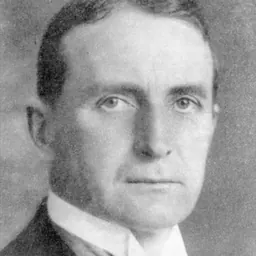
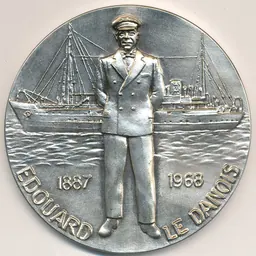
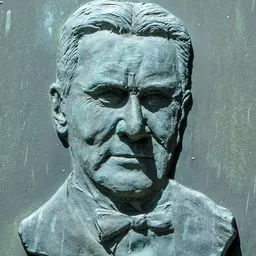
Contemporaries
People whose lives overlapped Nicholas H. Heck's

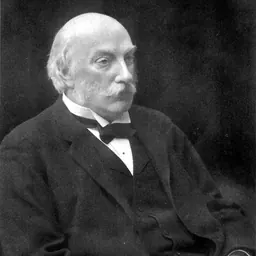




Frequently asked questions
Who was Nicholas H. Heck?
American USCGSC officer (1882–1953)
When was Nicholas H. Heck born?
Nicholas H. Heck was born on 1 September 1882 in Heckton.
When did Nicholas H. Heck die?
Nicholas H. Heck died on 21 December 1953 in Fairfax County.
What was Nicholas H. Heck's occupation?
Nicholas H. Heck was an oceanographer, seismologist and geophysicist.
What nationality was Nicholas H. Heck?
Nicholas H. Heck was American.
Sources & further reading
Cite this page
APA: Biography.guide. (2026). Nicholas H. Heck. https://biography.guide/nicholas-h-heck/
MLA: "Nicholas H. Heck." Biography.guide, https://biography.guide/nicholas-h-heck/.
Chicago: "Nicholas H. Heck." Biography.guide. https://biography.guide/nicholas-h-heck/.
Data last updated: 2026-09-20 · Spot an error? Report a correction.
Page generated 2026-09-27 05:08 UTC