
About Ngô Đình Cẩn
Lived 1911 – 1964 (aged 52–53). Ngô Đình Cẩn was a politician, known for Ngo Dinh Diem and South Vietnam.
Ngô Đình Cẩn (; 1911 – 9 May 1964) was the younger brother and confidant of South Vietnam's first president, Ngô Đình Diệm, and an important member of the Diệm government. Diệm put Cẩn in charge of central Vietnam, stretching from Phan Thiết in the south to the border at the 17th parallel, with Cẩn ruling the region as a virtual dictator. Based in the former imperial capital of Huế, Cẩn operated private armies and secret police that controlled the central region and earned himself a reputation as the most oppressive of the Ngô brothers.
In his youth, Cẩn was a follower of the nationalist Phan Bội Châu. In the late 1940s and early 1950s, he worked to organise support for Diệm as various Vietnamese groups and international powers sought to stamp their authority over Vietnam. Cẩn, who succeeded in eliminating alternative nationalist opposition in central Vietnam, became the warlord of the region when his brother became president of the southern half of the partitioned nation in 1955. He became notorious for his involvement in smuggling and corruption, as well as his autocratic rule. Cẩn was regarded as an effective leader against the Viet Cong communist insurgency, which was much weaker in central Vietnam than in other parts of South Vietnam. His Popular Force militia was regarded by US officials in central Vietnam as a successful counter to the communists.
Khả retired from the court in protest at French interference, taking up farming.
Details about Cẩn's early life are scarce. In his youth, he had studied the writings and opinions of the renowned anti-French Vietnamese nationalist Phan Bội Châu, who spent his last years in Huế. Cẩn regularly traveled to Châu's sampan on the Perfume River with gifts of food and listened to Châu's political lectures. Regarded as the least educated of his family, Cẩn had never traveled outside Vietnam and was the only Ngô brother not to have studied at a European-run institution. Remnants of Ngo Dinh Can's villa in Ngu Tay, Thuy An, Hue city. Vietnam was in chaos after the Japanese invaded the country during World War II and displaced the French colonial administration. At the end of the war, the Japanese left the country, and France, severely weakened by political turmoil within the Vichy regime, was unable to exert control. Hồ Chí Minh's Viet Minh declared independence as the Democratic Republic of Vietnam and battled other Vietnamese nationalist groups as well as French forces for control of the nation. During this time, Cẩn organised a clandestine support base for Diệm in central Vietnam. On 23 October 1955, Diệm toppled Bảo Đại in a fraud-ridden referendum orchestrated by Nhu. Diệm declared himself President of the newly proclaimed Republic of Vietnam three days later.
Cẩn's men helped to cower the populace into voting for his brother. Those who disobeyed were often chased down and beaten, with pepper sauce and water often forced down their nostrils. The violations were particularly flagrant in Cẩn's area, which was the home of the Nguyễn dynasty and a source of sympathy towards Bảo Đại.
Rule With Diệm's ascent to the leadership of South Vietnam in 1955, Cẩn's stock rose. Cẩn had no formal position in the government but was effectively regarded as the warlord of central Vietnam. He had almost unlimited power in the region, often interfering with army operations against the Viet Cong in a style described as "feudal".
Cẩn ran his own personal army and secret police, which fought the Viet Cong and imprisoned other anti-communist political opponents. Cẩn accumulated great wealth through corrupt practices such as graft in awarding foreign aid contracts from the United States governments of Dwight D. Eisenhower and John F. Kennedy to Vietnamese businessmen. He required the businessmen to pay a fee to the National Revolutionary Movement – the official party of the regime – in return for the processing of applications for foreign aid contracts and import licenses. Cẩn was widely believed to be selling rice to North Vietnam on the black market, as well as organising the trafficking of opium throughout Asia via Laos, and monopolising the cinnamon trade. controlling the southern part of the country. The brothers often competed with each other for US aid contracts and the rice trade, but did not interfere with matters in one another's territorial zone. Cẩn had once tried to set up an office for his secret police in Saigon (which was in Nhu's southern region) by showing Diệm his long list of detained political opponents, but insisted that he not have to report to Nhu. He brutally suppressed dissent by using torture and re-education camps to achieve his aims.
Anti-communism In spite of his autocracy and iron rule, Cẩn earned praise from Huế-based US officials for his relatively high levels of success against the Cong san insurgency. Cẩn's central region was much more peaceful than the restive areas near Saigon and the Mekong Delta. Cẩn created the Popular Force organisation to operate in central Vietnam. Cẩn assumed a third or so of the rural peasantry were Viet Cong sympathisers, significant enough to render the hamlets ineffective by intimidating other villagers from within. Cẩn's Popular Force were a group of volunteers who underwent rigorous training similar to United States Marine Corps Recruit Training. Those who passed the training were put into units of 150 men and assigned to live and work in the villages by day. At night, they did defence patrols, using hit-and-run tactics against the Viet Cong. According to the report by US officials in central Vietnam, the program aroused popular support because of the integration of the Popular Force's personnel into the daily life of the village and the sense of security that the force provided. Officials in Washington disagreed with the assessment of their subordinates in central Vietnam, alleging that Cẩn was mainly using the Popular Force for repressing dissidents.
Buddhist crisis
Cẩn was considered the most secular of the four Ngô brothers who controlled Vietnam's domestic affairs. With the appointment of elder brother Thục as the Archbishop of Huế in 1961, Cẩn became less influential as Thục aggressively blurred the distinction between church and state. In early 1963, Nhu sent an emissary from Saigon telling Cẩn to retire and leave for Japan. Unrest erupted in the summer of 1963. After the flying of Vatican flags was permitted at a celebration for the anniversary of Thục's consecration as a bishop, the flying of Buddhist flags on 8 May to commemorate Vesak – the birth of Gautama Buddha – was banned. Cẩn's subordinates ordered government forces to fire on the unarmed Buddhist crowd protesting the ban, killing nine.
Another notable religious incident occurred in the central region under Cẩn's rule in 1963. An oversized carp was found swimming in a small pond near the central city of Đà Nẵng. Local Buddhists began to believe that the fish was a reincarnation of one of Gautama Buddha's disciples.
Downfall and arrest
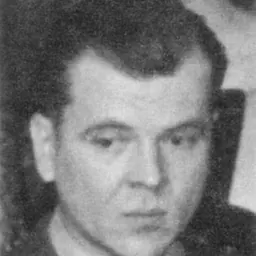
alt=A portrait of a middle-aged man, looking to the left in a half-portrait/profile. He has chubby cheeks, parts his hair to the side and wears a suit and tie. Sparked by the killings in Huế on Vesak, the Buddhists organised nationwide mass protests against the religious bias of the Diệm regime throughout the summer of 1963, demanding religious equality. The protests were met with brutal crackdowns, including ARVN Special Forces attacks on Buddhist pagodas which left hundreds missing, presumed dead. As public discontent heightened, a group of ARVN officers planned and carried out a US-backed coup in November. This came about after Cẩn's protégé Tôn Thất Đính switched sides and helped the coup when his corps was expected to remain loyal. Diệm and Nhu were executed at the conclusion of the coup.
Following the downfall of the Ngô family, the White House came under pressure from the South Vietnamese public to take a hard line against Cẩn. He had intended to seek asylum in Japan.
US ambassador Henry Cabot Lodge, Jr. had other ideas. Instead of sending embassy officials to Tân Sơn Nhứt airport, Lodge sent CIA officer Lucien Conein, who had helped the Vietnamese generals to plan the coup. Conein turned Cẩn over to the junta. Lodge said that General Đôn had promised that Cẩn would be dealt with "legally and judicially". The ambassador told Washington that asylum was unnecessary, saying "It seems to me that our reason for giving him asylum therefore no longer exists". He said that the US could not interfere with justice, since Cẩn was "undoubtedly a reprehensible figure who deserves all the loathing which he now receives".
Trial and execution It was reported that General Nguyễn Khánh – who had deposed Minh in a January 1964 coup – offered Cẩn exile if he handed over his foreign bank deposits. Cẩn protested, saying that he had no money. Đôn later claimed that Khánh would have executed Cẩn anyway, as Cẩn would have known of the corruption that the generals were party to. During the Ngô era, Khánh commanded the ARVN II Corps, which had operated in the Central Highlands under Cẩn's supervision. Despite having helped to arrest Cẩn, Lodge advised Khánh to be restrained in his handling of the case for fear of stoking religious resentment or upsetting international opinion with a death penalty.
Lodge later claimed the South Vietnamese prosecutors failed to make any case against Cẩn. The Vietnamese leader also had to contend with the other side of the arguments, from those who considered themselves to be victims of the Diệm regime. Cẩn was sentenced to death. He appealed to the head of state for clemency; his lawyers used a provision in the legal code to make the appeal. This placed Minhwho was still the titular head of statein the position of approving a third death in the Ngô family, having already ordered his bodyguard Nguyễn Văn Nhung to execute Diệm and Nhu during the coup.
Cẩn's diabetes worsened during the course of the trial, and by the time he was executed, his elderly mother had died. He suffered a heart attack while in custody. On 9 May 1964, he was carried on a stretcher into the prison courtyard and assisted by guards and two Catholic priests to stand alongside the post to which he was tied. He was blindfolded against his request and shot in front of approximately 200 observers. Lodge defended his actions, claiming the United States did all it could to prevent the execution. The ambassador claimed Cẩn would have been allowed to seek refuge at the US embassy,
Don’t just read it —
keep it.
Full-length biographies made to live with: read them, listen on the way to work, watch them tonight.
- E-book
- Audio
- Video
Instant download · yours to keep · every purchase keeps this site free
Important facts
People in Ngô Đình Cẩn's life
Named in this biography and alive at the same time





Related people
Same field, nearest in time




Contemporaries
People whose lives overlapped Ngô Đình Cẩn's




Frequently asked questions
Who was Ngô Đình Cẩn?
South Vietnamese politician/warlord
When was Ngô Đình Cẩn born?
Ngô Đình Cẩn was born in 1911 in Huế.
When did Ngô Đình Cẩn die?
Ngô Đình Cẩn died on 9 May 1964 in Ho Chi Minh City.
What was Ngô Đình Cẩn's occupation?
Ngô Đình Cẩn was a politician.
What was Ngô Đình Cẩn known for?
Ngô Đình Cẩn was known for Ngo Dinh Diem and South Vietnam.
What nationality was Ngô Đình Cẩn?
Ngô Đình Cẩn's recorded nationality: French Indochina, South Vietnam.
Sources & further reading
Cite this page
APA: Biography.guide. (2026). Ngô Đình Cẩn. https://biography.guide/ngo-dinh-can/
MLA: "Ngô Đình Cẩn." Biography.guide, https://biography.guide/ngo-dinh-can/.
Chicago: "Ngô Đình Cẩn." Biography.guide. https://biography.guide/ngo-dinh-can/.
Data last updated: 2026-09-22 · Spot an error? Report a correction.
Page generated 2026-09-27 05:25 UTC