
About Nathaniel Pigott
Lived 1725 – 1804 (aged 78–79). Nathaniel Pigott was an astronomer.
Nathaniel Pigott (1725–1804) was an English astronomer, noted for his observations of eclipses, a transit of Venus and a transit of Mercury, and comets. He became a Fellow of the Royal Society on 16 January 1772, a foreign member of the Imperial Academy at Brussels in 1773, and a correspondent of the French Academy of Sciences in 1776.
Life and career Born in Whitton, Middlesex, Pigott was the son of Ralph Pigott of Whitton by his wife Alethea, daughter of the eighth Viscount Fairfax. He was the grandson of barrister Nathaniel Pigott (1661–1737), a Roman Catholic and intimate friend of poet Alexander Pope, who eulogised him in an epitaph inscribed in the parish church of Twickenham. The younger Nathaniel Pigott married Anna Mathurina, daughter of Monsieur de Bériol, and spent some years at Caen in Normandy for the education of his children. He and his family led a somewhat vagrant life in various parts of Britain and the Continent, where conditions were more congenial for the staunchly Catholic family.
It is not known when Pigott first became interested in astronomy. However, he was able to purchase fine instruments from London craftsmen and became known for observational ability and computational accuracy. The Academy of Sciences of Caen chose him a foreign member about 1764, and he observed there, with John Dollond's six-foot achromatic telescope, the partial solar eclipse of 16 August 1765. His observations of the transit of Venus on 3 June 1769 were transmitted to the French Academy of Sciences; his meteorological record at Caen, from 1765 to 1769, to the Royal Society, of which body he was elected a fellow on 16 January 1772. He maintained a friendly relationship with astronomer William Herschel. In 1783 he sent to the Royal Society an account of a remarkable meteor seen by him while riding across Hewit (Heworth) Common, near York. He observed at the Collège Royal, Louvain, a few days after his arrival from England, the transit of Mercury of 3 May 1786. His second son, Charles Gregory Pigott, assumed the name Fairfax on succeeding his cousin, Anne Fairfax, in 1793, in the possession of Gilling Castle, Yorkshire; he married in 1794 Mary, sister of Sir Henry Goodricke, and died in 1845. The possession of Gilling Castle had been the subject of a lengthy family dispute.
Publications 1782 (with Dr William White): "Observations on the Bills of Mortality at York. By William White, MDFAS; Communicated by Nathaniel Pigott, Esq. FRS" Philosophical Transactions of the Royal Society of London
Don’t just read it —
keep it.
Full-length biographies made to live with: read them, listen on the way to work, watch them tonight.
- E-book
- Audio
- Video
Instant download · yours to keep · every purchase keeps this site free
Important facts
People in Nathaniel Pigott's life
Named in this biography and alive at the same time

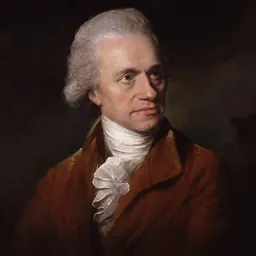
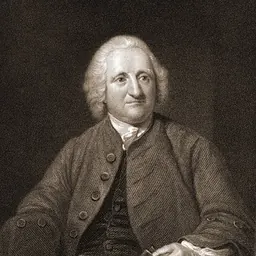
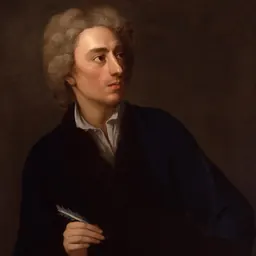

Related people
Same field, nearest in time

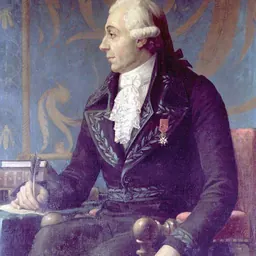


Contemporaries
People whose lives overlapped Nathaniel Pigott's





Frequently asked questions
Who was Nathaniel Pigott?
British astronomer
When was Nathaniel Pigott born?
Nathaniel Pigott was born in 1725.
When did Nathaniel Pigott die?
Nathaniel Pigott died in 1804.
What was Nathaniel Pigott's occupation?
Nathaniel Pigott was an astronomer.
Sources & further reading
Cite this page
APA: Biography.guide. (2026). Nathaniel Pigott. https://biography.guide/nathaniel-pigott/
MLA: "Nathaniel Pigott." Biography.guide, https://biography.guide/nathaniel-pigott/.
Chicago: "Nathaniel Pigott." Biography.guide. https://biography.guide/nathaniel-pigott/.
Data last updated: 2026-09-20 · Spot an error? Report a correction.
Page generated 2026-09-27 05:11 UTC