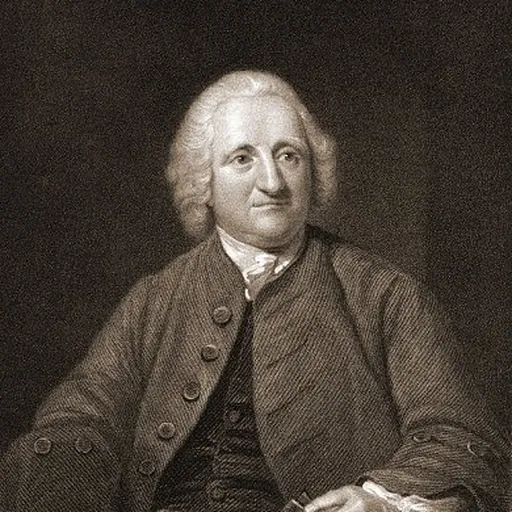
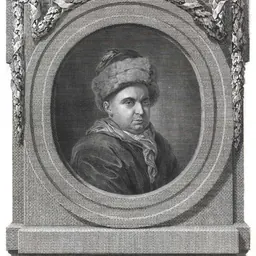
John Dollond
English optician, known for his achromatic doublets
About John Dollond
Lived 1706 – 1761 (aged 55). John Dollond was a British and English astronomer, physicist, instrument maker, inventor and medical instrument maker, known for Achromatic doublet.
John Dollond (30 November 1761) was an English optician known for his successful optics business and his patenting and commercialization of achromatic doublets.
Biography Dollond was the son of a Huguenot refugee, a silk-weaver at Spitalfields, London, where he was born. He followed his father's trade, but found time to acquire a knowledge of Latin, Greek, mathematics, physics, anatomy and other subjects. In 1752 he abandoned silk-weaving and joined his eldest son, Peter Dollond (1731–1820), who in 1750 had started in business as a maker of optical instruments; this business went on to become Dollond & Aitchison. His reputation grew rapidly, and in 1761 he was appointed optician to the king. describing the experiments that led him to the achievement with which his name is specially associated, the discovery of a means of constructing achromatic lenses by the combination of crown and flint glasses, reducing or eliminating chromatic aberration (distortion due to colour fringes). Leonhard Euler in 1747 had suggested that achromatism might be obtained by the combination of glass and water lenses. Relying on statements made by Sir Isaac Newton, Dollond first disputed this possibility (Phil. Trans., 1753), but subsequently, after the Swedish physicist, Samuel Klingenstierna (1698–1765), had pointed out that Newton's law of dispersion did not harmonize with certain observed facts, Dollond began experiments to settle the question.
In 1761, Dollond became the optician of King George III. He died of apoplexy on 30 November, of that year in London.
Family He married Elizabeth Sommelier in 1729. Their daughter, Sarah Dollond, married his neighbour and friend, the mathematician and instrument maker Jesse Ramsden.
Priority of invention
Dollond patented the achromatic doublet, which combines crown glass and flint glass. A theoretical approach to reduce chromatic aberration was worked out by Leonhard Euler in papers that he published in the Memoires of the Berlin Academy between 1747 and 1753. John Dollond read the paper and conducted experiments to construct an achromatic lens and was the first person to patent the achromatic doublet which was granted on 19 April 1758 for a period of 14 years. However, he was not the first to make such lenses. Optician George Bass, following the instructions of Chester Moore Hall, made and sold such lenses as early as 1733. In the late 1750s, Bass told Dollond about Hall's design; Dollond saw the potential and was able to reproduce them.
Dollond appears to have known of the prior work and refrained from enforcing his patent.
Don’t just read it —
keep it.
Full-length biographies made to live with: read them, listen on the way to work, watch them tonight.
- E-book
- Audio
- Video
Instant download · yours to keep · every purchase keeps this site free
Important facts
People in John Dollond's life
Named in this biography and alive at the same time



Related people
Same field, nearest in time
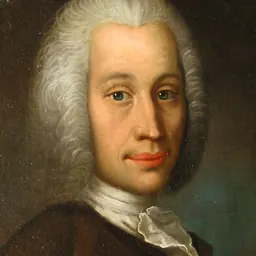
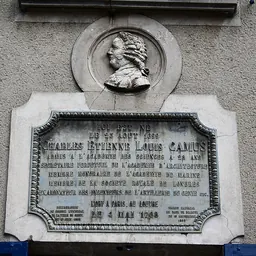


Contemporaries
People whose lives overlapped John Dollond's

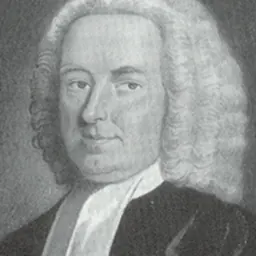


Frequently asked questions
Who was John Dollond?
English optician, known for his achromatic doublets
When was John Dollond born?
John Dollond was born on 10 June 1706 in Spitalfields.
When did John Dollond die?
John Dollond died on 29 November 1761 in London.
What was John Dollond's occupation?
John Dollond was an astronomer, physicist, instrument maker, inventor and medical instrument maker.
What was John Dollond known for?
John Dollond was known for Achromatic doublet.
What nationality was John Dollond?
John Dollond was British and English.
Sources & further reading
Cite this page
APA: Biography.guide. (2026). John Dollond. https://biography.guide/john-dollond/
MLA: "John Dollond." Biography.guide, https://biography.guide/john-dollond/.
Chicago: "John Dollond." Biography.guide. https://biography.guide/john-dollond/.
Data last updated: 2026-09-22 · Spot an error? Report a correction.
Portrait: Wikimedia Commons · author & licence
Page generated 2026-09-27 05:04 UTC