
Nathaniel Kleitman
American sleep researcher
About Nathaniel Kleitman
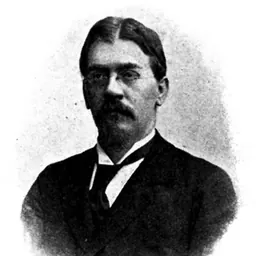
Lived 1895 – 1999 (aged 104). Nathaniel Kleitman was an American physiologist, university teacher, psychologist and physician.
Nathaniel Kleitman (April 26, 1895 – August 13, 1999) was an American physiologist and sleep researcher who served as Professor Emeritus in Physiology at the University of Chicago. He is recognized as the father of modern sleep research, and is the author of the seminal 1939 book Sleep and Wakefulness.
Biography
Early life Nathaniel Kleitman was born in Chișinău, also known as Kishinev, the capital of the province of Bessarabia (Moldova), in 1895 to a Jewish family. He was deeply interested in consciousness and reasoned that he could get insight in consciousness by studying the unconsciousness of sleep. Pogroms drove him to Palestine, and in 1915 he emigrated to the United States as a result of World War I. At the age of twenty, he landed in New York City penniless; in 1923, at age twenty-eight, he had worked his way through City College of New York and earned a PhD from the University of Chicago's Department of Physiology. His thesis was "Studies on the physiology of sleep." Soon after, in 1925, he joined the faculty there. An early sponsor of Kleitman's sleep research was the Wander AG company, which manufactured Ovaltine and hoped to promote it as a remedy for insomnia.
REM sleep Eugene Aserinsky, one of Kleitman's graduate students, decided to hook sleepers up to an early version of an electroencephalogram machine, which scribbled across of paper each night. In the process, Aserinsky noticed that several times each night the sleepers went through periods when their eyes darted wildly back and forth. Kleitman insisted that the experiment be repeated yet again, this time on his daughter, Esther. In 1953, he and Aserinsky introduced the world to "rapid-eye movement," or REM sleep. Kleitman and Aserinsky demonstrated that REM sleep was correlated with dreaming and brain activity. Another of Kleitman's graduate students, William C. Dement, who was a professor of psychiatry at the Stanford medical school, described this as the year that "the study of sleep became a true scientific field."
Rest activity cycle Kleitman made countless additional contributions to the field of sleep research and was especially interested in "rest-activity" cycles, leading to many fundamental findings on circadian and ultradian rhythms. Kleitman proposed the existence of a Basic rest activity cycle, or BRAC, during both sleep and wakefulness.
Other experiments Kleitman also conducted sleep studies underground in Mammoth Cave, Kentucky and lesser-known studies underwater in submarines during World War II and above the Arctic Circle.
Don’t just read it —
keep it.
Full-length biographies made to live with: read them, listen on the way to work, watch them tonight.
- E-book
- Audio
- Video
Instant download · yours to keep · every purchase keeps this site free
Important facts
People in Nathaniel Kleitman's life
Named in this biography and alive at the same time

Related people
Same field, nearest in time




Contemporaries
People whose lives overlapped Nathaniel Kleitman's

Frequently asked questions
Who was Nathaniel Kleitman?
American sleep researcher (1895–1999)
When was Nathaniel Kleitman born?
Nathaniel Kleitman was born on 26 April 1895 in Chișinău.
When did Nathaniel Kleitman die?
Nathaniel Kleitman died on 13 August 1999 in Los Angeles.
What was Nathaniel Kleitman's occupation?
Nathaniel Kleitman was a physiologist, university teacher, psychologist and physician.
What nationality was Nathaniel Kleitman?
Nathaniel Kleitman was American.
Sources & further reading
· Wikipedia: Nathaniel Kleitman
Cite this page
APA: Biography.guide. (2026). Nathaniel Kleitman. https://biography.guide/nathaniel-kleitman/
MLA: "Nathaniel Kleitman." Biography.guide, https://biography.guide/nathaniel-kleitman/.
Chicago: "Nathaniel Kleitman." Biography.guide. https://biography.guide/nathaniel-kleitman/.
Data last updated: 2026-09-20 · Spot an error? Report a correction.
Page generated 2026-09-27 05:17 UTC