
About Natasha Kroll
Lived 1914 – 2004 (aged 89). Natasha Kroll was a designer and production designer.
Natasha Kroll (1914–2004) was a display and production designer born in Moscow, who moved to Germany with her family in 1922. Most widely known for her production design at the BBC in the late 1950s and early 1960s, Kroll went on to design several feature films.
Her archive is held at the University of Brighton Design Archives.
Education Kroll attended the renowned Reimann School in Berlin specialising in display design, and joined the staff as an assistant teacher when the school moved to London in 1936.
Career
Shop display Kroll established her career as a window display designer. Some of her early commissions included Rowntree's department stores in York and Scarborough.
In 1942 Kroll was appointed to the position of display manager for the large retail store Simpson (Piccadilly) Ltd. Her pioneering approach and her display philosophy, with its roots in European modernism, complemented the innovative new premises designed by Joseph Emberton. Kroll stayed at Simpsons twelve years, working her way up from the role of display manager to taking full responsibility for all the store's design, publicity and display work. During this time she recruited illustrator André François and gave Terence Conran his first display commission.
Kroll was also involved in the design of the interior of the restaurant "Sugar and Spice", which opened in Dunstable in 1966, and was owned by J Lyons & Co.
Exhibition design Natasha Kroll was also involved in the display design of the following exhibitions: Lion and Unicorn Pavilion at The Festival of Britain, 1951 Finmar Exhibition at the Tea Centre, 1960 Milan Triennale, 1964
Production design
In 1956 Kroll joined the production design department of the BBC. As a member of the design department under Richard Levin, Kroll devised innovative settings for factual programmes and talks. As with her window displays, ideas originating from European modernism and contemporary design were given popular exposure. Of particular note is the studio design she devised for Huw Weldon's ground-breaking arts programme Monitor.
Kroll left the BBC to go freelance in 1966, specialising in period dramas. These included Mary Queen of Scots (1969) and Love's Labour's Lost (1975).
Kroll gained several feature film credits as a production designer, including: Macbeth (1970) The Music Lovers (1971) The Hireling (1973) Age of Innocence (1977) Absolution (1978) (producer and production designer)
Don’t just read it —
keep it.
Full-length biographies made to live with: read them, listen on the way to work, watch them tonight.
- E-book
- Audio
- Video
Instant download · yours to keep · every purchase keeps this site free
Important facts
People in Natasha Kroll's life
Named in this biography and alive at the same time




Related people
Same field, nearest in time

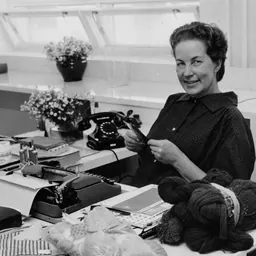
Contemporaries
People whose lives overlapped Natasha Kroll's



Frequently asked questions
Who was Natasha Kroll?
production designer (1914–2004)
When was Natasha Kroll born?
Natasha Kroll was born on 20 May 1914 in Moscow.
When did Natasha Kroll die?
Natasha Kroll died on 2 April 2004 in London.
What was Natasha Kroll's occupation?
Natasha Kroll was a designer and production designer.
Sources & further reading
Cite this page
APA: Biography.guide. (2026). Natasha Kroll. https://biography.guide/natasha-kroll/
MLA: "Natasha Kroll." Biography.guide, https://biography.guide/natasha-kroll/.
Chicago: "Natasha Kroll." Biography.guide. https://biography.guide/natasha-kroll/.
Data last updated: 2026-09-20 · Spot an error? Report a correction.
Page generated 2026-09-27 05:09 UTC