
About Natan Yavlinsky
Lived 1912 – 1962 (aged 50). Natan Yavlinsky was a Russian physicist and nuclear physicist, known for Soviet nuclear program, Stellarator and Tokamak.
Natan Aronovich Yavlinsky (; 13 February 191228 July 1962) was a physicist in the former Soviet Union who invented and developed the first working tokamak.
Early life and career
Yavlinsky was born to a Jewish family of doctors on 13 February 1912 at Kharkov, Russian Empire. Grigory Yavlinsky, an economist and politician, is related to him. He underwent professional technical school (PTU) in 1931 and finished an engineering degree in 1936 at Kharkiv Polytechnic Institute (then Kharkiv V.I. Lenin Polytechnic Institute). As a student, he worked in the Kharkiv Electromechanical Plant. He became a member of the Communist Party of the Soviet Union (then All-Union Communist Party) in 1932, but was removed from the party in 1937. His exclusion from the party also cost him his work at the Moscow Power Engineering Institute (founded as Correspondence Power Engineering Institute). While little is known about his removal from the party, his membership and his position was restored in 1939. He would continue working in the institute until 1948, when he would obtain his Candidate of Sciences, the Soviet equivalent of a Doctor of Philosophy degree. Also by 1948, Yavlinsky became a senior associate of the USSR Academy of Science. ), to build a device out of surplus radar equipment. This was successfully operated in 1948, but showed no clear evidence of fusion and failed to gain the interest of the Atomic Energy Research Establishment. In 1948, Yavlinsky moved to the Kurchatov Institute (also known as the I. V. Kurchatov Institute of Atomic Energy, named after its head Igor Kurchatov). By this time, other Soviet scientists under Kurchatov such as Nobel Prize laureates Andrei Sakharov and Igor Tamm were working on the Soviet atomic bomb project. The word tokamak is a transliteration of the Russian word , an acronym of either: "тороидальная камера с магнитными катушками" (toroidal'naya kamera s magnitnymi katushkami) — toroidal chamber with magnetic coils; or "тороидальная камера с аксиальным магнитным полем" (toroidal'naya kamera s aksial'nym magnitnym polem) — toroidal chamber with axial magnetic field.
The term was attributed to Igor Golovin. The T-1 used both stronger external magnets and a reduced current compared to stabilized pinch machines like ZETA. Yavlinsky was already preparing the design of an even larger model, later built as T-3, the first large tokamak. With the apparently successful ZETA announcement, Yavlinsky's engineering concept became viewed as more acceptable. For his work on "powerful impulse discharges in a gas, to obtain unusually high temperatures needed for thermonuclear processes," he was awarded the Lenin Prize and the Stalin Prize in 1958.
Death Yavlinsky was not to see the T-3 completed. On 28 July 1962, while travelling from Lviv to Sochi through Aeroflot Flight 415, he and his family died in an airplane crash at Gagra. While there has been speculation that his death was connected with politics, primarily over his intended developments in nuclear research, the government did not provide any clear indication that this was so.
Don’t just read it —
keep it.
Full-length biographies made to live with: read them, listen on the way to work, watch them tonight.
- E-book
- Audio
- Video
Instant download · yours to keep · every purchase keeps this site free
Important facts
People in Natan Yavlinsky's life
Named in this biography and alive at the same time

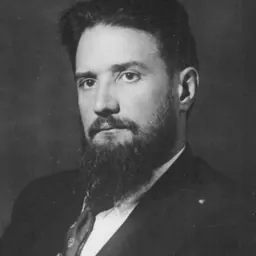


Related people
Same field, nearest in time
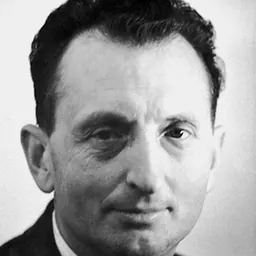



Contemporaries
People whose lives overlapped Natan Yavlinsky's






Frequently asked questions
Who was Natan Yavlinsky?
Soviet physicist (1912-1962)
When was Natan Yavlinsky born?
Natan Yavlinsky was born on 13 February 1912 in Kharkiv.
When did Natan Yavlinsky die?
Natan Yavlinsky died on 28 July 1962 in Gagra District.
What was Natan Yavlinsky's occupation?
Natan Yavlinsky was a physicist and nuclear physicist.
What was Natan Yavlinsky known for?
Natan Yavlinsky was known for Soviet nuclear program, Stellarator and Tokamak.
What nationality was Natan Yavlinsky?
Natan Yavlinsky was Russian.
Sources & further reading
Cite this page
APA: Biography.guide. (2026). Natan Yavlinsky. https://biography.guide/natan-yavlinsky/
MLA: "Natan Yavlinsky." Biography.guide, https://biography.guide/natan-yavlinsky/.
Chicago: "Natan Yavlinsky." Biography.guide. https://biography.guide/natan-yavlinsky/.
Data last updated: 2026-09-20 · Spot an error? Report a correction.
Page generated 2026-09-27 05:09 UTC