
About Nâmık Kemâl
Lived 1840 – 1888 (aged 47). Nâmık Kemâl was a Turkish poet, journalist, writer, politician, historian and prose writer.
Namık Kemal (, ; ; 21 December 1840 – 2 December 1888) was an Ottoman writer, poet, democrat, intellectual, reformer, journalist, playwright, and political activist who was influential in the formation of the Young Ottomans and their struggle for governmental reform in the Ottoman Empire during the late Tanzimat period, which led to the First Constitutional Era in the Empire in 1876. Kemal championed notions of freedom and fatherland in his plays and poems, and his works had a significant impact on the establishment of and future reform movements in Turkey, as well as other former Ottoman territories. He is often regarded as being instrumental in redefining Western concepts like natural rights and constitutional government.
Early years
An Ottoman subject, Namık Kemal was born in Tekirdağ (present-day Turkey, then part of the Ottoman Empire) on 21 December 1840, to mother Fatma Zehra Hanım and father Mustafa Asım Bey, the chief astrologer in the Sultan's Palace. Kemal's father was of Turkish descent, his family originally being from Yenişehir in Bursa Province. Since surnames or family names were not in use during the Ottoman Empire, "Kemal" was not his surname, but part of his first name. During his youth, Kemal traveled throughout the Ottoman Empire, staying in Istanbul, Kars, and Sofia, and studied a number of subjects, including poetry. However, as a result of the political nature of his writings, Kemal was forced to leave this job by Grand Vizier Emin Âli Pasha and so joined his friend and fellow Young Ottoman, İbrahim Şinasi, at his newspaper (Herald of Ideas). The major goal of this group was to institute political reform according to the Western ideas of representative government. In 1864, Kemal took over the pro-reform newspaper after its previous owner and Kemal's friend İbrahim Şinasi was forced into exile.
Namık Kemal drew on the parliamentary constitution of United Kingdom, in preference to that of France which, under Napoleon III, he considered too authoritarian. London on the other hand, with its "indomitable power of public opinion against authority" he saw as the "model of the world" in political principles.
Ideology and exile
Namık Kemal was heavily influenced by Western conceptions of the relationship between the government and the people. As a result of his criticism of the government, Namık Kemal was exiled from the Ottoman Empire in 1867 and fled to Paris where many other exiled Young Ottomans had found refuge.
In 1869 or 1870, Kemal was allowed to return to Constantinople and proceeded to write for a number of Young Ottoman-run newspapers, and eventually published one of his own, İbret ("Admonition"), in which he addressed more intellectual, social, and national subjects.
In addition, it was after his return to Constantinople that Kemal wrote his most significant and influential work: the play Vatan Yahut Silistre, which translates to "Homeland or Silistra." The play tells the story of an Ottoman soldier whose loyalty to his nation, and not his religion or allegiance to the Sultan, motivates him to defend the town of Silistra, Bulgaria from the Russians during the Crimean War. The impact these nationalist sentiments, unheard of in the Ottoman Empire prior to Kemal, had on the Turkish people was so profound that Kemal's newspaper, İbret, was shut down, and Kemal himself was banished from the Empire for the second time.
Later career
Like many Young Ottomans, Namık Kemal supported Murad V’s ascension to the throne after the abdication of Abdülaziz in 1876. However, their hope that Murad would institute the reforms they desired was dashed, for it rapidly became apparent that he was not suited for rule; his weak nerves and alcoholism leading to his abdication after only three months. Namık Kemal protested against Murad’s deposition, and continued to support Murad's Western political perspectives, but ultimately, his pleas failed to have any effect and Murad V stepped down in 1876.
Despite Murad's abdication, the first Ottoman Parliament, the General Assembly of the Ottoman Empire, was established in 1876, largely as a result of pressure from the Young Ottomans, as well as Midhat Pasha’s political influence. However, while, at first, Abdul Hamid II, the sultan who succeeded Murad V, was willing to allow Parliament to function, he quickly decided that it was easier for him to enact reform by seizing autocratic powers instead of waiting for the approval of elected officials. In order to successfully implement his autocratic rule, Abdul Hamid II exiled many Young Ottomans, including Namık Kemal, who were critical of his decision to disregard the Parliament. Thus, for the third time, Kemal was removed from Constantinople by being forced into an administrative position in Chios, where he would die in 1888.
Legacy
Namık Kemal had an enormous influence on the formation of a Turkish national identity. The founder of modern Turkey, Mustafa Kemal Atatürk, often remarked that he had been influenced by Kemal's writing as a young man, and that they had subsequently been a source of inspiration for his goals in the formation of the Turkish government and state.
Don’t just read it —
keep it.
Full-length biographies made to live with: read them, listen on the way to work, watch them tonight.
- E-book
- Audio
- Video
Instant download · yours to keep · every purchase keeps this site free
Important facts
People in Nâmık Kemâl's life
Named in this biography and alive at the same time



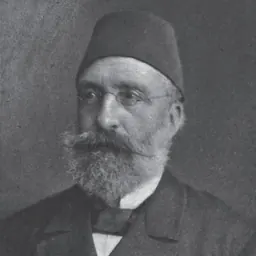
Related people
Same field, nearest in time
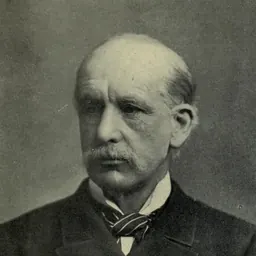
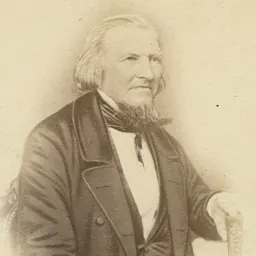
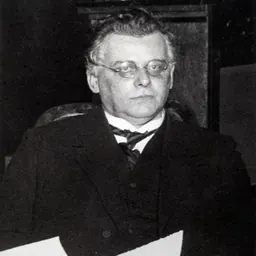
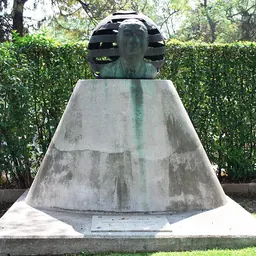
Contemporaries
People whose lives overlapped Nâmık Kemâl's
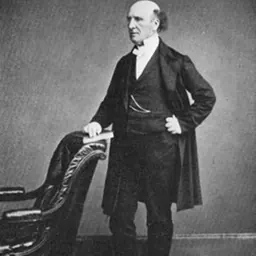
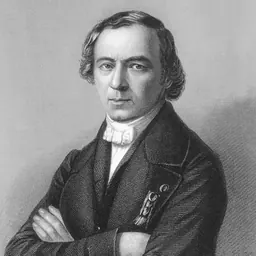

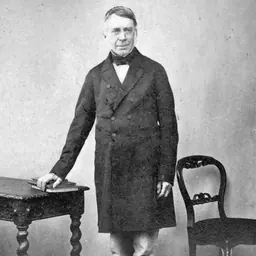
Frequently asked questions
Who was Nâmık Kemâl?
Ottoman writer (1840-1888)
When was Nâmık Kemâl born?
Nâmık Kemâl was born on 21 December 1840 in Tekirdağ.
When did Nâmık Kemâl die?
Nâmık Kemâl died on 2 December 1888 in Chios.
What was Nâmık Kemâl's occupation?
Nâmık Kemâl was a poet, journalist, writer, politician, historian and prose writer.
What nationality was Nâmık Kemâl?
Nâmık Kemâl was Turkish.
Sources & further reading
Cite this page
APA: Biography.guide. (2026). Nâmık Kemâl. https://biography.guide/namik-kemal/
MLA: "Nâmık Kemâl." Biography.guide, https://biography.guide/namik-kemal/.
Chicago: "Nâmık Kemâl." Biography.guide. https://biography.guide/namik-kemal/.
Data last updated: 2026-09-27 · Spot an error? Report a correction.
Page generated 2026-09-27 05:16 UTC