
About İbrahim Şinasi
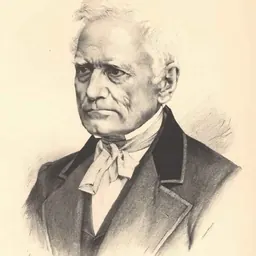
Lived 1826 – 1871 (aged 45). İbrahim Şinasi was a Turkish poet, journalist, translator, writer, playwright and politician.
İbrahim Şinasi Efendi (; 5 August 1826 – 13 September 1871) was a pioneering Ottoman intellectual, founder of Turkish dramaturgy, author, journalist, translator, playwright, linguist and newspaper editor. He was an innovator across several fields: authoring one of the earliest examples of an Ottoman play, encouraging the translation of French poetry into Turkish, simplifying the script used for writing the Ottoman Turkish language, and being one of the first Ottoman writers to write specifically for the broader public. Şinasi used his newspapers, Tercüman-ı Ahvâl and Tasvîr-i Efkâr, to promote the proliferation of European Enlightenment ideals during the Tanzimat period, and he made the education of the literate Ottoman public his personal vocation. Though many of Şinasi's projects were incomplete at the time of his death, "he was at the forefront of a number of fields and put his stamp on the development of each field so long as it contained unsolved problems."
Şinasi was an early proponent of a constitution for the Empire. Along with his colleague and friend Namık Kemal, Şinasi was one of the foremost leaders of the Young Ottomans, a secret society of Ottoman Turkish intellectuals pushing for further reform in the Ottoman Empire after Tanzimat in order to modernize and revitalize it by bringing it into line with the rest of Europe. Although Şinasi died before their goals for reform came to fruition, the Young Ottomans' efforts directly led to the first attempt at constitutional monarchy in the Empire in 1876, when the short-lived First Constitutional Era ushered in the writing of an Ottoman constitution and the creation of a bicameral parliament. Through his work as a political activist and one of the foremost literary figures of his time, Şinasi laid the groundwork in the minds of the public for contemporary and later reforms in the Ottoman Empire and, later, the modern Republic of Turkey.
His life Early life
İbrahim Şinasi was born in Constantinople (modern Istanbul) in 1826 during a period of uncertainty in the Ottoman Empire. By ethnic origin he was a Rutulian. Şinasi's father served as an artillery captain in the Ottoman army and died during one of the Russo-Turkish wars. He was raised by his mother and relatives and began his education at a neighborhood school. Şinasi attended elementary school with the intention of becoming a clerk for the military. He took a position with the Müşiriyet Armory, while taking lessons in Arabic, Persian, and French. It is speculated that conflicts with some of the Tanzimat reformers, such as Mehmed Emin Âli Pasha and Mehmed Fuad Pasha, encouraged Şinasi to leave the country. This publication was the successor to another newspaper called Tercüman-ı Ahvâl that Şinasi had previously founded and edited with his associate Agah Efendi. In these newspapers, he employed a "journalistic Turkish" that was heavily influenced by the coarser language of average Ottoman Turks (kaba Türkçe). He advocated strongly for an increasing Westernization of the Ottoman Empire and also for "encyclopedism"; he believed that the public should be educated in a wide variety of subject areas, so his pieces frequently included references to figures, such as Plato or Newton, and elevated concepts such as natural law.
Later life and death Şinasi returned to Istanbul in 1869, where "he lived as a recluse in some financial need." In the first issue of his first newspaper, Şinasi wrote, "Since people who live in a society have a duty of loyalty to various official obligations, it necessarily follows that a part of their rights consists of the dissemination of verbal and written ideas to promote the interests of the motherland."
While being a patriot and populist per his inclination towards the regular people's language, Şinasi was also a romantic and internationalist. He declared, in his writing, that "my nation is humankind, and my motherland is the earth" . As it was noted by Ahmet Hamdi Tanpınar, this line was inspired from Victor Hugo's Les Burgraves' closing remarks: "... to have the world as its motherland and humanity as its nation" .
Language Şinasi's major contributions to reform and to Ottoman and Turkish culture were the result of his use of language. Prior to Şinasi, Namık Kemal, and Ziya Pasha, Ottoman writing was largely split into elite literature and folk literature. The writing of the elites was almost exclusively poetry (divan şiiri) of a strict form, meter, and rhyme. It was written strictly in the Ottoman Turkish language, which incorporated vocabulary words from Arabic and Persian that were beyond the understanding of the common people (who spoke "vulgar Turkish" (kaba Türkçe), which more resembled Modern Turkish); it emphasized artistic excellence over communication. The elites wrote for each other, rather than for the general public. Both elite and folk literature incorporated elements of the Islamic tradition, but popular writing drew heavily on the Central Asian roots of the Ottomans. It employed both verse and prose, but members of the elite did not take it seriously.
Şinasi altered the paradigm of writing within the Ottoman Empire by simplifying the language, intentionally engaging directly with an increasingly literate public, and introducing new, more European, genres to the masses. He also simplified the Arabic-based Ottoman Turkish script, combining the nashk and kufi calligraphy, but he "only succeeded in reducing the more than five hundred signs used since Muteferrika first cut his type to 112.".
The Wedding of a Poet Arguably, Şinasi's most famous work was the play The Wedding of a Poet . It was not the first theatrical work written in a Turkic language, as the Azerbaijani playwright Mirza Fatali Akhundov's work had appeared first, but it was the first widely recognized play written by an Ottoman person in the style of modern European theatrical productions, and it had a strong influence on the canon of plays that followed. The one-act comedy was written in 1859 but was not published until 1860. It was printed as a serial, in parts called Tefriqa in his newspaper Tercüman-ı Ahvâl in response to the growing popularity of theater in the Ottoman Empire. European acting troupes from London, Paris, St. Petersburg, and other major cities increased the demand for plays amongst the people of the Middle East, particularly in urban centers like Tbilisi, Istanbul, and Cairo. In writing this play, as was typical of his artistic style, Şinasi employed a Turkish language that was closer to the vernacular, rather than the vocabulary and structures previously used by the cultural elite. Durub-i Emsal-i Osmaniye (1863, the first book of Turkish proverbs) Müntahabat-ı Eş'ar (1863, collection of poems)
Don’t just read it —
keep it.
Full-length biographies made to live with: read them, listen on the way to work, watch them tonight.
- E-book
- Audio
- Video
Instant download · yours to keep · every purchase keeps this site free
Important facts
People in İbrahim Şinasi's life
Named in this biography and alive at the same time

Related people
Same field, nearest in time

Contemporaries
People whose lives overlapped İbrahim Şinasi's




Frequently asked questions
Who was İbrahim Şinasi?
Ottoman journalist (1826-1871)
When was İbrahim Şinasi born?
İbrahim Şinasi was born on 5 August 1826 in Istanbul.
When did İbrahim Şinasi die?
İbrahim Şinasi died on 13 September 1871 in Istanbul.
What was İbrahim Şinasi's occupation?
İbrahim Şinasi was a poet, journalist, translator, writer, playwright and politician.
What nationality was İbrahim Şinasi?
İbrahim Şinasi was Turkish.
Sources & further reading
Cite this page
APA: Biography.guide. (2026). İbrahim Şinasi. https://biography.guide/ibrahim-sinasi/
MLA: "İbrahim Şinasi." Biography.guide, https://biography.guide/ibrahim-sinasi/.
Chicago: "İbrahim Şinasi." Biography.guide. https://biography.guide/ibrahim-sinasi/.
Data last updated: 2026-09-20 · Spot an error? Report a correction.
Page generated 2026-09-27 05:21 UTC