
Nagisa Ōshima
Japanese film director and screenwriter
About Nagisa Ōshima
Lived 1932 – 2013 (aged 80). Nagisa Ōshima was a Japanese screenwriter, film director, film producer, film editor and director.
was a Japanese film director, writer, and left-wing activist who is best known for his fiction films, of which he directed 23 features in a career spanning from 1959 to 1999. He is regarded as one of the greatest Japanese directors of all time, and as one of the most important figures of the Japanese New Wave (Nūberu bāgu), alongside Shōhei Imamura. His film style was bold, innovative and provocative. Common themes in his work include youthful rebellion, class and racial discrimination and taboo sexuality.
His first major film was his second feature, Cruel Story of Youth (1960), one of the first Japanese New Wave films, a youth-oriented film with an earnest portrayal of the sexual lives and criminal activities of its young protagonists. He came to greater international renown after Death By Hanging (1968), a film on the theme of capital punishment and anti-Korean sentiment, was shown at the Cannes Film Festival in 1968. His most controversial film is In the Realm of the Senses (1976), a sexually explicit film set in 1930s Japan.
Profile Early life Nagisa Ōshima was born into a family of aristocratic samurai roots. His father was a government official who had a large library. Ōshima spent very little time with his father, who died when he was six, which left a deep mark on him. Ōshima would point to this as the most important event of his childhood in his 1992 essay My Father's Non-existence: A Determining Factor in My Existence. After graduating from Kyoto University in 1954, where he studied political history, and such films as Cruel Story of Youth, The Sun's Burial and Night and Fog in Japan followed in 1960. The last of these 1960 films explored Ōshima's disillusionment with the traditional political left, and his frustrations with the right, and Shochiku withdrew the film from circulation after less than a week, claiming that, following the recent assassination of the Socialist Party leader Inejiro Asanuma by the ultranationalist Otoya Yamaguchi, there was a risk of "unrest". Ōshima left the studio in response, and launched his own independent production company. Despite the controversy, Night and Fog in Japan placed tenth in that year's Kinema Jumpo best-films poll of Japanese critics, and it has subsequently amassed considerable acclaim abroad.
In 1961 Ōshima directed The Catch, based on a novella by Kenzaburō Ōe about the relationship between a wartime Japanese village and a captured African American serviceman. The Catch has not traditionally been viewed as one of Ōshima’s major works, though it did notably introduce a thematic exploration of bigotry and xenophobia, themes which would be explored in greater depth in the later documentary Diary of Yunbogi, and feature films Death by Hanging and Three Resurrected Drunkards. He embarked upon a period of work in television, producing a series of documentaries; notably among them 1965's Diary Of Yunbogi. Based upon an examination of the lives of street children in Seoul, it was made by Ōshima after a trip to South Korea.
Ōshima directed three features in 1968. The first of these, Death by Hanging (1968), presented the story of the failed execution of a young Korean for rape and murder, and was loosely based upon an actual crime and execution which had taken place in 1958. The film utilizes non-realistic "distancing" techniques after the fashion of Bertold Brecht or Jean-Luc Godard to examine Japan's record of racial discrimination against its Korean minority, incorporating elements of farce and political satire, and a number of visual techniques associated with the cinematic new wave in a densely layered narrative. It was placed third in Kinema Jumpo 1968 poll, and has also garnered significant attention globally. Death By Hanging inaugurated a string of films (continuing through 1976's In the Realm of the Senses) that clarified a number of Ōshima's key themes, most notably a need to question social constraints, and to similarly deconstruct received political doctrines.
Months later, Diary of a Shinjuku Thief unites a number of Ōshima's thematic concerns within a dense, collage-style presentation. Featuring a title which alludes to Jean Genet's The Thief's Journal, the film explores the links between sexual and political radicalism, specifically examining the day-to-day life of a would-be radical whose sexual desires take the form of kleptomania. The fragmented narrative is interrupted by commentators, including Kara Jūrō's underground performance troupe, starring Kara Jūrō, his then wife Ri Reisen, and Maro Akaji (who would go on to lead the butoh troupe Dairakudakan). Yokoo Tadanori, an artist who created many of the iconic theatre posters during the 1960s and '70s, plays the thief, who gets a bit part in Kara's performance. The film also features a psychoanalyst, the president of Kinokuniya Bookstore in Shinjuku, and an impromptu symposium featuring actors from previous Ōshima films (along with Ōshima himself), all dissecting varied aspects of shifting sexual politics, as embodied by various characters within the film.
Boy (1969), based on another real-life case, was the story of a family who use their child to make money by deliberately getting involved in road accidents and making the drivers pay compensation.
1970s career The Ceremony (1971) is a satirical film on traditional Japanese attitudes, famously expressed in a scene where a marriage ceremony has to go ahead even though the bride is not present.
In 1976, Ōshima made In the Realm of the Senses, a film based on a true story of fatal sexual obsession in 1930s Japan. Ōshima, a critic of censorship and his contemporary Akira Kurosawa's humanism, was determined that the film should feature unsimulated sex and thus the undeveloped film had to be transported to France to be processed. An uncensored version of the movie is still unavailable in Japan. A book with stills and script notes from the film was published by San’ichishobo, and in 1976 the Japanese government brought obscenity charges against Ōshima and San’ichishobo. Ōshima testified in the trial and said. "Nothing that is expressed is obscene. What is obscene is what is hidden." Ōshima and the publisher were found not guilty in 1979; the government appealed and the Tokyo High Court upheld the verdict in 1982.
1980s onwards In 1983 Ōshima had a critical success with Merry Christmas, Mr. Lawrence, a film partly in English and set in a wartime Japanese prison camp, and featuring rock star David Bowie and musician Ryuichi Sakamoto, alongside Takeshi Kitano. The movie is sometimes viewed as a minor classic but never found a mainstream audience. (1986), written with Luis Buñuel's frequent collaborator Jean-Claude Carrière, was a comedy about a diplomat's wife (Charlotte Rampling) whose love affair with a chimpanzee is quietly incorporated into an eminently civilised ménage à trois.
For much of the 1980s and 1990s, he served as president of the Directors Guild of Japan. He won the inaugural Directors Guild of Japan New Directors Award in 1960.
A collection of Ōshima's essays and articles was published in English in 1993 as Cinema, Censorship and the State. In 1995 he wrote and directed the archival documentary '100 Years of Japanese Cinema' for the British Film Institute. A critical study by Maureen Turim appeared in 1998.
In 1996 Ōshima suffered a stroke, but he recovered enough to return to directing in 1999 with the samurai film Taboo (Gohatto), set during the bakumatsu era and starring Merry Christmas, Mr. Lawrence actor Takeshi Kitano. Ryuichi Sakamoto, who had both acted in and composed for Lawrence, provided the score.
He subsequently suffered more strokes, and Gohatto proved to be his final film. Ōshima had initially planned to create a biopic entitled Hollywood Zen based on the life of Issei actor Sessue Hayakawa. The script had been allegedly completed and set to film in Los Angeles, but due to constant delays, declining health, and Ōshima's eventual death in 2013 (see below), the project went unrealized.
Having a degree of fluency in English, in the 2000s, Ōshima worked as a translator. He translated four books by John Gray into Japanese, including Men Are from Mars, Women Are from Venus.
Ōshima died on January 15, 2013, of pneumonia. He was 80.
The 2013 edition of the San Sebastian Film Festival scheduled a retrospective of Ōshima films in September.
Filmography
Feature Films Year English title Japanese title Romanized title Director Writer Notes 1959 Donto ikōze Donto ikōze Co-written with Yoshitarō Nomura A Town of Love and Hope Ai to Kibō no Machi 1960 Cruel Story of Youth Seishun Zankoku Monogatari The Sun's Burial Taiyō no Hakaba Co-written with Toshirō Ishidō Night and Fog in Japan Nihon no Yoru to Kiri Co-written with Toshirō Ishidō 1961 The Catch Shiiku 1962 The Rebel Amakusa Shirō Tokisada Co-written with Toshirō Ishidō 1965 The Pleasures of the Flesh Etsuraku 1966 Violence at Noon Hakuchū no tōrima 1967 Tales of the Ninja (Band of Ninja) Ninja Bugei-Chō Co-written with Mamoru Sasaki Sing a Song of Sex Nihon Shunka-Kō Co-written with Mamoru Sasaki, Tsutomu Tamura, and Toshio Tajima Double Suicide: Japanese Summer Muri Shinjū: Nihon no Natsu Co-written with Mamoru Sasaki and Tamura Tsutomu 1968 Death by Hanging Kōshikē Co-written with Mamoru Sasaki, Michinori Fukao, and Tsutomu Tamura Three Resurrected Drunkards Kaette Kita Yopparai Co-written with Mamoru Sasaki, Masao Adachi, and Tsutomu Tamura 1969 Diary of a Shinjuku Thief Shinjuku Dorobō Nikki Co-written with Mamoru Sasaki, Masao Adachi, and Tsutomu Tamura Boy Shōnen 1970 The Man Who Left His Will on Film Tōkyō Sensō Sengo Hiwa 1971 The Ceremony Gishiki Co-written with Mamoru Sasaki and Tsutomu Tamura 1972 Dear Summer Sister Natsu no Imōto Co-written with Mamoru Sasaki and Tsutomu Tamura 1976 In the Realm of the Senses Ai no Korīda 1978 Empire of Passion Ai no Bōrē Co-written with Itoko Nakamura 1983 Merry Christmas, Mr. Lawrence Co-written with Paul Mayersberg 1986 Co-written with Jean-Claude Carrière 1999 Taboo Gohatto
Short Films Year English title Japanese title Romanized title Ref.1959 Tomorrow's Sun Ashita no Taiyō 1965 Yunbogi's Diary Yunbogi no Nikki
Television Year English title Romanized title 1962 Youth on the Ice Kōri no Naka no Seishun 1963 Forgotten Soldiers Wasurerareta Kōgun A Small Child's First Adventure Chiisana Bōken Ryokō 1964 It's Me Here, Bellett Watashi wa Beretto The Tomb of Youth Seishun no Ishibumi A Rebel's Fortress Hankotsu no Toride The Girl Under an Assumed Name Gimei Shōjo Crossing the Pacific on the Chita Niseigo Chita Niseigo Taiheiyō Ōdan A National Railway Worker Aru Kokutetsu-Jōmuin Ode to an Old Teacher Aogeba Tōtoshi Why I Love You Aisurebakoso The Dawn of Asia Ajia no Akebono 1965 The Trawler Incident Gyosen Sonansu 1968 The Pacific War (The Greater East Asian War) Daitōa Sensō 1969 Mao and the Cultural Revolution Mō-Takutō to Bunka Daikakumē 1972 Giants Kyojin-Gun Joi! Bangla Joi! Bangla The Journey of the Blind Musicians Goze: Mōmoku no Onna-Tabigēnin 1973 The Father of Bangladesh Bengal no Chichi Laman 1975 The Battle of Tsushima Ikiteiru Nihonkai-Kaisen 1976 The Isle of the Final Battle Ikiteiru Gyokusai no Shima The Golden Land of Bengal Ōgon no Daichi Bengal The Sunken Tomb Ikiteiru Umi no Bohyō The Life of Mao Denki Mō-Takutō 1977 Human Drama: 28 Years of Hiding in the Jungle Yokoi Shōichi: Guamu-to 28 Nen no Nazo o Ou The Dead Remain Young Shisha wa Itsumademo Wakai 1991 Kyōto, My Mother's Place 1994 100 Years of Japanese Cinema
Don’t just read it —
keep it.
Full-length biographies made to live with: read them, listen on the way to work, watch them tonight.
- E-book
- Audio
- Video
Instant download · yours to keep · every purchase keeps this site free
Important facts
Family & relationships
People in Nagisa Ōshima's life
Named in this biography and alive at the same time


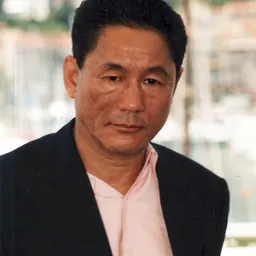



Related people
Same field, nearest in time



Contemporaries
People whose lives overlapped Nagisa Ōshima's

Frequently asked questions
Who was Nagisa Ōshima?
Japanese film director and screenwriter (1932–2013)
When was Nagisa Ōshima born?
Nagisa Ōshima was born on 31 March 1932 in Kyoto, Tamano.
When did Nagisa Ōshima die?
Nagisa Ōshima died on 15 January 2013 in Fujisawa.
What was Nagisa Ōshima's occupation?
Nagisa Ōshima was a screenwriter, film director, film producer, film editor and director.
What nationality was Nagisa Ōshima?
Nagisa Ōshima was Japanese.
Sources & further reading
Cite this page
APA: Biography.guide. (2026). Nagisa Ōshima. https://biography.guide/nagisa-oshima/
MLA: "Nagisa Ōshima." Biography.guide, https://biography.guide/nagisa-oshima/.
Chicago: "Nagisa Ōshima." Biography.guide. https://biography.guide/nagisa-oshima/.
Data last updated: 2026-09-25 · Spot an error? Report a correction.
Page generated 2026-09-27 05:11 UTC