
About Nabin Chandra Sen
Lived 1847 – 1909 (aged 61). Nabin Chandra Sen was an Indian poet, translator, autobiographer and writer.
Nabinchandra Sen (; 10 February 1847 – 23 January 1909) was a Bengali poet and writer, often considered one of the greatest poets prior to the arrival of Rabindranath Tagore. He commented on the Battle of Plassey and the arrival of British rule in India as "a night of Eternal Gloom".
Life
Nabinchandra was born in Noapara, Raozan Upazila, in Chittagong on 10 February 1847 in a Baidya family. He studied at the Chittagong Collegiate School, clearing the school-leaving Entrance examination in 1863. In 1865, he passed the FA exam from Presidency College, Calcutta. In 1868, he earned his BA from General Assembly's Institution (now Scottish Church College), and after teaching for a brief period at Hare School, he joined the colonial administrative services as a deputy magistrate. Sen retired in 1904, and died on 23 January 1909. He has been considered one of Bengal's greatest writers and poets.
Works Sen's earliest poems were published in the Education Gazette, edited by Peary Charan Sarker, and his first volume of poetry, Abakash Ranjani, was published in 1871. A second volume of Abakash Ranjani was published in 1877. Palashir Juddha (1875), a long epic poem lamenting the betrayal of Siraj ud-Daulah by his followers and his defeat at the Battle of Plassey, was an evocative expression of Bengali nationalism in literature, and it established his reputation as a powerful Bengali poet. A contemporary of Michael Madhusudan Dutt, Nabichandra is also known for popularizing the epic narrative in the Bengali language through his reinterpretations of the Mahabharata in a three-volume epic:Raivatak (1887), Kuruksetra (1893) and Prabhas (1896), where Krishna serves as the protagonist and adventurer during the fall of kingdoms. He wrote biographies of Jesus, Buddha, and Cleopatra in the Bengali language, and made verse translations of the Bhagavad Gita and the Markandeya Purana. Nabindrachandra's Bhanumati (a novel-in-verse) and "Prabaser Patra" (a memoir of his travels) also brought him fame. His five-volume autobiography, Amar Jiban (My Life), is an important document chronicling the politics and social aspirations of the Bengali literati in the late nineteenth century.
Don’t just read it —
keep it.
Full-length biographies made to live with: read them, listen on the way to work, watch them tonight.
- E-book
- Audio
- Video
Instant download · yours to keep · every purchase keeps this site free
Important facts
People in Nabin Chandra Sen's life
Named in this biography and alive at the same time
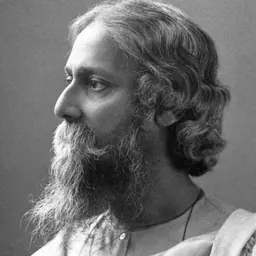
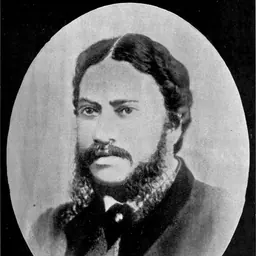
Related people
Same field, nearest in time
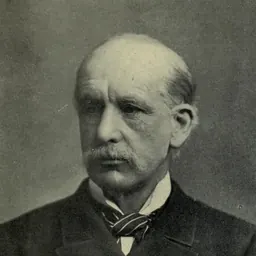

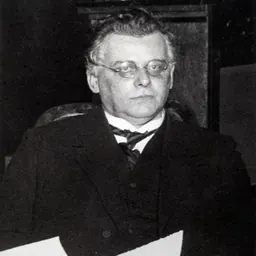
Contemporaries
People whose lives overlapped Nabin Chandra Sen's




Frequently asked questions
Who was Nabin Chandra Sen?
Bengali poet and writer (1847-1909)
When was Nabin Chandra Sen born?
Nabin Chandra Sen was born on 10 February 1847 in Chittagong.
When did Nabin Chandra Sen die?
Nabin Chandra Sen died on 23 January 1909 in Kolkata.
What was Nabin Chandra Sen's occupation?
Nabin Chandra Sen was a poet, translator, autobiographer and writer.
What nationality was Nabin Chandra Sen?
Nabin Chandra Sen was Indian.
Sources & further reading
· Wikipedia: Nabin Chandra Sen
Cite this page
APA: Biography.guide. (2026). Nabin Chandra Sen. https://biography.guide/nabin-chandra-sen/
MLA: "Nabin Chandra Sen." Biography.guide, https://biography.guide/nabin-chandra-sen/.
Chicago: "Nabin Chandra Sen." Biography.guide. https://biography.guide/nabin-chandra-sen/.
Data last updated: 2026-09-22 · Spot an error? Report a correction.
Page generated 2026-09-27 05:22 UTC