
Nabi Bux Khan Baloch
Baloch scholar, historian, sindhologist, linguist and educationist
About Nabi Bux Khan Baloch
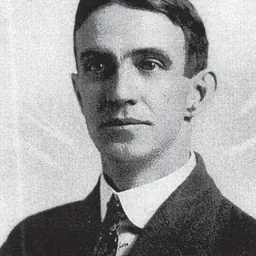
Lived 1917 – 2011 (aged 93). Nabi Bux Khan Baloch was a Pakistani lexicographer, historian, folklorist, linguist, vice-chancellor and pedagogue.
Nabi Bakhsh Khan Baloch (; 16 December 1917 – 6 April 2011) was a Pakistani research scholar, historian, Sindhologist, educationist, linguist and writer. He predominantly wrote in Sindhi, but also in Urdu, English, Persian and Arabic. He has been described as the "moving library" of the Pakistani province of Sindh.
The author of some 150 books, he contributed to many subjects and disciplines of knowledge, which include history, education, folklore, archeology, anthropology, musicology, Islamic culture and civilisation. He contributed two articles - on Sindh and Baluchistan - which appeared in the Fifteenth Edition of Encyclopædia Britannica, 1972.
Baloch did pioneering work on the classic poets of Sindh, culminating in the ten-volume critical text of Shah Jo Risalo, the poetic compendium of the Sufi poet of Sindh, Shah Abdul Latif Bhittai. He edited 42 volumes on Sindhi folklore, with scholarly prefaces in English, under the heading of the Folklore and Literature Project.
In addition, he compiled and published a Sindhi dictionary, Jami'a Sindhi Lughaat During his tenure at the university he was responsible for initiating several publications and editing monographs such as: Journal of Education, Journal of Research: Arts and Social Sciences, Historical Perspective on Education, Methods of Teaching Hasil-a-lNijh of Jafar al- Bubakani, and Report on Education in Sindh with an extensive introduction by Baloch (drawn by B.H. Ellis, first printed for the Government at the Bombay Education Society Press in 1856).
He served as a first dean of Sindh University and later became the vice chancellor of the university. Baloch was proficient in Sindhi, Persian, Arabic and Urdu languages.
Baloch also played a key role in the establishment of various institutes associated with the University of Sindh. The Department of Sindhi began work in 1953. A Sindhi Academy, initiated earlier by Baloch, developed into the concept of the Institute of Sindhology. Baloch worked out the draft of the scheme to establish it and served as the Director. He initiated the publication of the monthly journal of the Institute under the name Ilmee Aa'eeno (Mirror of Knowledge).
Parallel to these scholarly endeavours, Baloch, during his tenure at the Sindh University, was a guiding force for several institutes in Sindh. He worked as Honorary Secretary Bhitshah Cultural Centre , where he organized literary conferences during the annual functions. He promoted the rural cultural milieu, spreading the message of Shah Abdul Latif Bhitai. In this regard, he published studies on Shah Jo Risalo. The first biographical work on Shah Abdul Latif, written in Persian by Mir Abdul Hussain Khan Sangi, Lutaif-i-Lateefee, was edited and introduced by Baloch and published by Bhitshah Cultural Centre in 1967. The manuscripts of Shah Jo Risalo were procured from London and published in 1969.
Mehran Arts Council was established, with Baloch as the honorary secretary. He devised the idea, persuaded authorities to give grants, bought a plot for the council in Latifabad and had a building constructed. He wrote Musical Instruments of the Lower Valley of Sindh (1966), and an article as an appendix: '‘Shah Abdul Latif as the Founder of a New Musical Tradition'’. Baloch also edited Aziz Baloch's work, ‘'Spanish Cante Jundo and its origin in Sindhi Music'’, published by Mehran Arts Council in 1968. Among other articles and monographs, the Council also published Sabhai Rangga (All Hues) on all aspects of folkloric poetry in 1969, edited and introduced by Baloch.
It was also during Baloch's term as the vice-chancellor of Sindh University (1973 - 1976)
In 1989, Baloch began the compiling, rearranging and editing the text of the anthology of Shah Abdul Latif Bhitai, Shah Jo Risalo. This project involved extensive research and a deep understanding of the poet's philosophy as well as expertise in the Sindhi language. In this regard, he also produced a companion dictionary, Roshni, for the understanding of text. Sitara-i-Imtiaz (Star of Excellence) Award by the President of Pakistan in 2002 Kamal-e-Fun Award (Lifetime Achievement Award) by Pakistan Academy of Letters in 2005
Don’t just read it —
keep it.
Full-length biographies made to live with: read them, listen on the way to work, watch them tonight.
- E-book
- Audio
- Video
Instant download · yours to keep · every purchase keeps this site free
Important facts
People in Nabi Bux Khan Baloch's life
Named in this biography and alive at the same time


Related people
Same field, nearest in time
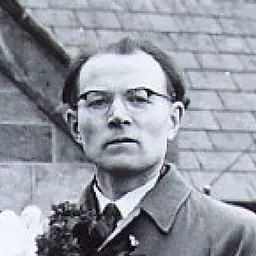




Contemporaries
People whose lives overlapped Nabi Bux Khan Baloch's

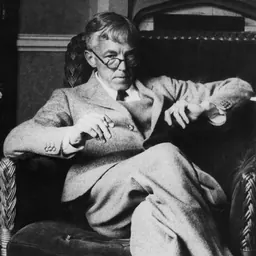
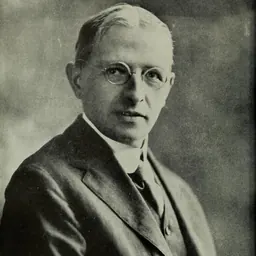
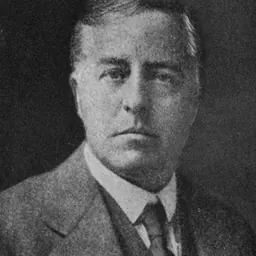

Frequently asked questions
Who was Nabi Bux Khan Baloch?
baloch scholar, historian, sindhologist, linguist and educationist
When was Nabi Bux Khan Baloch born?
Nabi Bux Khan Baloch was born on 16 December 1917 in Sanghar, Sindh.
When did Nabi Bux Khan Baloch die?
Nabi Bux Khan Baloch died on 6 April 2011 in Qasimabad, Pakistan.
What was Nabi Bux Khan Baloch's occupation?
Nabi Bux Khan Baloch was a lexicographer, historian, folklorist, linguist, vice-chancellor and pedagogue.
What nationality was Nabi Bux Khan Baloch?
Nabi Bux Khan Baloch was Pakistani.
Sources & further reading
· Wikipedia: Nabi Bux Khan Baloch
Cite this page
APA: Biography.guide. (2026). Nabi Bux Khan Baloch. https://biography.guide/nabi-bux-khan-baloch/
MLA: "Nabi Bux Khan Baloch." Biography.guide, https://biography.guide/nabi-bux-khan-baloch/.
Chicago: "Nabi Bux Khan Baloch." Biography.guide. https://biography.guide/nabi-bux-khan-baloch/.
Data last updated: 2026-09-20 · Spot an error? Report a correction.
Page generated 2026-09-27 05:10 UTC