
About Hajime Nakamura
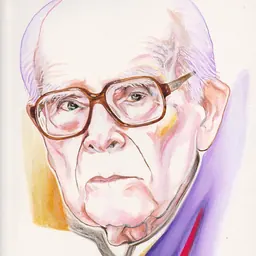
Lived 1912 – 1999 (aged 86). Hajime Nakamura was a Japanese lexicographer, translator, philosopher, writer, orientalist and buddhist scriptures.
was a Japanese Orientalist, Indologist, philosopher and academic of Vedic, Hindu and Buddhist scriptures.
Biography Nakamura was born in Matsue, Shimane Prefecture, Japan. In 1943 he graduated from the Department of Literature at Tokyo Imperial University on a study on "The History of Early Vedanta Philosophy" under the supervision of Prof. Hakuju Ui. In 1943 he succeeded Prof. Ui and was appointed Associate Professor of Tokyo Imperial University.
He was a professor there from 1954 to 1973. After retiring from Tokyo University, he established Toho Gakuin (The Eastern Institute, Inc.) and lectured on philosophy to the general public.
Academic studies Nakamura was an expert on Sanskrit and Pali, and among his many writings are commentaries on Buddhist scriptures. He is most known in Japan as the first to translate the entire Pali Tripitaka into Japanese. This work is still considered the definitive translation to date against which later translations are measured. The footnotes in his Pali translation often refer to other previous translations in German, English, French as well as the ancient Chinese translations of Sanskrit scriptures.
Because of his meticulous approach to translation he had a dominating and lasting influence in the study of Indic philosophy in Japan at a time when it was establishing itself throughout the major Japanese universities. He also indirectly influenced the secular scholastic study of Buddhism throughout Eastern and Southern Asia, especially Taiwan and Korea. Japan, Korea, Taiwan and recently China is the only area in which all major scriptural languages of Buddhism (Chinese, Tibetan, Sanskrit and Pali) are taught and studied by academics of Indic philosophy.
Nakamura was influenced by the Indian philosophy of Buddhism, Chinese, Japanese and Western thought. He made remarks on the problem of bioethics.
Nakamura published more than 170 monographs, both in Japanese and in Western languages, and over a thousand articles.
Awards An Imperial Award of the Japan Academy for "The History of Early Vedanta Philosophy", a slightly revised version of his doctoral thesis The Order of Culture in 1977 (Japan) A nomination to the Japan Academy in 1982. Honorary degree of Vidya-Vacaspati by President of India Dr Sarvepalli Radhakrishnan.
Publications
Don’t just read it —
keep it.
Full-length biographies made to live with: read them, listen on the way to work, watch them tonight.
- E-book
- Audio
- Video
Instant download · yours to keep · every purchase keeps this site free
Important facts
People in Hajime Nakamura's life
Named in this biography and alive at the same time

Related people
Same field, nearest in time





Contemporaries
People whose lives overlapped Hajime Nakamura's






Frequently asked questions
Who was Hajime Nakamura?
Japanese philosopher (1912-1999)
When was Hajime Nakamura born?
Hajime Nakamura was born on 28 November 1912 in Matsue.
When did Hajime Nakamura die?
Hajime Nakamura died on 10 October 1999.
What was Hajime Nakamura's occupation?
Hajime Nakamura was a lexicographer, translator, philosopher, writer, orientalist and buddhist scriptures.
What nationality was Hajime Nakamura?
Hajime Nakamura was Japanese.
Sources & further reading
Cite this page
APA: Biography.guide. (2026). Hajime Nakamura. https://biography.guide/hajime-nakamura/
MLA: "Hajime Nakamura." Biography.guide, https://biography.guide/hajime-nakamura/.
Chicago: "Hajime Nakamura." Biography.guide. https://biography.guide/hajime-nakamura/.
Data last updated: 2026-09-20 · Spot an error? Report a correction.
Page generated 2026-09-27 05:28 UTC