
Mykolas Sleževičius
Lithuanian lawyer, political figure, and journalist
About Mykolas Sleževičius
Lived 1882 – 1939 (aged 57). Mykolas Sleževičius was a Lithuanian diplomat, journalist, lawyer, politician and jurist.
Mykolas Sleževičius (21 February 1882 – 11 November 1939) was a Lithuanian lawyer, political and cultural figure, and journalist. One of the most influential figures in inter-war Lithuania, he served as the prime minister of Lithuania on three occasions. Taking the helm of the government at a difficult time in 1918 and again in 1919, Sleževičius has been credited with preparing Lithuania for the fights to come and for laying the foundations of the fledgling state.
Sleževičius was elected to the Lithuanian parliament, initially the Constituent Assembly, later the Seimas, on four occasions. In 1926, as a representative of the Lithuanian Popular Peasants' Union, Sleževičius became the prime minister for a third time. His government introduced important changes aimed at normalizing the situation in Lithuania, but the reforms faced resistance from the Catholic clergy, military officers, and the parliamentary opposition. The resistance culminated in a military coup d'état in December 1926, which brought to power the authoritarian rule of Antanas Smetona. Sleževičius continued participating in the activities of his party but never again regained his previous influence.
Early life Mykolas Sleževičius was born on 21 February 1882 in Drembliai village in Kovno Governorate of the Russian Empire (now part of Raseiniai district municipality, Lithuania). He was the oldest of two brothers, with Kazimieras Sleževičius, who would grow up to become a geophysicist, born in 1890. That same year, their father, Feliksas Sleževičius died.
Despite the early death of his father, and with the support from his aunt and uncle, Mykolas Sleževičius left for studies in Jelgava (then known as Mitau), graduating from the Jelgava Gymnasium in 1901. After failing to get accepted to the Riga Polytechnicum (now Riga Technical University), he started studying law at the Odessa University in 1902.
Early political activities
While in Odessa, Sleževičius became politically involved, with Juozas Gabrys taking credit for converting him to the Lithuanian nationalist cause. He was also involved in a number of cultural and religious activities, organizing courses, concerts, and plays, and arranging for religious mass in the Lithuanian language. Sleževičius took part in the Russian Revolution of 1905, maintaining public order together with other volunteers. That same year, he represented Odessa Lithuanians in the Great Seimas of Vilnius and started contributing to the newspaper Lietuvos ūkininkas.
After receiving a law degree in 1907, Sleževičius returned to Lithuania and joined the Lithuanian Democratic Party (LDP). For the following five years, he practiced the legal profession, participated in cultural activities (particularly in theater performances of the Rūta Society), and served as the chief editor of Lietuvos ūkininkas (1907–12), and another newspaper Lietuvos žinios (1910–12). When the German army occupied Lithuania in 1915, Sleževičius left for Russia.
In 1917, Sleževičius, together with Kazys Grinius, joined the presidium of the newly established Supreme Council of Lithuania in Russia, based in Voronezh. Buoyed by the Act of Independence of Lithuania, the Council encouraged ideas of Lithuanian sovereignty, issued passports, and assisted Lithuanians in returning to their homeland. For his activities, Sleževičius was briefly imprisoned by the Bolsheviks in 1918. He was released after a month in prison and fled to Moscow, eventually returning to Lithuania on 19 December 1918. Stasys Šilingas, who was one of only two remaining members of the Council of Lithuania, declared his assumption of dictatorial powers on 22 December 1918, but failed to win support of the military officers, who demanded his resignation just a day later and offered the dictatorial powers to Sleževičius. While refusing to assume dictatorship, Sleževičius agreed to take over as the prime minister, on the condition that his government be granted full legislative powers. The council agreed and officially dissolved the cabinet of Voldemeras on 26 December 1918, after the resignation of its ministers, appointing Sleževičius in his stead.
Mykolas Sleževičius (seated, in the middle), the head of the Fourth Cabinet.Just two weeks later, Sleževičius was asked to lead the government again, which he accepted only on the condition that the Council of Lithuania elected a president to replace it as the collegial head of state. The Council agreed, electing Smetona as the first President of Lithuania, prompting Prime Minister Pranas Dovydaitis to resign. The cabinet also laid the foundations for the Lithuanian state institutions, in the areas of government, finance, law, and municipalities. Sleževičius' government also prepared the first draft of the land reform, which acted as a key instrument of national defense by promising land in return for military service, aiding the recruitment of personnel to the armed forces.
After the resignation of right-wing members of the government and political maneuvering from Voldemaras and Martynas Yčas, the government collapsed and Sleževičius resigned on 7 October 1919. Sleževičius declined to take part in the subsequent government headed by Ernestas Galvanauskas.
In the elections of 1922, Sleževičius was elected to the First Seimas, but LSLDP ended up with only 1% of the vote and 5 seats. On 24 November 1922, the party merged with the Peasant Union to form the Lithuanian Popular Peasants' Union (LVLS), with Sleževičius presiding over the political group in the Seimas. The First Seimas was short-lived and LVLS was successful in the elections of 1923, winning 17.9% of the vote and 16 seats, the largest single party in the Second Seimas.
The elections of 1926 proved to be even more successful for LVLS, with the party winning 22.2% of the vote and 22 seats in the Third Seimas. Sleževičius was once again reelected to the parliament and was invited by the newly elected President Kazys Grinius to form the 13th cabinet. On the evening of 17 December 1926, during the 60th birthday celebrations for President Grinius, the military executed a coup d'état, taking over central military and government offices and arresting officials. Colonel Povilas Plechavičius invited Smetona, a Nationalist who had been aware of the coup beforehand, to take over as the president. Sleževičius resigned as the prime minister and Grinius was forced to appoint Voldemaras, another Nationalist figure, as his replacement. Grinius soon resigned and the Seimas, based on the votes of the Christian Democrats, elected Smetona as the new president. While initially maintaining the façade of constitutionality, Smetona dismissed the Third Seimas in April 1927, not calling for fresh elections for more than 9 years.
Under Smetona's rule
The coup effectively ended Sleževičius' political career. Already ill during the events, Sleževičius left to seek treatment abroad and did not return to work in the Seimas before its dissolution. On 3 January 1927, his resignation from the Central Committee of LVLS was accepted. Kazys Škirpa (LVLS) commented that the "violence of 17 December suddenly parted M. Sleževičius from any kind of political activity, as if he had been euthanized as a political persona".
The activities, or the lack of activities, of Sleževičius and Grinius during the coup would come under intense criticism during the following years of authoritarian rule. Only in January 1929 did Sleževičius return to the activities of LVLS, making a speech in front of the party assembly defending his actions during the coup and placing the blame for the coup on the Christian Democrats. Sleževičius argued that resigning was the only way to avoid significant bloodshed and that he had not believed that the Christian Democrats would open the doors for authoritarian rule.
Sleževičius was an avid theater lover. Already, in Odessa, he had established a cultural society Rūta, which was one of the centers of Lithuanian cultural life in the city. After returning to Lithuania, Sleževičius took part in establishing a cultural society of the same name in Vilnius, acting as its secretary. The society was active between 1908 and 1918 and operated a library, organized lectures and concerts, and staged over 50 plays. Sleževičius directed several of them, with his staging of Juliusz Słowacki's "Mindaugas" (1908) and Vincas Nagornockis' "Živilė" (1909) particularly well received.
Sleževičius edited several newspapers (Bendrija, Lietuvos ūkininkas, and Lietuvos žinios) and contributed to others (Varpas). He also translated a number of dramas into the Lithuanian language and initiated the publishing of the Lithuanian Encyclopedia. Mykolas Sleževičius' brother Kazys Sleževičius was a prominent geophysicist in Lithuania, Head of the Department of Geophysics and Meteorology at the Lithuanian University (now Vytautas Magnus University), later at the Vilnius University.
Sleževičius died on 11 November 1939 in Kaunas. He was buried in the Petrašiūnai Cemetery.
Don’t just read it —
keep it.
Full-length biographies made to live with: read them, listen on the way to work, watch them tonight.
- E-book
- Audio
- Video
Instant download · yours to keep · every purchase keeps this site free
Important facts
People in Mykolas Sleževičius's life
Named in this biography and alive at the same time

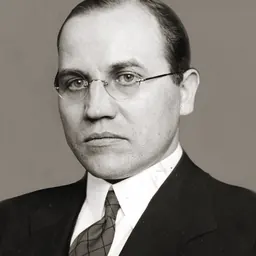
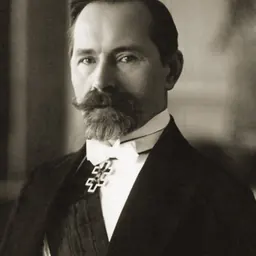
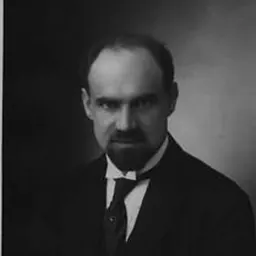
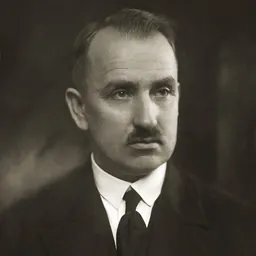
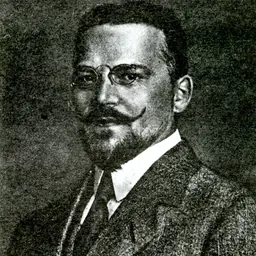


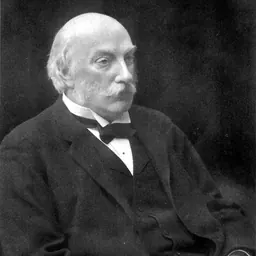
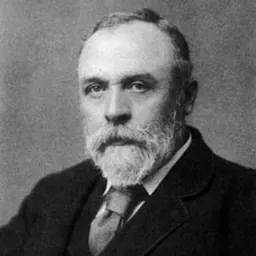
Related people
Same field, nearest in time

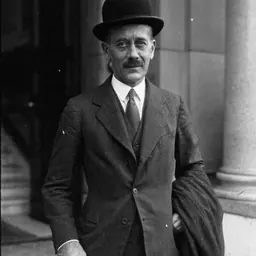
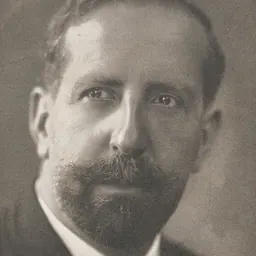
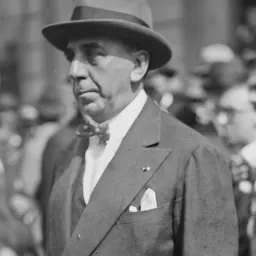
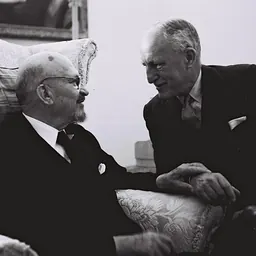
Contemporaries
People whose lives overlapped Mykolas Sleževičius's




Frequently asked questions
Who was Mykolas Sleževičius?
Lithuanian lawyer, political figure, and journalist (1882-1939)
When was Mykolas Sleževičius born?
Mykolas Sleževičius was born on 21 February 1882 in Kovno Governorate, Russian Empire.
When did Mykolas Sleževičius die?
Mykolas Sleževičius died on 11 November 1939 in Kaunas.
What was Mykolas Sleževičius's occupation?
Mykolas Sleževičius was a diplomat, journalist, lawyer, politician and jurist.
What nationality was Mykolas Sleževičius?
Mykolas Sleževičius was Lithuanian.
Sources & further reading
· Wikipedia: Mykolas Sleževičius
· DBpedia: Mykolas Sleževičius
Cite this page
APA: Biography.guide. (2026). Mykolas Sleževičius. https://biography.guide/mykolas-slezevicius/
MLA: "Mykolas Sleževičius." Biography.guide, https://biography.guide/mykolas-slezevicius/.
Chicago: "Mykolas Sleževičius." Biography.guide. https://biography.guide/mykolas-slezevicius/.
Data last updated: 2026-09-20 · Spot an error? Report a correction.
Page generated 2026-09-27 05:26 UTC