
About Mykolas Kalmantas
Lived 1895 – 1976 (aged 80). Mykolas Kalmantas was a Lithuanian military officer.
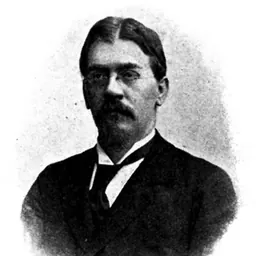
Mykolas Kalmantas (born Mykolas Kalmantavičius; 18 October 1895 – 6 June 1976) was a Lithuanian military officer. Apart from being one of the founders of the Aeroclub of Lithuania, Kalmantas had a significant role in commanding a contingent of Lithuanian soldiers during the Klaipėda Revolt of 1923. His son, Vytautas Mykolas Kalmantas, was a famous fencer and athlete.
Biography Early life Mykolas Kalmantas was born on 18 October 1895 in the village of , then belonging to the Vilna Governorate of the Russian Empire, to Matas Kalmantavičius and Anelė Kalmantavičienė née Kuodytė. In 1912 Kalmantas graduated from the St. Petersburg Secondary Technical School.
World War I In 1915 Kalmantas attended the St. Petersburg gymnasium, later studying at the Moscow Institute of Archeology. Kalmantas's studies were interrupted by the outbreak of the First World War as he was conscripted into the Imperial Russian Army in 1915. In 1916 he graduated from the Petergof 3rd Praporshchik War School,
Independence Wars On 3 July 1919 Kalmantas was mobilized into the Lithuanian Army and assigned to the Ukmergė Infantry Battalion's 2nd Company as a junior officer. Later he was appointed the commander of the company's machine-gun squad. In November he was promoted to senior lieutenant. After the battalion was transformed into the 8th Infantry Regiment on 10 December, Kalmantas became the regiment's chief of the regimental communications team just five days later on 15 December. From 1919 to 1920 Kalmantas along with the battalion fought against various Bolshevik forces in the region of Zarasai, and against Polish forces near Augustów and Vilnius. On 20 August 1920 he was made chief of the 6th, and later the Training, Company. As was the customary reward for people serving in the army during the Lithuanian Wars of Independence, Kalmantas received land in the village of Beržai near Jonava. Jonas Budrys described that: "Later, with two other companies, he was summoned near the city of Klaipėda and after Captain Strielnikas captured the Althof manor, he [Kalmantas] received the task of occupying the bar and taking the city. They pushed the entrenched enemy with a powerful blow and forced them to retreat. The operation was complicated by the fact that the left wing – the second company – stopped as its company commander was killed near the Rumpischen estate and began to retreat in confusion. Nevertheless, at the risk of death every minute, setting an example to his subjects, he went forward and captured a part of the city as far as the river Danga, capturing about 60 well-armed Frenchmen with officers and 10 machine guns." From 1923 to 1925 Kalmantas was commander of an unknown battalion belonging to the 8th Infantry Regiment. In July 1923, Kalmantas was awarded the Order of the Cross of Vytis, 1st degree, for "bravery and cleverness during the operation of the liberation of Klaipėda". In 1929 Kalmantas was promoted to lieutenant colonel. From 1925 to 1935 Kalmantas was the Commander-in-Chief of the Lithuanian Riflemen's Union, a paramilitary organization. A reform in 1935 made it so the Union was directly subordinate to the Chief of Defence of Lithuania, integrating it closer with the Lithuanian defensive structure. Such reforms caused disagreements between Kalmantas and the military leadership, and so Kalmantas officially resigned in the same year.
After his resignation, Kalmantas was elected a member of the council of elders of the Kaunas Garrison Officers' Club, as well as the President Antanas Smetona's secretary. In 1935 Kalmantas was chairman of the Lithuanian-Finnish Rapprochement Society. On 20 July 1935 he was transferred to the army headquarters and appointed as a special affairs officer under the army commander general Stasys Raštikis. In November 1935 Kalmantas was promoted to colonel. On 3 November 1938 he transferred to the armaments board as chief of the General Department.
Soviet occupation and World War II When the Soviet Union occupied Lithuania, Kalmantas was discharged to the infantry officers reserve on 25 June 1940. On 17 December, NKVD officer Aleksandras Gudaitis-Guzevičius gave the order to follow Kalmantas. On 14 May 1941 Kalmantas was arrested and interrogated. The interrogators especially questioned Kalmantas on his work with the Lithuanian-Finnish Rapprochement Society. However, the interrogation did not finish due to the Operation Barbarossa. Furthermore, the June Uprising which occurred on 23 June 1941, freed Kalmantas from prison, after which he joined rebels in Kaunas. On the same day, Kalmantas was appointed as the deputy head of the armaments board of the Kaunas war command, which was just formed by order of the Provisional Government of Lithuania. On 23–24 July, pro-Nazi voldemarininkai, following the wishes of Nazi Germany, unsuccessfully tried to overthrow it.
Kalmantas at this point was made deputy military commandant of Kaunas. After some time Kalmantas was allowed to resign. For some time he served in the Lithuanian Auxiliary Police's communications headquarters. From 1943 to 1944 Kalmantas was head of Kaunas city and county pension department. After the Germans began to retreat from the Soviet Union, Kalmantas decided to flee Lithuania. In summer of 1944 he moved to Germany, however on 29 August he returned and was appointed the head of the press and education department of the headquarters of the Fatherland Defense Force. After the Battle of Seda, having lost contact with his family, Kalmantas moved to the Allied-occupied zones in Western Germany.
Emigration and later years In 1948 Kalmantas emigrated to the United States and settled in Chicago, a city with a significant population of Lithuanian émigrés. He was a member of the group that revived the Lithuanian Riflemen's Union in 1954. Although the KGB searched for Kalmantas and his wife even after the war, after receiving information that Kalmantas was already in Chicago, the search was canceled in 1964. Although Soviet authorities claimed that they were in possession of his medals and a parade sword on which his Klaipėda Revolt codename Bajoras was inscribed, all of the items were lost. In his old age, Kalmantas lived in a nursing home, where he was provided with the help of Lithuanian doctors.
Kalmantas died on 28 November 1976. He was buried in the Lithuanian National Cemetery in Chicago.
Awards Kalmantas received the following awards:
Order of the Cross of Vytis, 1st degree (1923) Silver Medal of the Liberation of Klaipėda (1925) Finnish National Guard Iron Cross (1926) Lithuanian Independence Medal (1928) Order of the Grand Duke Gediminas, 3rd degree (1928) Latvian War of Independence 10 Year Anniversary Commemorative Medal (1929) (1929) Riflemen's Star (1931) Order of the Lily (1931) Order of the Wolf of Gediminas (1932) Firefighters' "To Help a Close One" Order (1934) Estonian Firefighters' Cross, 1st gold order (1935) Riflemen's Star (1939)
Don’t just read it —
keep it.
Full-length biographies made to live with: read them, listen on the way to work, watch them tonight.
- E-book
- Audio
- Video
Instant download · yours to keep · every purchase keeps this site free
Important facts
People in Mykolas Kalmantas's life
Named in this biography and alive at the same time


Related people
Same field, nearest in time


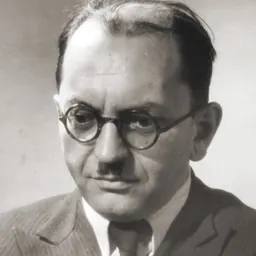
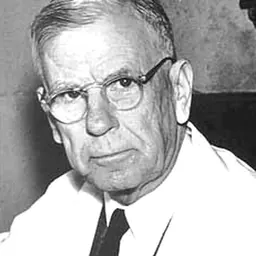
Contemporaries
People whose lives overlapped Mykolas Kalmantas's
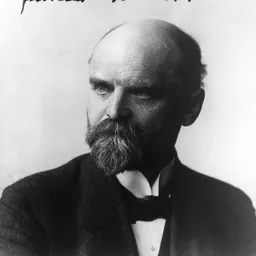
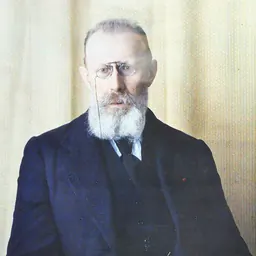

Frequently asked questions
Who was Mykolas Kalmantas?
Lithuanian military officer
When was Mykolas Kalmantas born?
Mykolas Kalmantas was born on 5 October 1895 in Mėčionys.
When did Mykolas Kalmantas die?
Mykolas Kalmantas died on 6 June 1976 in Chicago.
What was Mykolas Kalmantas's occupation?
Mykolas Kalmantas was a military officer.
What nationality was Mykolas Kalmantas?
Mykolas Kalmantas was Lithuanian.
Sources & further reading
· Wikipedia: Mykolas Kalmantas
Cite this page
APA: Biography.guide. (2026). Mykolas Kalmantas. https://biography.guide/mykolas-kalmantas/
MLA: "Mykolas Kalmantas." Biography.guide, https://biography.guide/mykolas-kalmantas/.
Chicago: "Mykolas Kalmantas." Biography.guide. https://biography.guide/mykolas-kalmantas/.
Data last updated: 2026-09-20 · Spot an error? Report a correction.
Page generated 2026-09-27 05:32 UTC