
About Mustapha Harun
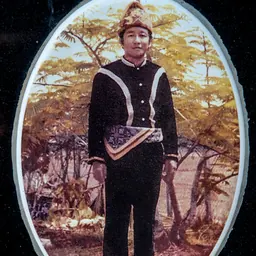
Lived 1918 – 1995 (aged 76). Mustapha Harun was a Malaysian politician.
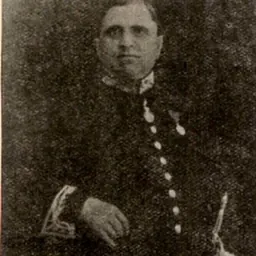
Datu Mustapha bin Datu Harun (31 July 1918 – 2 January 1995 ) was a Malaysian politician who served as the 3rd Chief Minister of Sabah from May 1967 to November 1975 and the 1st Yang Di-Pertua Negara from September 1963 to September 1965 and President of the United Sabah National Organisation (USNO). He was an important figure in Sabah and sometimes known as "Father of Independence" (Bapa Kemerdekaan) of Sabah due to his direct involvement in negotiations leading to the formation of Malaysia from 1961 to 1963. He also play an important role in Sabah early development in terms of education, economy, spread of Islam and the formation of Yayasan Sabah (Sabah Foundation).
Personal life Datu Mustapha or Datu Badiozaman (his original name) was born on 31 July 1918 at Kampung Limau-Limauan, Kudat. During his youth, he often got sick which encouraged his name to be changed from Datu Badiozaman to Datu Mustapha based on local belief that the name change can help him overcome his frequent sickness. He also had a nickname, Jaman. His father was Datu Harun bin Datu Nasaruddin and his mother was Norani Hj. Abdul Rahim. He was forth child of nine siblings-six girls and three boys: Dayang Lana, Dayang Bidari, Dayang Siti Sarah (Dayang Pindau), Datu Mustapha, Dayang Harum, Datu Muhammad, Dayang Tahiran, Datu Aliuddin and Dayang Hadjah.
World War II During World War II, he was wanted by the Japanese forces because of the rebellions he led against them, mainly in Kudat during the Japanese occupation. But when they could not find him, they caught his younger brother and eventually killed him because his brother would not reveal where he was hiding. Albert Kwok invited Mustapha to join in the Jesselton Revolt but he advised Kwok to wait and prepare, saying the time wasn't right for insurrection. However, Kwok was forced to launch the revolt ahead of schedule because the Chinese were going to be subjected to conscription by the Japanese. Kwok was able to gather the support of the islanders around the west coast of North Borneo compromising of Suluks, Bajaus and Binadans (Bajau Bannaran) under Panglima Ali and other Village Headman. The revolt was successful at first but the guerilla forces was eventually overwhelmed due to lack of support from the Allied Forces and other locals which forced Kwok and his men to surrender and executed. The japanese then engaged in large scale massacres of indigenous civilians, including women and children while others have to watch the man of the communities executed such as the case of the islanders community like the Suluk.
Political career Mustapha founded the United Sabah National Organisation (USNO). Mustapha ruled USNO with an iron fist, together with two other ineffective partners in Sabah Alliance. It can be described that "Mustapha was USNO and USNO was Mustapha."
Appointment as Yang di-Pertua Negeri of Sabah Mustapha was appointed the first Yang di-Pertua Negeri (head of state) for Sabah while Donald Stephens became the first chief minister of Sabah upon the formation of Malaysia, after a formal endorsement by the Sabah state legislative assembly on instruction from the Malaysian federal government. Aside from his involvement in politics and religion (Islam), he also made contributions in the education of Sabah. He mooted the idea of forming Sabah Foundation (Yayasan Sabah) and was responsible in setting up the first university, Universiti Kebangsaan Malaysia (UKM) Sabah Campus, and also the setting up of ITM (Institut Teknologi Mara).
He was also the Deputy President of PERKIM, when the late Tunku was the President. He was also the head of United Sabah Islamic Association (USIA) and a member of RISEAP.
In 1975, USNO secretary-general Harris Salleh left the party to form BERJAYA. This party was backed up by the federal government through the oil lobby. In the 1976 state election, BERJAYA won and Mustapha was finally ousted from power for good.
Formation of Sabah chapter of UMNO Since his ouster in 1976, Tun Mustapha had been trying to initiate a merger of his party USNO with peninsular-based United Malays National Organisation (UMNO) in a bid to return to the corridors of power in Sabah. However, the UMNO supreme council was hesitant on a merger because their party did not accept non-Malay/non-Muslim members. Mustapha remained active in politics, leading USNO and contesting in four subsequent state elections (1981, 1985, 1986, and 1990). Although they never won again, they still managed to win several seats in the state assembly. They also remained a partner of BN at the federal government level (as opposed to the state level). After the 1990 state election, he teamed up with Harris Salleh again, after BERJAYA themselves were ousted by Parti Bersatu Sabah (PBS). This resulted in a merger of USNO and BERJAYA to create the Sabah chapter of UMNO. Mustapha became its first chief of UMNO Sabah.
Controversies Arrests of Roman Catholic priests, Islamisation, anti-Christian persecution and Malayisation of Sabah
Mustapha is remembered negatively by the Catholics (what more other Christians in general) of Sabah for imposing to the letter the immigration laws by denying foreign priests as well as missionary pastors who have not obtained permanent residency on the extension of their visas. All the priests who objected to their expulsion for doing religious proselytization among the Catholics and also other Christians were eventually arrested by using his powers as Chairman of the State Security Operation Committee in his capacity as the Chief Minister of Sabah.
Under his orders, on 2 December 1972, the police made a raid at the missions at Bundu Tuhan (Ranau), Papar, Tambunan and Kuala Penyu. The raids at Tambunan and Papar were successful, timed early in the morning with the church bell ropes cut to prevent it from being used to warn the people. The priests were at Kapayan long before the parishioners were aware of it. The raid at Kuala Penyu was initially a fiasco with a reception committee of 600 Catholics. To avoid clashes, by 11 am reinforcements were flown in to arrest one priest. On 15 December, more missionary priests were arrested at Keningau, Tenom and Limbahau (Papar). The rest of the priests who only had temporary residence permits, on hearing this has no choice but to say goodbye to their parishioners and went home or were given new assignments to nearby countries. As reported in local news such as Daily Express (p. 2, 11 November 2009), the Malaysian home ministry informed in parliament that a biography of Mustapha's political opponent who died in the Double Six Crash plane crash, Datuk Peter Mojuntin, is banned. The reason was that the book "allegedly" recorded that Mojuntin exposed Mustapha's attempt to stop Catholicism in Sabah by deporting and arresting foreign missionary priests who were serving their local parishes in the state.
Peter's house was also surrounded by the police after all the priests were arrested because only he dared to voice his opposition to the prosecution of the priests. He was not arrested because of his strong political support from the Kadazan people of Penampang.
Whilst the 20-point agreement had provided that "there should be no any state religion in North Borneo", Mustapha's party of USNO including himself as well as the religious organization which he established is very active in propagating Islam and has attempted to make Islam as the official religion of the state. He actively sponsored the creation of United Sabah Islamic Association (USIA) on 14 August 1969 which was modelled from similar agencies that already existed in West Malaysia. He also actively campaigned to persuade non-Muslims to convert to Islam due to what he perceived that the unity can only be achieved through a common religion and language, where he also enforced the official use of Malay (Bahasa Malaysia) as the language of Sabah by limiting the importance of English language as well as ethnic vernacular languages and banning radio broadcasts in other vernacular languages as well as English. By February 1974, around 75,000 non-Muslim Sabahans had been converted to Islam which rapidly increase to 95,000 in 1975.
Aiding the Moro rebels in the southern Philippines
During Mustapha term as a Chief Minister of Sabah, he had a vision to make Islam as the majority religion in the state. In order to achieve his aims, he was actively harbouring Muslim refugees from the Philippines especially those of similar ethnic background to himself. Mustapha was also believed to have aiding the Moro in their struggle for independence by providing arms and training facilities in Malaysia. His action were tolerated by the Malaysian government because he was consistent in delivering Muslim votes as well as for his continuous backing of the Malaysian government. He was later successful in making Islam the main religion of Sabah. The state government renamed the Sabah Foundation Building to Tun Mustapha Tower, as a token of appreciation for his positive contributions to the state. Tun Mustapha Marine Park, a marine park in Kudat, Sabah was named after him. A MARA institution boarding school, MRSM Tun Mustapha is named after him in Tawau, Sabah.
Honours
Honours of Malaysia
Foreign Honours
Don’t just read it —
keep it.
Full-length biographies made to live with: read them, listen on the way to work, watch them tonight.
- E-book
- Audio
- Video
Instant download · yours to keep · every purchase keeps this site free
Important facts
People in Mustapha Harun's life
Named in this biography and alive at the same time






Related people
Same field, nearest in time



Contemporaries
People whose lives overlapped Mustapha Harun's


Frequently asked questions
Who was Mustapha Harun?
politician and independent leader from Sabah, Malaysia
When was Mustapha Harun born?
Mustapha Harun was born on 31 July 1918 in Kudat.
When did Mustapha Harun die?
Mustapha Harun died on 2 January 1995 in Kota Kinabalu.
What was Mustapha Harun's occupation?
Mustapha Harun was a politician.
What nationality was Mustapha Harun?
Mustapha Harun was Malaysian.
Sources & further reading
· DBpedia: Datu Mustapha Datu Harun
Cite this page
APA: Biography.guide. (2026). Mustapha Harun. https://biography.guide/mustapha-harun/
MLA: "Mustapha Harun." Biography.guide, https://biography.guide/mustapha-harun/.
Chicago: "Mustapha Harun." Biography.guide. https://biography.guide/mustapha-harun/.
Data last updated: 2026-09-20 · Spot an error? Report a correction.
Page generated 2026-09-27 05:29 UTC