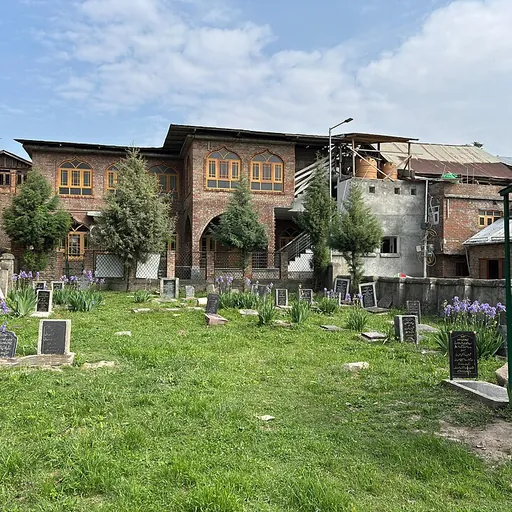
About Mulla Hakim Muhammad Azim
Lived 1804 – 1853 (aged 48). Mulla Hakim Muhammad Azim was a poet.
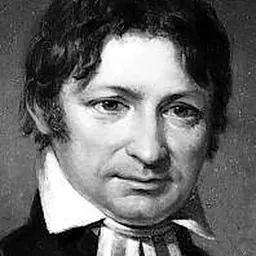
Mulla Hakim Muhammad Azim-al Din ; 1220–1269 AH / 1805–1852/63 CE) was a Kashmiri polymath, physician, philosopher, astronomer, a polyglot who wrote both in Kashmiri and Persian, and a courtier, who is widely regarded amongst the foremost Kashmiri Marsiya writers. One of the leading personalities of the Kashmiri Shia community and Kashmir itself in the nineteenth century, He served as the Chief Physician at the court of Maharaja Gulab Singh (r. 1846–1857), the first Dogra ruler of Kashmir. Before this, he held positions at the court of Maharaja Ranjit Singh in Lahore and under Shaykh Ghulam-Mohyi-al Din, the Sikh governor of Kashmir. Azim's forebear, Mulla Said-ud-Din Hamdani, served as the first custodian of the Khanqah-i Maulla, the principal hospice of the Hamdani order in Srinagar.
Career
Chief Royal Physician and Courtier Mirza Saif-al Din the author of Akhbarat writes, that Azim was one of the few jagirdar of Kashmir whose name was registered in a special diwan at Lahore, and whose land holdings were left undisturbed by Gulab Singh on assuming the control of Kashmir in 1847. a leading Shia scholar, respected by the Chak Sultans. After the khanqah was burnt down in Shia-Sunni riot, most of the Shia population migrated from this neighbourhood. whose close association with the British colonial authority had resulted in a Shia revival in Punjab.
One of Azim’s most famous marsiya remains Baradari (Brotherhood). Verses from this marsiya are invariably recited in the Ashura procession, especially in the procession accompanying the Zuljinah. These include Lady Zainab’s lament on the martyrdom of Imam Husayn:
And then Zainab wept,
Oh, leader of my tribe,
May I be your sacrifice;
None remains here to mourn you,
Shall I not call out to Abbas?
“Come, wash your brother; do not let the waterskin fall, yet”.
When the wayfarers see you in this state on the road,
Will they not be moved to grief?
Will they not ask,
"Who is this dead traveler—poor and alone?
Unaware of the ways of life?
Did he not have a son?
To bury him?
To mourn him in his death." The main marsiya written by Azim include: +Title of the MarisyaAftabDarakht-i ToubaKhaliq al KalamMarQafasSarafiZangirBaradariHawaKhawabMusaRauSherLaskharChahKassaKitabNamakSal o MahShirKheemaDarKhakhKohPeeriSarTasbihSafar
Anecdotes It is related that while he was in Lahore, the Azim developed a likening for astrology and a renowned astrologer of the city offered to teach him against payment of money for each class. After attending a couple of lessons, Azim ceased his classes. One day he came across the astrologer in the streets of Lahore, who enquired from him as to why he had ceased attending the classes. Azim replied that after studying a few lessons he simply did not feel the need for attending any more classes. Incensed by this reply, the astrologer asked him to solve certain astrological problems, and immediately Azim kneeled and drew the required sketch there itself on the dusty street. Displeased and angry the astrologer remarked that if he had known that the Azim was blessed with this intelligent, he would not even have taught him those few lessons.
GMD Sufi, in his book, Kashir, writes about Hakim Azim:Hakim Muhammad Jawad’s son, Hakim Mohammad Azim, rose to the position of the chief physician of the Maharaja Ranjit Singh at Lahore. The hakim was a great scholar of Arabic and a poet. Like his father, there is a curious tradition about him also. It is said that, while going on a boat, he saw a man bathing at a ghat on the river, and perceived that he was suffering from a certain disease of which the man himself seemed quite ignorant. The hakim stopped his boat, and warned the man that he would have serious trouble if he did not immediately rub fresh cow-dung on his body, and then sit in the sun till the cow-dung dried up completely, and fell of his body. The man obeyed the hakim, and when the dried cow dung fell of his body, it was found full of lice. While travelling from Jammu to Srinagar, the Azim's entourage once camped at Sular, Dooru-Shahabad a halting place on the route. Here Azim met a Sunni astrologer, Ayatollah (Aya Baba). Impressed by the astrologers’ knowledge, Azim bought him home, to reside and teach his son Hakim Abdul Rahim, saying,It is a disgrace that such a knowledgeable man should be lost in the dusts of obscurity. The incident highlights Azim's ecumenical nature, patronising a Sunni man of knowledge at a time when the two communities were still torn apart by sectarian differences, misunderstandings and conflict.
Death Azim died at the age of forty-eight on Ramzan 19, 1269 AH (July 26, 1853). The date is significant in the Shia liturgical calendar as it marks the day when Imam Ali was assassinated. The funeral prayer was offered by Akhund Mulla Javad Ansari who was with Azim on his deathbed. Historians Mirza Saif and Hakim Safdar both note that Azim's death was unexpected, and deeply shocked Gulab Singh, though Azim himself was aware of his approaching death. According to Saif, upon learning of Azim's demise, Gulab Singh sent Shaykh Illahi Baksh, a senior Muslim court officer to Azim's home to offer his condolences. On his return to Srinagar, Gulab Singh honoured Azim's son, Hakim Abdul Rahim, in an open court session, and presented him with two Pashmina shawls. Additionally, Rahim was appointed to succeed his father as Chief Physician and Darogha-i Abi Resham. Azim was laid to rest in his family's ancestral graveyard in Hassanabad, a predominantly Shia neighbourhood of Srinagar, in vicinity of a mosque built by his father.
Don’t just read it —
keep it.
Full-length biographies made to live with: read them, listen on the way to work, watch them tonight.
- E-book
- Audio
- Video
Instant download · yours to keep · every purchase keeps this site free
Important facts
People in Mulla Hakim Muhammad Azim's life
Named in this biography and alive at the same time


Related people
Same field, nearest in time

Contemporaries
People whose lives overlapped Mulla Hakim Muhammad Azim's





Frequently asked questions
Who was Mulla Hakim Muhammad Azim?
Kashmir poet, physician and courtier
When was Mulla Hakim Muhammad Azim born?
Mulla Hakim Muhammad Azim was born on 1 August 1804.
When did Mulla Hakim Muhammad Azim die?
Mulla Hakim Muhammad Azim died on 23 June 1853.
What was Mulla Hakim Muhammad Azim's occupation?
Mulla Hakim Muhammad Azim was a poet.
Sources & further reading
· Wikipedia: Mulla Hakim Muhammad Azim
· DBpedia: Mulla Hakim Muhammad Azim
Cite this page
APA: Biography.guide. (2026). Mulla Hakim Muhammad Azim. https://biography.guide/mulla-hakim-muhammad-azim/
MLA: "Mulla Hakim Muhammad Azim." Biography.guide, https://biography.guide/mulla-hakim-muhammad-azim/.
Chicago: "Mulla Hakim Muhammad Azim." Biography.guide. https://biography.guide/mulla-hakim-muhammad-azim/.
Data last updated: 2026-09-24 · Spot an error? Report a correction.
Portrait: Wikimedia Commons · author & licence
Page generated 2026-09-27 05:08 UTC