
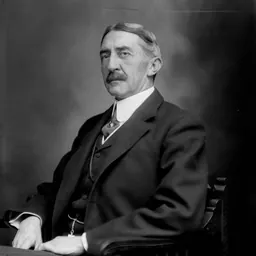
Muhammad Asad
Austrian-born Pakistani writer and social activist
About Muhammad Asad
Lived 1900 – 1992 (aged 91). Muhammad Asad was an Austrian, Pakistani and Indian writer, diplomat, journalist, translator, novelist and linguist.
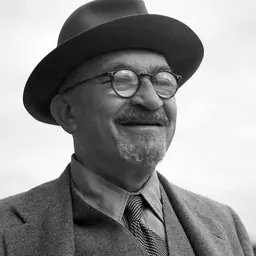
Muhammad Asad (born Leopold Weiss; 2 July 1900 – 20 February 1992) was an Austro-Hungarian Pakistani Muslim convert and polymath, born in modern day Ukraine. He worked as a journalist, traveler, writer, political theorist, and diplomat. By his mid-twenties, he could read and write in English, French, Persian and Arabic. In Mandatory Palestine, Weiss engaged in arguments with Zionist leaders like Chaim Weizmann, voicing his reservations about some aspects of the Zionist Movement.
During his stay in Saudi Arabia, he spent time with Bedouins and enjoyed the close company of the state's founder, Ibn Saud. Later, after seventeen years of scholarly research, he published his magnum opus: The Message of the Qur'an—an English translation and commentary of the Quran. The book, along with the translations of Pickthall and Yusuf Ali, is regarded as one of the most influential translations of the modern era. Other notable of his works include: "Islam at Crossroads" (1934) and "This law of Ours and other essays" (1987) .
In 2008, the entrance square to the UN Office in Vienna was named Muhammad Asad Platz in commemoration of his work as a "religious bridge-builder". however, his father, Akiva Weiss, broke from tradition and became a lawyer. Leopold received a religious education and was proficient in Hebrew from an early age, as well as familiar with Aramaic. He studied the Jewish Bible or Tanakh, the text and commentaries of the Talmud, the Mishna and Gemara, also delving into the intricacies of Biblical exegesis and the Targum.
At the age of fourteen he escaped school and joined the Austrian army under a false name. After a week or so, his father traced him with the help of the police, and he was escorted back to Vienna.
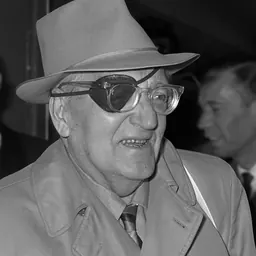
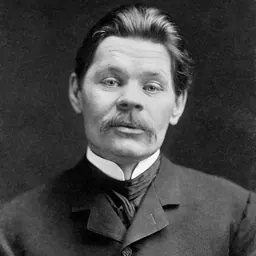
Years in wilderness (1920–1922) After abandoning university in Vienna, Weiss drifted aimlessly around 1920s Germany, working briefly for the expressionist film director Fritz Lang (F. W. Murnau, according to The Road to Mecca). By his own account, after selling a jointly written film script, he splurged the windfall on a wild party at an expensive Berlin restaurant, in the spirit of the times. While working as a telephone operator for an American news agency in Berlin, Weiss obtained a coveted interview with Russian author Maxim Gorky's wife, his first published piece of journalism, after simply ringing up her hotel room.
Stay in the Middle East
In 1922 Weiss moved to the British Mandate of Palestine, staying in Jerusalem at the house of his maternal uncle Dorian Feigenbaum at his invitation. Feigenbaum was a psychoanalyst, a disciple of Freud, and later founded the Psychoanalytic Quarterly.
Foreign correspondent for Frankfurter Zeitung He picked up work as a stringer for the German newspaper Frankfurter Zeitung, one of the most prestigious newspapers of Germany and Europe, selling articles on a freelance basis. His pieces were noteworthy for their understanding of Arab fears and grievances against the Zionist project. He published a small book on the subject in 1924, and this so inspired the confidence of the Frankfurter Zeitung that it commissioned him to travel more widely still, to collect information for a full-scale book. Weiss made the trip, which lasted two years.
Conversion to Islam To gain closer assignments in the Arab world, Weiss developed an ever-deepening engagement with Islam. This led to his religious conversion in 1926 in Berlin and adopting an Arabic name, Muhammad Asad.
Asad spoke of Islam: "Islam appears to me like a perfect work of architecture. All its parts are harmoniously conceived to complement and support each other; nothing is superfluous and nothing lacking; and the result is a structure of absolute balance and solid composure." He stayed there for nearly six years during which he made five pilgrimages. Alongside, he started writing essays for the Swiss newspaper Neue Zürcher Zeitung, and continued to do so till 1934.
Ibn Saud's confidant and Bolshevik allegations After the sudden death of his wife Elsa, Asad stayed on in Mecca where, in a chance encounter in the Grand Mosque's library, he met Prince Faysal. On Faysal's invitation, Asad met King Abdulaziz (founder of modern Saudi Arabia); the meeting led to almost daily audiences with the King, who quickly came to appreciate Asad's knowledge, keen mind and spiritual depth.
In late 1928, an Iraqi named Abdallah Damluji, who had been an adviser to Ibn Saud, submitted a report to the British on "Bolshevik and Soviet penetration" of the Hijaz. In this report, after highlighting Asad's activities in Arabia, Damluji alleged that Asad had connections with Bolsheviks: "What is the real mission which makes him endure the greatest discomforts and the worst conditions of life? On what basis rests the close intimacy between him and Shaykh Yusuf Yasin (secretary to the King and editor of the official newspaper Umm al-Qura)? Is there some connection between von Weiss and the Bolshevik consulate in Jidda?"
Time in Pakistan Muhammad Asad (seated right) and his wife Pola Hamida Asad (seated left) at the residence of Chaudhry Niaz Ali Khan in Jauharabad, Pakistan. Circa 1957
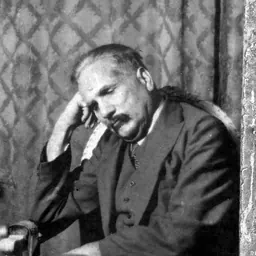
Meeting Iqbal and visiting Kashmir Asad left Arabia and came to British India in 1932 where he met South Asia's premier Muslim poet, philosopher and thinker Muhammad Iqbal. Iqbal had proposed the idea of an independent Muslim state in India, which later became Pakistan. Iqbal persuaded Asad to stay on in British India and help the Muslims of India establish their separate Muslim state. Iqbal introduced Asad to Chaudhry Niaz Ali Khan, a philanthropist and agriculturalist, who, on the advice of Muhammad Iqbal, established the Dar-ul-Islam Trust Institutes in Pathankot, India and Jauharabad, Pakistan. Asad stayed on in British India and worked with both Muhammad Iqbal and Chaudhry Niaz Ali Khan. Allama Iqbal encouraged Asad to translate Sahih Al-Bukhari in English for the first time in history. Asad responded positively and started making the arrangements for his translation. In order to find a place serene enough to stimulate his intellectual and spiritual cerebration, he arrived in Kashmir during the summer of 1934. There, he met Mirwaiz Muhammad Yusuf who became his close friend. While working enthusiastically on his translation, he also set up his own printing press in Srinagar. The first two chapters of his translation were printed in Srinagar. Asad mentions in his book Home-coming of the Heart that he had a special relationship with Kashmir and that he felt very sad when he left it.
Internment as enemy alien (1939–1945)
When the Second World War broke out in 1939, Asad's parents were arrested and, subsequently, murdered by the Nazis. Asad himself was arrested in Lahore in 1939, a day after the war broke out, by the British as an enemy alien. This was despite the fact that Asad had refused German nationality after the annexation of Austria in 1938 and had insisted on retaining his Austrian citizenship. Asad spent three years in prison, while his family consisting of his wife, Munira, and son, Talal, after being released from detention earlier, lived under the protection of Chaudhry Niaz Ali Khan at the latter's vast estate in Jamalpur, 5 km west of Pathankot. Asad was finally released and reunited with his family in Jamalpur when the Second World War ended in 1945. where he made recommendations on the drafting of Pakistan's first Constitution. He was buried in the Muslim cemetery of Granada in the former Moorish province of Andalusia, Spain.
Honors and recognition
A Lviv Islamic Cultural Center named after Muhammad Asad was officially opened in 2015.
Muhammad-Asad-Platz In April 2008, a space in front of the UNO City in the 22nd District of Vienna was named Muhammad-Asad-Platz in honour of Muhammad Asad. The step was taken as part of a two-day program on the European Year of Intercultural Dialogue focusing on Islam and its relationship with Europe. The program commemorated the life and work of Asad, described as a great Austrian visionary, who earned international recognition by building bridges between religions. The honoree's son Talal Asad, the President of the Islamic Community of Austria Anas Schakfeh and Vienna's cultural adviser Andreas Mailath-Pokorny were present at the unveiling of the square. Mailath-Pokorny, while talking to the media said: "There is probably no more appropriate place to honour Muhammad Asad than that in front of the UN-City. Muhammad Asad was a citizen of the world, who was at home, and left his mark, everywhere in the world, especially in the Orient."
Honorary postage stamp On 23 March 2013, Pakistan Post issued a stamp with denomination of Rs. 15 under the "Men of Letters" Series in honour of Allamah Muhammad Asad.
Don’t just read it —
keep it.
Full-length biographies made to live with: read them, listen on the way to work, watch them tonight.
- E-book
- Audio
- Video
Instant download · yours to keep · every purchase keeps this site free
Important facts
People in Muhammad Asad's life
Named in this biography and alive at the same time




Related people
Same field, nearest in time





Contemporaries
People whose lives overlapped Muhammad Asad's




Frequently asked questions
Who was Muhammad Asad?
Austrian-born Pakistani writer and social activist (1900–1992)
When was Muhammad Asad born?
Muhammad Asad was born on 2 July 1900 in Lviv.
When did Muhammad Asad die?
Muhammad Asad died on 23 February 1992 in Andalucia, Mijas, Spain.
What was Muhammad Asad's occupation?
Muhammad Asad was a writer, diplomat, journalist, translator, novelist and linguist.
What nationality was Muhammad Asad?
Muhammad Asad was Austrian, Pakistani and Indian.
Sources & further reading
Cite this page
APA: Biography.guide. (2026). Muhammad Asad. https://biography.guide/muhammad-asad-writer/
MLA: "Muhammad Asad." Biography.guide, https://biography.guide/muhammad-asad-writer/.
Chicago: "Muhammad Asad." Biography.guide. https://biography.guide/muhammad-asad-writer/.
Data last updated: 2026-09-20 · Spot an error? Report a correction.
Page generated 2026-09-27 05:24 UTC