
About Ibn Saud
Lived 1876 – 1953 (aged 77). Ibn Saud was a Saudi statesperson, monarch, politician, military personnel and king.
module =
Abdulaziz bin Abdu Rahman Al Saud (; 15 January 1876 – 9 November 1953), known in the Western world as Ibn Saud (; Ibn Suʿūd), and known with his kunya Abu Turki , was a Najdi statesman and religious leader who became the founder and first King of Saudi Arabia, reigning from 23 September 1932 until his death in 1953. He had ruled parts of the kingdom since 1902, having previously been Emir, Sultan, King of Nejd, and King of Hejaz.
Ibn Saud was the son of Abdul Rahman bin Faisal, Emir of Nejd, and Sara bint Ahmed Al Sudairi. The family were exiled from their residence in the city of Riyadh in 1890. Ibn Saud reconquered Riyadh in 1902, starting three decades of conquests that made him the ruler of nearly all of central and north Arabia. He consolidated his control over Najd in 1921, then conquered the Hejaz in 1925. He extended his dominions into what later became the Kingdom of Saudi Arabia in 1932. Ibn Saud's victory and his support for Islamic revivalists would greatly bolster pan-Islamism across the Islamic world. Concording with Wahhabi beliefs, he ordered the demolition of several shrines, the Al-Baqi Cemetery and the Jannat al-Mu'alla. As King, he presided over the discovery of petroleum in Saudi Arabia in 1938 and the beginning of large-scale oil production after World War II. He fathered many children, including 45 sons, and all of the subsequent kings of Saudi Arabia as of .
Early life and family origins
The Al Saud family had been a power in central Arabia for the previous 130 years. Under the influence and inspiration of Wahhabism, the Saudis had previously attempted to control much of the Arabian Peninsula in the form of the Emirate of Diriyah, the first Saudi state, until its destruction by an Ottoman army in the Ottoman–Wahhabi war in the early nineteenth century.
Abdulaziz bin Abdul Rahman, also known as Ibn Saud, was born on 15 January 1876 in Riyadh. He was the fourth child and third son of Abdul Rahman bin Faisal, one of the last rulers of the Emirate of Nejd, the second Saudi state, a tribal sheikhdom centered on Riyadh. Ibn Saud's mother was Sara bint Ahmed Al Sudairi of the Sudairi family. She died in 1910. He also had a number of half-siblings from his father's other marriages, including Muhammad, Abdullah, Ahmed, and Musaid, who all had roles in the Saudi government. Ibn Saud was taught Quran by Abdullah Al Kharji in Riyadh.
Exile and recapture of Riyadh In 1891, the House of Saud's long-term regional rivals led by Muhammad bin Abdullah Al Rashid conquered Riyadh. Ibn Saud was 15 at the time. He and his family initially took refuge with the Al Murrah, a Bedouin tribe in the southern desert of Arabia. Later, the Al Sauds moved to Qatar and stayed there for two months. Their next stop was Bahrain where they stayed briefly. The Ottoman State allowed them to settle in Kuwait where they settled and lived for nearly a decade. On 12 December they reached Al Ahsa and then proceeded south towards the Empty Quarter with the support from various tribes. The Rashidi governor of the city, Ajlan, was killed by Abdullah bin Jiluwi
Following Ibn Saud's victory the Kuwaiti ruler Mubarak Al Sabah sent him an additional seventy warriors commanded by Ibn Saud's younger brother Saad.
Rise to power
Following the capture of Riyadh, many former supporters of the House of Saud rallied to Ibn Saud's call to arms. He was a charismatic leader and kept his men supplied with arms. Over the next two years, he and his forces recaptured almost half of the Nejd from the Rashidis. which he held until 1913 when an Anglo-Ottoman agreement was signed. Ibn Saud's victory in Rawdat Muhanna, in which Abdulaziz Al Rashid died, ended the Ottoman presence in Nejd and Qassim by the end of October 1906. This victory also weakened the alliance between Mubarak Al Sabah, ruler of Kuwait, and Ibn Saud due to the former's concerns about the increase of Saudi power in the region.
Ibn Saud completed his conquest of the Nejd and the eastern coast of Arabia in 1912. However, due to the outbreak of World War I, this agreement which would have made Ibn Saud the wali or governor of Najd did not materialize, and because of the Ottomans' attempt to develop a connection with Ibn Saud the British government soon established diplomatic relations with him. Similar diplomatic missions were established with any Arabian power who might have been able to unify and stabilize the region. The British entered into the Treaty of Darin in December 1915, which made the lands of the House of Saud a British protectorate and attempted to define the boundaries of the developing Saudi state. In exchange, Ibn Saud pledged to again make war against Ibn Rashid, who was an ally of the Ottomans.
Ibn Saud as a guest of Shaikh Khaz'al in Mohammerah. The image includes Sheikh Khaz'al, Emir of Arabistan, Ibn Saud, Sir Percy Cox, along with Saudi Arabia dignitaries and other British officials
During this period, Ibn Saud also sought to strengthen his position through regional alliances. Sheikh Khaz'al Emir of Arabistan advised the Ottoman authorities that Ibn Saud was more valuable to them than Al-Ahsa and Qatif, urging them to support him as a strategic asset. As part of his diplomatic engagements, Ibn Saud traveled to Mohammerah as a guest of Sheikh Khaz'al. The two leaders arrived in Basra on the evening of November 26. The next morning, the British senior political officer, accompanied by two high-ranking British military representatives of the stationed army commander in Basra, boarded Sheikh Khaz’al's ship and presented Ibn Saud with the Sword of Honor along with a welcome letter from the army commander. He spent the day inspecting the British military base camps, their organization, and the latest military equipment, including warplanes, which he showed great interest in.
The British Foreign Office had previously begun to support Hussein bin Ali, Sharif of Mecca and Emir of the Hejaz, by sending T. E. Lawrence to him in 1915. The Saudi Ikhwan began to conflict with Hussein in 1917, just as his sons Abdullah and Faisal entered Damascus. The Treaty of Darin remained in effect until superseded by the Jeddah conference of 1927 and the Dammam conference of 1952, during both of which Ibn Saud extended his boundaries past the Anglo-Ottoman Blue Line. After Darin, he stockpiled the weapons and supplies which the British provided him, including a 'tribute' of £5,000 per month. After World War I Ibn Saud received further support from the British, including a glut of surplus munitions. He launched his campaign against the Al Rashidi in 1920; by 1922 they had been all but destroyed.
The defeat of the Al Rashidi doubled the size of Saudi territory because, after the war of Ha'il, Ibn Saud sent his army to occupy Al Jouf and the army led by Eqab bin Mohaya, the head of the Talhah branch of the Otaibah tribe. This allowed Ibn Saud the leverage to negotiate a new and more favorable treaty with the British in 1922, signed at Uqair. He met Percy Cox, British High Commissioner in Iraq, to draw boundaries and the treaty saw Britain recognize many of Ibn Saud's territorial gains. In exchange, Ibn Saud agreed to recognize British territories in the area, particularly along the Persian Gulf coast and in Iraq. The former of these were vital to the British, as merchant traffic between British India and the United Kingdom depended upon coaling stations on the approach to the Suez Canal. On 8 January 1926, the leading figures in Mecca, Medina and Jeddah proclaimed Ibn Saud the King of Hejaz and the bayaa (oath of allegiance) ceremony was held in the Great Mosque of Mecca.
Ibn Saud raised Nejd to a kingdom as well on 29 January 1927. On 20 May 1927, the British government signed the Treaty of Jeddah, which abolished the Darin protection agreement and recognized the independence of the Hejaz and Nejd, with Ibn Saud as their ruler. For the next five years, Ibn Saud administered the two parts of his dual kingdom as separate units. He also succeeded his father, Abdul Rahman, as Imam.
With international recognition and support, Ibn Saud continued to consolidate his power. By 1927, his forces had overrun most of the central Arabian Peninsula, but the alliance between the Ikhwan and the Al Saud collapsed when Ibn Saud forbade further raiding. The few portions of central Arabia that had not been overrun by the Saudi-Ikhwan forces had treaties with London, and Ibn Saud was sober enough to see the folly of provoking the British by pushing into these areas. This did not sit well with the Ikhwan, who had been taught that all non-Wahhabis were infidels. In order to settle down the problems with the Ikhwan leaders, including Faisal Al Duwaish, Sultan bin Bajad and Dhaydan bin Hithlain, Ibn Saud organized a meeting in Riyadh in 1928, but none of them attended the meeting. Tensions finally boiled over when the Ikhwan rebelled. After two years of fighting, they were suppressed by Ibn Saud in the Battle of Sabilla in March 1929. thumb
On 23 September 1932, Ibn Saud formally united his realm into the Kingdom of Saudi Arabia, with himself as its king. He transferred his court to Murabba Palace from the Masmak Fort in 1938 and the palace remained his residence and the seat of government until his death in 1953.
Ibn Saud had to first eliminate the right of his own father in order to rule, and then distance and contain the ambitions of his five brothers, particularly his brother Muhammad, who had fought with him during the battles and conquests that gave birth to the state.
Oil discovery and his rule
Petroleum was discovered in Saudi Arabia in 1938 by Chevron Corporation, after Ibn Saud granted a concession in 1933. Through his advisers St John Philby and Ameen Rihani, Ibn Saud granted substantial authority over Saudi oil fields to American oil companies in 1944. Beginning in 1915, he signed a "friendship and cooperation" pact with Britain to keep his militia in line and cease any further attacks against their protectorates for whom they were responsible.
Ibn Saud's newly found oil wealth brought a great deal of power and influence that he would use to advantage in the Hejaz. He forced many nomadic tribes to settle down and abandon "petty wars" and vendettas. He began widespread enforcement of the new kingdom's ideology, based on the teachings of Muhammad Ibn Abd al-Wahhab. This included an end to traditionally sanctioned rites of pilgrimage, recognized by the orthodox schools of jurisprudence, but at odds with those sanctioned by al-Wahhab. In 1926, after a caravan of Egyptian pilgrims on the way to Mecca were beaten by his forces for playing bugles, he was impelled to issue a conciliatory statement to the Egyptian government. In fact, several such statements were issued to Muslim governments around the world as a result of beatings suffered by the pilgrims visiting the holy cities of Mecca and Medina. With the uprising and subsequent suppression thereafter of the Ikhwan in 1929, the 1930s marked a turning point. With his rivals eliminated, Ibn Saud's ideology was in full force, ending nearly 1,400 years of accepted religious practices surrounding the Hajj, the majority of which were sanctioned by a millennium of scholarship.
Ibn Saud established a Shura Council of the Hejaz as early as 1927. This council was later expanded to 20 members and was chaired by Ibn Saud's son, Prince Faisal.
Foreign wars Following the unification of the Kingdom of Saudi Arabia, Ibn Saud focused on securing his frontiers against neighboring Arab states and British mandate territories. His primary military engagement during this era was the Saudi-Yemeni War of 1934, sparked by long-standing territorial disputes over the border regions of Asir, Jazan, and Najran.
The conflict was brief but decisive. Saudi forces advanced rapidly along the Tihama coastal plain and into the mountainous interior of Yemen. The war concluded the same year with the signing of the Treaty of Taif. Under this agreement, Yemen recognized Saudi sovereignty over Asir, Jazan, and Najran, while Ibn Saud withdrew his forces from newly occupied Yemeni territories like Hudaydah, establishing a border framework that lasted for decades.
Beyond direct warfare, Ibn Saud’s regional foreign policy relied on stabilizing the northern frontier. While early cross-border raids by the Ikhwan into the British mandates of Transjordan and Iraq caused severe diplomatic tension, Ibn Saud spent the late 1920s and 1930s suppressing these unauthorized incursions, eventually signing frontier agreements, such as the Treaty of Hadda, to cement peaceful relations with his Hashemite neighbors under British arbitration.
Charity works Ibn Saud's charity earned him respect among his people. The King would direct money to be handed to the impoverished whenever he saw them. This is why the poor would eagerly anticipate his appearance in villages, towns, and even the desert.
"O Abdul-Aziz, may Allah give you in the Hereafter as He has given you in the world!" an elderly woman once said to Ibn Saud's procession. The King ordered that she be given ten bags of money from his car. Ibn Saud noticed the old woman having trouble bringing the money back to her home, so he had his aid service deliver the money and accompany her back to her home. Ibn Saud was on a picnic outside of Riyadh when he came across an elderly man dressed in rags. The old man proceeded to stand up in front of the King's horse and said, "O Abdul-Aziz, it is terribly cold, and I have no clothes to protect me". Ibn Saud, saddened by the man's condition, removed his cloak and gave it to him. He also offered the elderly man a stipend to help him with his everyday costs. The King said, "I haven't obtained all this wealth by myself. It is a blessing from Allah, and all of you have a share in it. So, I want you to guide me to whatever takes me nearer to my Lord and qualifies me for His forgiveness."
Later years Ibn Saud converses with U.S. president Franklin D. Roosevelt (right) in 1945 through interpreter William A. Eddy, on board the , after the Yalta Conference. Fleet Admiral William D. Leahy (left) watches. alt=Kings Farouk and Ibn Saud in 1946 King Farouk of Egypt and Sudan alongside Ibn Saud checking an Egyptian Army unit in 1946.
Ibn Saud positioned Saudi Arabia as neutral in World War II, but was generally considered to favor the Allies. However, in 1938, when an attack on a main British pipeline in the Kingdom of Iraq was found to be connected to the German Ambassador, Fritz Grobba, Ibn Saud provided Grobba with refuge. It was reported that he had been disfavoring the British as of 1937.
In the last stage of the war, Ibn Saud met significant political figures. One of these meetings, which lasted for three days, was with U.S. president Franklin D. Roosevelt on 14 February 1945. The meeting laid down the basis of the future relations between the two countries. The other meeting was with British prime minister Winston Churchill in the Grand Hotel du Lac on the shores of the Fayyoun Oasis, fifty miles south of Cairo, in February 1945. Saudis report that the meeting heavily focused on the Palestine problem and was unproductive in terms of its outcomes, in contrast to that with Roosevelt. His first flight was between Afif and Taif in September 1945. Ibn Saud met with King Farouk of Egypt during his ten-day state visit to Egypt from 10 to 22 January 1946. He actively attempted to resolve the dispute between the Kingdom of Egypt and the United Kingdom in the early 1952 and developed a proposal for a settlement between two countries.
While most of the royal family desired luxuries such as gardens, splendid cars, and palaces, Ibn Saud wanted a royal railway from the Persian Gulf to Riyadh and then an extension to Jeddah. His advisors regarded this as an old man's folly. Eventually, ARAMCO built the railway, at a cost of $70 million, drawn from the King's oil royalties. It was completed in 1951 and was used commercially after the King's death. It enabled Riyadh to grow into a relatively modern city. But when a paved road was built in 1962, the railway lost its traffic.
Personal life
Ibn Saud was very tall for a Saudi man of his time, his height reported as between 1.85m (6 ft 1 in) and 1.88m (6 ft 2 in). He was known to have a charming and charismatic personality that earned him respect among his people and some foreign diplomats. His family and others described Ibn Saud as an affectionate and caring man. Many of his marriages were arranged to form alliances with other clans during the establishment and early years of the Saudi state. As well as his legal wives, he kept concubines in his harem,
One of the significant publications about Ibn Saud in the Western media was a comprehensive article by Noel Busch published in Life magazine in May 1943 which introduced him as a legendary monarch.
Ibn Saud had a kennel for salukis, a dog breed originated in the Middle East. He gave two of his salukis, a male and a mate, to British Field Marshal Sir Henry Maitland Wilson who brought them to Washington, D.C., USA.
Another assassination attempt occurred in 1951, when Captain Abdullah Al Mandili, a member of Royal Saudi Air Force, tried to bomb the King's camp from an airplane.
Successor Ibn Saud's eldest son Turki, who was the crown prince of the Kingdoms of Nejd and Hejaz, died at age 18, predeceasing his father. Had Turki not died, he would have been the crown prince. However, he made the decision to keep Prince Saud as crown prince for fear that doing otherwise would lead to decreased stability. He also remarked, "We know what to avoid, and we know what to accept for our own benefit."
Amani Hamdan argues that the King's attitude towards women's education was encouraging since he expressed his support in a conversation with St John Philby in which he stated, "It is permissible for women to read."
Ibn Saud kept servants, and regulated slavery in his kingdom in 1936. It was only his son, King Faisal, who abolished slavery in Saudi Arabia in 1967.
Ibn Saud repeated the following views about the British authorities many times: "The English are my friends, but I will walk with them only so far as my religion and honor will allow." He had much more positive views about the United States, including finance, and in 1947 when the World Bank was suggested to him as the source of development loans instead of the US Export-Import Bank, Ibn Saud reported that Saudi Arabia would do business with and be indebted to the United States instead of other countries and international agencies.
Shortly before his death, the King stated, "Verily, my children and my possessions are my enemies." and "In my youth and manhood, I made a nation. Now, in my declining years, I make men for it."
Death and funeral Ibn Saud experienced heart disease in his final years and also, was half blind and racked by arthritis. Before Ibn Saud slept on the night of 8 November, he recited the shahada several times, which were his last words. on 9 November 1953 at the age of 77, and Prince Faisal was at his side.
The funeral prayer was performed at Al Hawiyah in Ta'if. next to his sister Noura.
U.S. president Dwight D. Eisenhower issued a message on Ibn Saud's death on 11 November 1953. U.S. Secretary of State John Foster Dulles stated after the King's death that he would be remembered for his achievements as a statesman.
Names, styles, honours, flags
Names and styles
King Abdulaziz was known by several names and styles. He was commonly known by the kunya Abu Turki , meaning "father of Turki", in reference to his eldest son, Turki I bin Abdulaziz Al Saud. He favored "Abu Turki" over more formal styles such as "His Highness the Sultan" and "His Majesty the King". He was also known as "Ibn Saud", meaning "son of Saud". Abdulaziz also expressed pride in his sister, Noura bint Abdul Rahman Al Saud, and was known to say, "I am the brother of Nourah". Grand Cross with White Decoration of the Cross of Military Merit (22 April 1952) The Most Honorable Order of the Bath (GCB, 1 January 1935) Knight Grand Commander of the Most Eminent Order of the Indian Empire (GCIE, 1 January 1920) Order of the Star of India (GCSI) Order of the Star of India (KCSI, 23 November 1916) Knight Commander of the Most Excellent Order of the British Empire (KBE, 23 November 1916)
Flags and banners
Don’t just read it —
keep it.
Full-length biographies made to live with: read them, listen on the way to work, watch them tonight.
- E-book
- Audio
- Video
Instant download · yours to keep · every purchase keeps this site free
Important facts
People in Ibn Saud's life
Named in this biography and alive at the same time


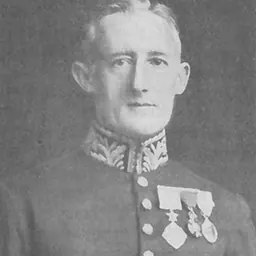
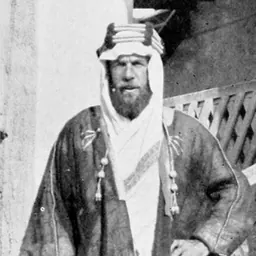


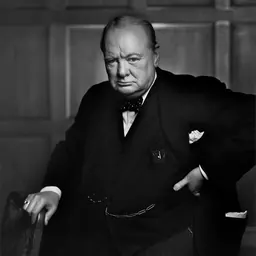
Related people
Same field, nearest in time


Contemporaries
People whose lives overlapped Ibn Saud's

Frequently asked questions
Who was Ibn Saud?
King of Saudi Arabia from 1932 to 1953
When was Ibn Saud born?
Ibn Saud was born on 15 January 1876 in Riyadh.
When did Ibn Saud die?
Ibn Saud died on 9 November 1953 in Ta'if.
What was Ibn Saud's occupation?
Ibn Saud was a statesperson, monarch, politician, military personnel and king.
What nationality was Ibn Saud?
Ibn Saud was Saudi.
Sources & further reading
Cite this page
APA: Biography.guide. (2026). Ibn Saud. https://biography.guide/ibn-saud/
MLA: "Ibn Saud." Biography.guide, https://biography.guide/ibn-saud/.
Chicago: "Ibn Saud." Biography.guide. https://biography.guide/ibn-saud/.
Data last updated: 2026-09-20 · Spot an error? Report a correction.
Page generated 2026-09-27 05:20 UTC