
About Moshe Landau
Lived 1912 – 2011 (aged 99). Moshe Landau was a German and Israeli judge and jurist.
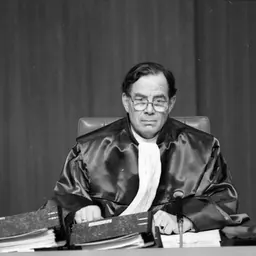
Moshe Landau (; 29 April 1912 – 1 May 2011) was an Israeli judge. He served on the Supreme Court of Israel from 1953 until his retirement in 1982. Landau was the fifth President of the Supreme Court, from 1980 to 1982.
Described as one of Israel's greatest judges and as one of the founders of Israeli law,
Landau's rulings sometimes obscured his personal political stance, yet he consistently opposed judicial activism, emphasizing the importance of judges avoiding political agendas to maintain public trust in the judicial system; those positions of his own are used until today as arguments in support of reform in the judiciary of Israel. His father was a leading member of the Jewish Community of Danzig. In 1930, he finished high school in the Free City of Danzig and in 1933 he graduated cum laude from the University of London School of Law. That year, he immigrated to the British Mandate of Palestine.
In 1957, Landau contributed significantly to the court-martial of the Criminal Court of Appeals, addressing the issue of lawful orders in a case involving the killing of 48 Arabs in Kafr Qasim.
In 1961, Landau presided over the landmark Eichmann trial. According to Israeli historian Tom Segev, Landau was dedicated to preserving order and fairness during the trial, even if it led to conflicts with those who aimed to use the trial for Holocaust education and Israeli nationalism. Landau, in an effort to maintain a genuine trial atmosphere, restricted testimony and evidence unrelated to Eichmann's role, minimizing dramatic elements and emphasizing the trial's prestige and respectability. In 1987, he headed the Landau Commission, investigating Shin Bet's procedures. The commission found instances of perjury and legal violations, acknowledging the use of "moderate physical pressure" in interrogations. However, this drew criticism from human rights groups, who maintained that the practices authorized by the commission amounted to torture. The commission's report faced legal challenges and was nullified in 1999 by a Supreme Court ruling. In 1993, he was made an honorary chairman of the Technion's board of directors.
Death Landau died in Jerusalem on 1 May 2011 after suffering a heart attack.
President Shimon Peres stated, "The State of Israel will remember Moshe Landau as a model for ideological and brave leadership." Former Supreme Court President Aharon Barak described him as "one of our greatest judges" and as one of the "founders of Israeli law."
Don’t just read it —
keep it.
Full-length biographies made to live with: read them, listen on the way to work, watch them tonight.
- E-book
- Audio
- Video
Instant download · yours to keep · every purchase keeps this site free
Important facts
People in Moshe Landau's life
Named in this biography and alive at the same time
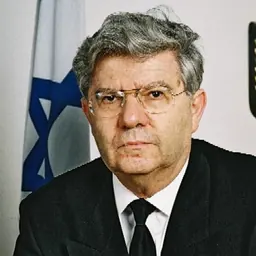
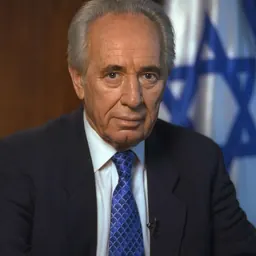

Related people
Same field, nearest in time

Contemporaries
People whose lives overlapped Moshe Landau's






Frequently asked questions
Who was Moshe Landau?
Israeli judge (1912–2011)
When was Moshe Landau born?
Moshe Landau was born on 29 April 1912 in Gdańsk.
When did Moshe Landau die?
Moshe Landau died on 1 May 2011 in Jerusalem.
What was Moshe Landau's occupation?
Moshe Landau was a judge and jurist.
What nationality was Moshe Landau?
Moshe Landau was German and Israeli.
Sources & further reading
Cite this page
APA: Biography.guide. (2026). Moshe Landau. https://biography.guide/moshe-landau/
MLA: "Moshe Landau." Biography.guide, https://biography.guide/moshe-landau/.
Chicago: "Moshe Landau." Biography.guide. https://biography.guide/moshe-landau/.
Data last updated: 2026-09-20 · Spot an error? Report a correction.
Page generated 2026-09-27 05:33 UTC