
Moshe Feinstein
Great Orthodox Jewish Rabbi of the 20th century
About Moshe Feinstein
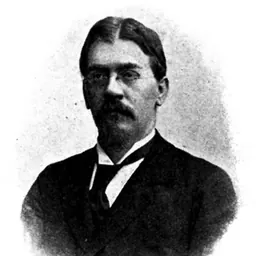
Lived 1895 – 1986 (aged 91). Moshe Feinstein was a Russian and American theologian, rabbi, philosopher and posek.
Moshe Feinstein (; Lithuanian pronunciation: Moishe Fainshtein; ; March 3, 1895 – March 23, 1986) was a Russian-born American Orthodox Jewish rabbi, scholar, and posek (authority on halakha—Jewish law). He has been called the most famous Orthodox Jewish legal authority of the 20th century and his rulings are often referenced in contemporary rabbinic literature. Feinstein served as president of the Union of Orthodox Rabbis, chairman of the Council of the Moetzes Gedolei HaTorah of the Agudath Israel of America, and head of Mesivtha Tifereth Jerusalem in New York.
Feinstein is commonly called "Reb Moshe"
Biography Moshe Feinstein was born, according to the Hebrew calendar, on Adar 7, 5655, in Uzda, Minsk Governorate, in the Russian Empire (now in Belarus). His father, David Feinstein, was the rabbi of Uzda and a great-grandson of the Vilna Gaon's brother. David Feinstein's father, Yechiel Michel Feinstein, was a Koidanover Chassid. His mother was a descendant of talmudist Yom-Tov Lipmann Heller, the Shlah HaKadosh, and Rashi. He studied with his father and in yeshivas in Slutsk, under Pesach Pruskin, and Shklov.
Feinstein was rabbi of Lyuban for 16 years. He married Shima Kustanovich in 1920 and had four children before leaving Europe.
Settling on the Lower East Side, Feinstein became the rosh yeshiva of Mesivtha Tifereth Jerusalem.
Feinstein was president of the Union of Orthodox Rabbis of the United States and Canada and chaired the Moetzes Gedolei HaTorah of Agudath Israel of America from the 1960s until his death.
Feinstein was said by some to be the preeminent halakhic authority (posek) of his generation, ruling on issues of Jewish law as they pertain to modern times.
Halakhic authority
Owing to his prominence as an adjudicator of Jewish law, Feinstein was often asked to rule on very difficult questions, whereupon he often employed a number of innovative and controversial theories to reach his decisions. Soon after arriving in the United States, he established a reputation for handling business and labor disputes, writing about strikes, seniority, and fair competition. He later served as the chief halakhic authority for the Association of Orthodox Jewish Scientists, an indication of his expertise in Jewish medical ethics. In the medical arena, he opposed the early, unsuccessful heart transplants, although it has been reported off-the-record that in his later years, he allowed a person to receive a heart transplant after the medical technique of preventing rejection improved. On such matters, he often consulted with various scientific experts, including his son-in-law Moshe David Tendler, a professor of biology who served as a rosh yeshiva at Yeshiva University.
As one of the prominent leaders of American Orthodoxy, Feinstein issued opinions that clearly distanced his community from Conservative and Reform Judaism. He faced intense opposition from Hasidic Orthodoxy on several controversial decisions, such as rulings on artificial insemination and mechitza. Feinstein did not prohibit cigarette smoking, though he recommended against it and prohibited secondhand smoke; other Orthodox rabbinic authorities disagreed. Even while disagreeing with specific rulings, his detractors still considered him a leading interpreter of Jewish law. The first volume of his Igrot Moshe, a voluminous collection of his halakhic decisions, was published in 1959.
Death
Feinstein died on March 23, 1986 (13th of Adar II, 5746). Over 20,000 people gathered to hear him eulogized in New York before he was flown to Israel for burial. His funeral was delayed by a day due to mechanical problems with the plane carrying his coffin, which had to return to New York. The funeral was said to be attended by between 200,000 and 250,000 people.
Feinstein was buried on Har HaMenuchot near his teacher, Isser Zalman Meltzer.
Prominent students Feinstein's students include:
Nisson Alpert, rabbi of Agudath Israel of Long Island, New York Avrohom Blumenkrantz (1944–2007), author of The Laws of Pesach Shimon Eider, posek and author Dovid Feinstein, rosh yeshiva of Mesivtha Tifereth Jerusalem in New York City, his son Reuven Feinstein, rosh yeshiva of Yeshiva of Staten Island, New York, his son Ephraim Greenblatt, posek Nota Greenblatt, Av Beis Din (chief judge) of Vaad Hakehilos of Memphis, Tennessee Jackie Mason, rabbi and comedian who played Rabbi Hyman Krustofsky on The Simpsons Moshe Dovid Tendler, rosh yeshiva (dean) at Rabbi Isaac Elchanan Theological Seminary, his son-in-law
Works
Feinstein wrote approximately 2,000 responsa on a wide range of issues affecting Jewish practice in the modern era. Some responsa can be found in his Talmudic commentary (Dibrot Moshe), some circulate informally, and 1,883 responsa were published in Igrot Moshe. Among Feinstein's works are: Igrot Moshe (Epistles of Moshe, pronounced Igros Moshe by Yiddish speakers such as Feinstein), halakhic responsa in seven volumes published during his lifetime and widely referenced by contemporary halakhic authorities. The seventh volume was published in two different forms, the resulting variations found in 65 responsa. An additional two volumes were published posthumously from manuscripts and oral dictations transcribed by others. Dibrot Moshe (Moshe's Words, pronounced Dibros Moshe by Yiddish speakers), a 14-volume work of Talmudic novellae with additional volumes published by the Feinstein Foundation and coordinated by his grandson Mordecai Tendler. Darash Moshe (Moshe Expounds, a reference to Leviticus 10:16), a posthumously published volume of novellae on the weekly synagogue Torah reading. Artscroll subsequently translated this as a two-volume English work. Kol Ram (High Voice), three volumes printed in his lifetime by Avraham Fishelis, the director of his yeshiva.
Some of Feinstein's early works, including a commentary on the Jerusalem Talmud, were lost in Communist Russia, though the Feinstein Foundation is preparing his first writings for publication.
Feinstein is known for writing, in a number of places, that certain statements by prominent rishonim that he found theologically objectionable were not in fact written by those rishonim, but rather inserted into the text by erring students. According to Rabbi Dovid Cohen of Brooklyn, Feinstein attributed such comments to students as a way of politely rejecting statements by rishonim while still retaining full reverence for them as religious leaders of earlier generations.
Don’t just read it —
keep it.
Full-length biographies made to live with: read them, listen on the way to work, watch them tonight.
- E-book
- Audio
- Video
Instant download · yours to keep · every purchase keeps this site free
Important facts
Family & relationships
People in Moshe Feinstein's life
Named in this biography and alive at the same time




Related people
Same field, nearest in time


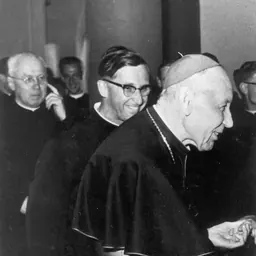
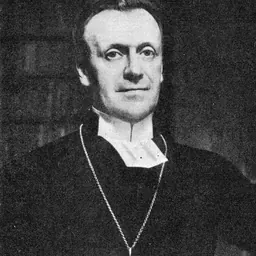
Contemporaries
People whose lives overlapped Moshe Feinstein's
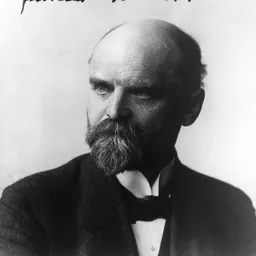
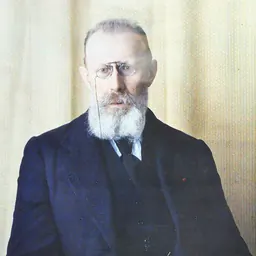

Frequently asked questions
Who was Moshe Feinstein?
Great Orthodox Jewish Rabbi of the 20th century (1895–1986)
When was Moshe Feinstein born?
Moshe Feinstein was born on 3 March 1895 in Uzda.
When did Moshe Feinstein die?
Moshe Feinstein died on 23 March 1986 in New York City.
What was Moshe Feinstein's occupation?
Moshe Feinstein was a theologian, rabbi, philosopher and posek.
What nationality was Moshe Feinstein?
Moshe Feinstein was Russian and American.
Sources & further reading
Cite this page
APA: Biography.guide. (2026). Moshe Feinstein. https://biography.guide/moshe-feinstein/
MLA: "Moshe Feinstein." Biography.guide, https://biography.guide/moshe-feinstein/.
Chicago: "Moshe Feinstein." Biography.guide. https://biography.guide/moshe-feinstein/.
Data last updated: 2026-09-22 · Spot an error? Report a correction.
Page generated 2026-09-27 05:25 UTC