
Moses Pergament
Finnish-Swedish composer, conductor and music critic
About Moses Pergament
Lived 1893 – 1977 (aged 83). Moses Pergament was a Swedish and Finnish composer, conductor, music critic and violinist.
Moses Pergament (21 September 1893 – 5 March 1977) was a Finnish-Swedish composer, conductor, and music critic. He is largely seen as one of the most influential figures in the first generation of Swedish modernism.
Biography
Education Pergament studied music at various locations across Europe during his youth, including at the Saint Petersburg Conservatory between 1908 and 1912. He then returned to Finland, studying at the University of Helsinki, and later moved to Sweden and studied at the Stockholm University in 1919, gaining Swedish citizenship a year prior. He studied at the Stern Conservatory of Berlin from 1921 to 1923.
Career He was a composer of primarily classical music, having written four string quartets, a violin concerto, a piano concerto, Den judiska sången for orchestra, choir and vocal soloists, as well as various a cappella choir compositions. He made his compositional debut in Finland in 1914. He also wrote scenic music and music for various Swedish films, one of them being Barabbas in 1953.
Pergament conducted both orchestras and choirs during his lifetime. He became a music critic at the Svenska Dagbladet in 1923, a post he remained at until 1937. In the 1940s, the Lund University choir would perform some of his a capella compositions during a tour in the United States.
His work Den judiska sången, sometimes referred to as a choral symphony, was a piece that became famous among European Jewry due to its basis in the ongoing Holocaust in Europe at the time. The composition, along with others that he would write, held many influences of Yiddish language and culture.
He is the brother of Finnish conductor, writer and composer Simon Parmet as well as uncle to Finnish composer and pianist Erna Tauro through his brother Isak.
Selected works
Duo for violin and cello (1917) Sonata for violin and piano (1918–20) Krelantems och Eldeling, ballet music for orchestra (1921/1925-26) String Quartet No. 1 (1920–22) Rapsodia ebraica (1935) Dibbuk (1936, later revised) Swedish Rhapsody for orchestra (1941) Den judiska sången ("Jewish song"), choral symphony for soloists, chorus and orchestra (1943-1945) Violin concerto (1948, later revised) String Quartet No. 2; Piano concerto (1952) Concerto for cello and orchestra (1955) Five sketches for string quartet (1956) Concerto for E-viola and orchestra (1964–65) String Quartet No. 3 (1956/1967) Sonata for flute and piano (1968) Fantasia differente for cello and strings (1970) String Quartet No. 4 (1975)
Film soundtracks
They Staked Their Lives (1939-1940) The Girl and the Devil (1944) Barabbas (1953)
Don’t just read it —
keep it.
Full-length biographies made to live with: read them, listen on the way to work, watch them tonight.
- E-book
- Audio
- Video
Instant download · yours to keep · every purchase keeps this site free
Important facts
People in Moses Pergament's life
Named in this biography and alive at the same time
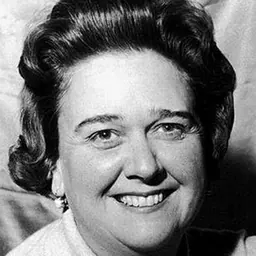
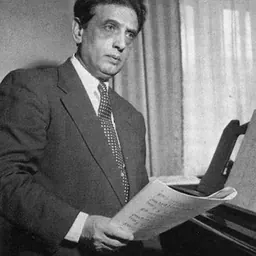
Related people
Same field, nearest in time

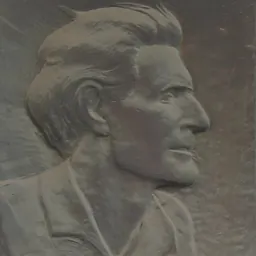
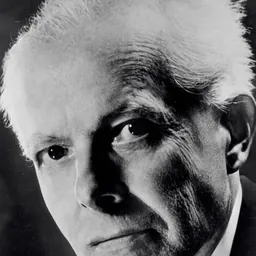



Contemporaries
People whose lives overlapped Moses Pergament's

Frequently asked questions
Who was Moses Pergament?
Finnish-Swedish composer, conductor and music critic (1893-1977)
When was Moses Pergament born?
Moses Pergament was born on 21 September 1893 in Helsinki.
When did Moses Pergament die?
Moses Pergament died on 5 March 1977 in Gustavsberg parish.
What was Moses Pergament's occupation?
Moses Pergament was a composer, conductor, music critic and violinist.
What nationality was Moses Pergament?
Moses Pergament was Swedish and Finnish.
Sources & further reading
Cite this page
APA: Biography.guide. (2026). Moses Pergament. https://biography.guide/moses-pergament/
MLA: "Moses Pergament." Biography.guide, https://biography.guide/moses-pergament/.
Chicago: "Moses Pergament." Biography.guide. https://biography.guide/moses-pergament/.
Data last updated: 2026-09-20 · Spot an error? Report a correction.
Page generated 2026-09-27 05:17 UTC