
About Mortimer Lewis
Lived 1796 – 1879 (aged 82–83). Mortimer Lewis was an architect and surveyor.
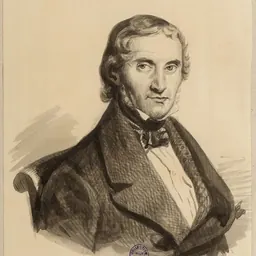
Mortimer William Lewis (1796 – 9 March 1879) was an English-born architect, surveyor and public servant who migrated to Australia and became Colonial Architect in the colony of New South Wales (now a state of Australia) from 1835 to 1849. Lewis was responsible for designing and overseeing many government buildings in Sydney and rural New South Wales, many of which are heritage listed.
Early life Lewis was born in Middlesex, England, in 1796, to Thomas Arundel Lewis and Caroline Lewis (née Derby) At the age of nineteen, he started work as a surveyor and draughtsman in the London office of the Inspector General of Fortifications. In 1819, he married Elizabeth Clements, who bore him three sons and a daughter. Another son was to be born later in Sydney, New South Wales. Lewis lived in the Eyre Estate at 11 South Bank, near St Johns Wood. After eight years in private practice, Lewis received an appointment as assistant surveyor in the office of surveyor-general of New South Wales. He set sail with his family in 1829 and arrived in Sydney in March, 1830.
Career in Australia
Lewis arrived in Sydney via Hobart on 1 April 1830 as a free settler aboard the convict ship the Dunvegan Castle, which left Britain on 28 September 1829.
From 1830 Lewis worked in the office of surveyor-general of New South Wales under Sir Thomas Mitchell, and during this time mapped the Great Dividing Range, 130 kilometres west of Sydney. Lewis was appointed to be the Town Surveyor; in 1835 he was further promoted to the position of Colonial Architect which he held for 14 years during a period of great expansion.
A long series of public works throughout New South Wales followed, including court houses, police stations and government buildings. Lewis also supervised the construction of buildings designed by other architects, a notable example being Government House designed in England by Edward Blore. Lewis became the leading proponent in Australia of the Classical Revival style, in particular the Doric variation, although he did not exclusively design in this style.
Lewis's post as Colonial Architect ended sourly after a public controversy concerning the construction of Sydney’s first museum. In the late 1840s he began designing Sydney's first museum, which would later be absorbed into the present Australian Museum. The project experienced substantial cost overruns during construction and Lewis was heavily criticised by both the press and politicians. The museum was completed, but an official inquiry blamed Lewis and he was forced to resign as Colonial Architect in 1849, after twenty nine years in retirement, Lewis died of a kidney ailment in 1879. Previously it was more common to see Doric columns with circular detailing at the capitals, requiring far less detail and craftsmanship than the ornate Ionic columns designed by Lewis.
St John's Anglican Church, Camden St John's Anglican Church of , completed in 1849, is regarded as one of the finest examples of Gothic Revival architecture in Australia. The church was constructed from local materials such as stone and clay. The clay is known to produce bricks with a great variation in colour and the St. Johns church is no exception producing pink, russet, red and orange bricks. Lewis had an affinity with stucco at the time of construction and the bricks of the church were laid with the anticipation of a secondary finish which never occurred for unknown reasons. Ironically the roughly laid bricks resulted in a richness in the facade, adding character and depth.
Darlinghurst Courthouse
Said to be one of Lewis’ most important works, Australian Museum, Sydney, 1849 Bronte House, Sydney, 1838 Callan Park Hospital for the Insane, 1878 Court House, Berrima, 1838 Former Court House, Sloane Street, Goulburn, 1849 Court House, Hartley, 1837 Court House, Raymond Terrace, 1841 Former Court House, Scone, 1848–49 Former Court House, Wollombi, 1866 Customs House, Sydney, 1844–45 Darlinghurst Courthouse, 1836, with additions by James Barnet Former Darlinghurst Gaol, Sydney, 1836 Fernhill, Gladesville Mental Hospital, formerly known as the Tarban Creek Lunatic Asylum, 1836 Hornby Lighthouse, 1858 Legislative Council Chamber, Sydney, 1843 Maitland Gaol, 1844–48 National Trust (originally military hospital), remodelled by Lewis, 1850s Nugal Hall, Randwick, 1853 Parramatta Correctional Centre Parramatta Courthouse, 1837 Police Station, Hunter Street, Newcastle, 1849 Police Station, Phillip Street, Sydney, 1869 Police Station, Victoria Road, Ryde, 1837 Signal Station, Vaucluse, early 1840s St John's Church, Newcastle, 1860 Toll House, Windsor (probably by Lewis), circa 1835 Treasury Building and Premier's Office, Sydney, 1849 Wentworth Mausoleum, Vaucluse, 1873 (attributed to Mansfield brothers by some sources)
Gallery
Don’t just read it —
keep it.
Full-length biographies made to live with: read them, listen on the way to work, watch them tonight.
- E-book
- Audio
- Video
Instant download · yours to keep · every purchase keeps this site free
Important facts
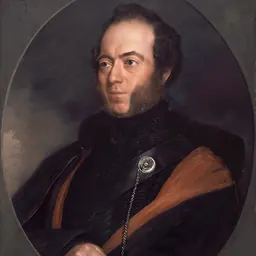
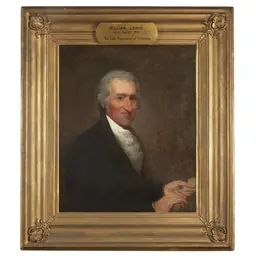
People in Mortimer Lewis's life
Named in this biography and alive at the same time



Related people
Same field, nearest in time


Contemporaries
People whose lives overlapped Mortimer Lewis's





Frequently asked questions
Who was Mortimer Lewis?
British architect
When was Mortimer Lewis born?
Mortimer Lewis was born in 1796 in London.
When did Mortimer Lewis die?
Mortimer Lewis died on 9 March 1879 in New South Wales.
What was Mortimer Lewis's occupation?
Mortimer Lewis was an architect and surveyor.
Sources & further reading
Cite this page
APA: Biography.guide. (2026). Mortimer Lewis. https://biography.guide/mortimer-lewis/
MLA: "Mortimer Lewis." Biography.guide, https://biography.guide/mortimer-lewis/.
Chicago: "Mortimer Lewis." Biography.guide. https://biography.guide/mortimer-lewis/.
Data last updated: 2026-09-24 · Spot an error? Report a correction.
Page generated 2026-09-27 05:06 UTC