
About Moritz von Bissing
Lived 1844 – 1917 (aged 73). Moritz von Bissing was a German military personnel, politician, generaloberst and governor-general.
Moritz Ferdinand Freiherr von Bissing (30 January 1844 – 18 April 1917) was a German officer and politician from Prussia.
Life Pre-WWI army career Moritz was born at the family estate of Ober Bellmannsdorf in the Province of Silesia. He was the son of lord of the manor Moritz Freiherr von Bissing (1802–1860), a member of the landed gentry and Royal Prussian Chamberlain. On 1 October 1863, Bissing entered the Prussian Army and was commissioned as a 2nd Lieutenant in the 2nd Silesian Dragoon Regiment No. 8 in 1865. He soon saw active service in the Austro-Prussian War and the Franco-Prussian War. Gaining steady promotion, in 1887 the young Major was appointed as an aide-de-camp to the prince Wilhelm, who later became the Emperor Wilhelm II. He served in the guards cavalry until 1897, when he was given command of the 29th Infantry Division. From 1901 to 1907 Bissing commanded the VII Army Corps in Münster. On 27 January 1902, he was promoted to General of the Cavalry, and he retired from the army on 12 December 1907.
First World War Upon the outbreak of the First World War, von Bissing was recalled to active duty as deputy commanding general of the VII Army Corps, serving in that post from 2 August until November 1914. After the fall of Belgium during the early months of the War, Bissing was promoted to Generaloberst and appointed as Governor-General of occupied Belgium, serving from December 1914 until a few days before his death in 1917.
As governor-general, Bissing executed the German Flamenpolitik, during which he netherlandized the Ghent University to make it the first solely Dutch-speaking university in Belgium. As the German Chancellor Theobald von Bethmann Hollweg encouraged Flemish nationalist leaders to declare independence and to integrate into the German sphere, Bissing convened a commission to organise the division of Belgium, issuing a decree on 21 March 1917 which separated Belgium into two administrative areas, Flanders and Wallonia. This was the first attempt at dividing Belgium along linguistic lines.
Taking into account the decision by Walloon nationalists in 1912 to recognize Namur as the central city of Wallonia, Bissing established the Walloon administration there. Wallonia then consisted of four southern Belgian provinces and the district of Nivelles, part of the province of Brabant, thus realizing another revendication of the Walloon movement, the creation of a Walloon Brabant. The Flemish region had Brussels as its capital and was made up of the four northern provinces of Belgium, as well as the districts of Brussels and Leuven.
Among many others, Bissing signed the warrant for the execution of Edith Cavell.
Association of Model Settlements for War-Damaged Freiherr von Bissing was the founder of the "Association of Model Settlements for War-Damaged" (Verein Mustersiedlungen für Kriegsbeschädigte), whose aim it was to build settlements for in the war wounded and disabled soldiers and their families. In 1916, von Bissing donated land from the Maximilian Graf von Spee's estate, which had previously been transferred to him. The settlement of Rheinisch-Bissingheim was to be built on this land. Around the same time, construction began on the Bissingheim settlement in Hagen. During the incorporation of surrounding areas into Hagen, the Bissingheim Damaschkehof was renamed Bissinghof. Death In April 1917, a chronic lung ailment forced von Bissing to resign his post as Governor-General, and he succumbed to his illness a few days later on 18 April 1917. Generaloberst Ludwig Freiherr von Falkenhausen would become his successor on 22 April 1917. He is buried at the Invalidenfriedhof in Berlin.
Promotions 1 October 1863 Dragoner mit der Aussicht auf Beförderung (Dragoon with the prospect of promotion) 22 May 1864 Portepee-Fähnrich (Officer Cadet) 11 November 1865 Seconde-Lieutenant (2nd Lieutenant) with Patent from 11 October 1865 14 December 1871 Premier-Lieutenant (1st Lieutenant) 15 January 1874 received a slightly improved Patent from 16 November 1871 1 June 1875 Hauptmann (Captain) 18 September 1880 reclassified as Rittmeister 7 April 1883 reclassified as Hauptmann 2 June 1883 Major 19 June 1888 Oberst-Lieutenant (Lieutenant Colonel) 23 May 1890 Oberst (Colonel) 29 March 1892 received standing as Brigade Commander (Rang als Brigadekommandeur erhalten) 17 March 1894 General-Major (Major General) 10 September 1897 Generallieutenant (Lieutenant General) 27 January 1902 General der Kavallerie (General of the Cavalry) 24 December 1914 Generaloberst
Awards and decorations (excerpt)
Don’t just read it —
keep it.
Full-length biographies made to live with: read them, listen on the way to work, watch them tonight.
- E-book
- Audio
- Video
Instant download · yours to keep · every purchase keeps this site free
Important facts
People in Moritz von Bissing's life
Named in this biography and alive at the same time



Related people
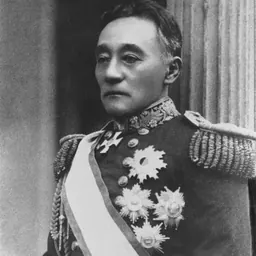
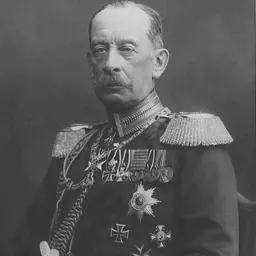
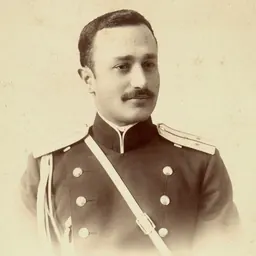
Same field, nearest in time


Contemporaries
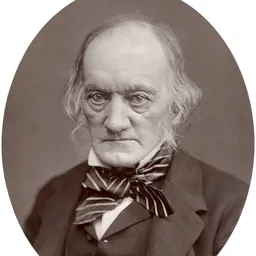
People whose lives overlapped Moritz von Bissing's

Frequently asked questions
Who was Moritz von Bissing?
German general (1844-1917)
When was Moritz von Bissing born?
Moritz von Bissing was born on 30 January 1844 in Radzimów.
When did Moritz von Bissing die?
Moritz von Bissing died on 18 April 1917 in Vilvoorde.
What was Moritz von Bissing's occupation?
Moritz von Bissing was a military personnel, politician, generaloberst and governor-general.
What nationality was Moritz von Bissing?
Moritz von Bissing was German.
Sources & further reading
· Wikipedia: Moritz von Bissing
Cite this page
APA: Biography.guide. (2026). Moritz von Bissing. https://biography.guide/moritz-von-bissing/
MLA: "Moritz von Bissing." Biography.guide, https://biography.guide/moritz-von-bissing/.
Chicago: "Moritz von Bissing." Biography.guide. https://biography.guide/moritz-von-bissing/.
Data last updated: 2026-09-20 · Spot an error? Report a correction.
Page generated 2026-09-27 05:20 UTC