
About Moritz Schiff
Lived 1823 – 1896 (aged 73). Moritz Schiff was a German physiologist, anatomist, zoologist and biologist.
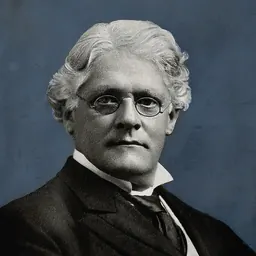
thumbMoritz Schiff (28 January 1823, Frankfurt – 6 October 1896, Geneva) was a German physiologist and the elder brother of the chemist Hugo Schiff (1834-1915), particularly known for his staining technique.
He made major contributions to human physiology, including studies of the circulatory system and the action of the vagus nerve.
Despite his independent and original spirit and being a much-cited author, he never reached the popularity of his contemporaries Emil du Bois-Reymond, Hermann von Helmholtz and Charles-Édouard Brown-Séquard.
Biography
Born into a family of Jewish merchants, Moritz Schiff can be considered as the archetype of the great nineteenth-century scientist, one of the pioneers of the experimental method in physiology as well as a polyglot, who published his articles in German, French or Italian indifferently. He began his studies in his hometown, at the Senckenberg Institute, from which he then moved to Heidelberg, then to Berlin and finally to Göttingen where he obtained a doctorate in medicine in 1844.
In Heidelberg, he had Adolf Kussmaul as one of his masters and was deeply influenced by Friedrich Tiedemann's anatomy lessons, which instilled in him a passion for biology, zoology and organic life. Schiff then studied zoology with Lichtenberg and morphology with Johannes Müller in Berlin and then with Rudolf Wagner in Göttingen. He also stayed in Paris where he followed the teachings of François Magendie, later professor at the College de France, François Achille Longet and Pierre Flourens. In this period he had the chance to see real life applications of zoology at the Musée du Jardin des Plantes.
In the following years Schiff helped Charles-Lucien Bonaparte with the systematics of South American birds in his "Conspectus generum avium" and in his honor the genus Schiffornis was erected.
He then converted to Protestantism to marry Elisabeth Schleuning of Darmstadt in 1860, after his first marriage to Claudia Gitta Trier in 1853. and from 1862 to 1876 professor of physiology and zoology at the Institute of Higher Studies in Florence at the invitation of Carlo Matteucci. thumb
In 1874, Schiff's laboratory was visited by the Society for the Prevention of Cruelty to Animals. They found many dogs with wide deep wounds under their throats. Schiff admitted the incisions were made to prevent the animals howling and disturbing the neighbourhood. He was then violently criticized and even sued by leagues who opposed vivisection. At the end, however, he was one of the first to use anesthesia (chloroform and ether) in animal experiments. This controversy, as well as his lack of means, forced him to leave Florence.
Thanks to the initiative of Carl Vogt, soon to be Rector of the University of Geneva, he accepted the chair of physiology after the refusal of Charles-Édouard Brown-Séquard and started teaching there. In Geneva he continued his research and teaching activities for nearly twenty years, from 1876 until his death at the age of seventy three. The chair of the physiology department of the Geneva medical faculty was then occupied by the neurologist Jean-Louis Prévost.
Mortiz Schiff is identified, like his correspondents Jakob Moleschott and Carl Vogt, as one of the proponents of materialism and with the help of these latter two and Alexandre A. Herzen tried to found a positivist magazine, focused on anticlerical propaganda.
He will also defend the theses of evolution that were put forward by Charles Darwin with whom he corresponded as well.
Without ever founding a school, he had as pupils, disciples or assistants: Alexandre A. Herzen son), Waldemar Haffkine, Nathan Loewenthal, Hillel Joffé and Angelo Mosso.
He was appointed foreign partner of the Accademia dei Lincei in 1892. and moreover, contributed to the description of the sensory pathways of the spinal cord by simultaneously performing hemisections, as his colleague Charles-Édouard Brown-Séquard was doing in those years. In digestive physiology, he researched the role of pepsin and showed that nutrients are broken down by digestive juices; these studies allowed him to describe the enterohepatic cycle of bile to which he gave his name (Schiff's biliary cycle). In circulatory and cardiac physiology, he studied the control of the cardiac and vascular activity by the autonomic nervous system and was the first, in 1850, to demonstrate the existence of a refractory period to the excitability of the heart muscle, and, above all, to give an observation of open-chest heart massage in animals, paving the way for the first cardiac resuscitation manoeuvres in medicine. Finally, he was interested in the effects of various anesthetics (chloroform, ether ...) and toxic substances (strychnine, curare, cocaine, Calabar bean) like his colleague Claude Bernard.
During his stay in Bern, he nurtured the project to publish a complete treatise on physiology, of which only the first volume was finally published between 1858 and 1859 dedicated to the physiology of muscles and nerves. In this volume, he clearly showed that the removing of the thyroid gland from dogs was fatal, and later showed that the injection of animal extract or thyroid transplantation can prevent death. Subsequently, he successfully used thyroid extract to treat humans.
Some writings
Untersuchungen zur Physiologie des Nervensystems mit Berücksichtigung der Pathologie Stahël'sche, Frankfurt-am-Main, 1855 Ueber die Rolle des pankratischen Saftes und der Galle bei Auf nahme der Fette, Verlag von Meidinger Sohn & Comp. Frankfurt-am-Main, 1857 Lehrbuch der Physiologie des Menschen - Teil I. Muskel- und Nervenphysiologie, Lahr, Schauenburg & C. 1858-1859 Zuckerbildund in der Leber und den Einfluss des Nervensystems auf die Diabetes, Stahël'sche, Würzburg, 1859 Schweizerische Zeitschrift für Heilkunde, J. Dalp'schen, Bern, 1862 Lezioni di fisiologia sperimentale sul sistema nervoso encefalico, Hermann loescher, Florence, 1865 Leçons sur la physiologie de la digestion faites au Muséum d'histoire Naturelle de Florence Herman Loescher, Florence & Turin, 1867 Contribution à la physiologie: De l'inflammation et de la circulation, J.-B. Baillière et fils, Paris,1873 La pupille considérée comme esthésiomètre, Paris, Baillière, 1875 Recueil des mémoires physiologiques. Lausanne, B. Benda, libraire- éditeur 1894- 1898, published in four volumes (1, 2, 3, 4)
Don’t just read it —
keep it.
Full-length biographies made to live with: read them, listen on the way to work, watch them tonight.
- E-book
- Audio
- Video
Instant download · yours to keep · every purchase keeps this site free
Important facts
People in Moritz Schiff's life
Named in this biography and alive at the same time



Related people
Same field, nearest in time


Contemporaries
People whose lives overlapped Moritz Schiff's



Frequently asked questions
Who was Moritz Schiff?
German physiologist and anatomist (1823-1896)
When was Moritz Schiff born?
Moritz Schiff was born on 28 January 1823 in Frankfurt.
When did Moritz Schiff die?
Moritz Schiff died on 6 October 1896 in Geneva.
What was Moritz Schiff's occupation?
Moritz Schiff was a physiologist, anatomist, zoologist and biologist.
What nationality was Moritz Schiff?
Moritz Schiff was German.
Sources & further reading
Cite this page
APA: Biography.guide. (2026). Moritz Schiff. https://biography.guide/moritz-schiff/
MLA: "Moritz Schiff." Biography.guide, https://biography.guide/moritz-schiff/.
Chicago: "Moritz Schiff." Biography.guide. https://biography.guide/moritz-schiff/.
Data last updated: 2026-09-25 · Spot an error? Report a correction.
Page generated 2026-09-27 05:11 UTC