
About Carl Vogt
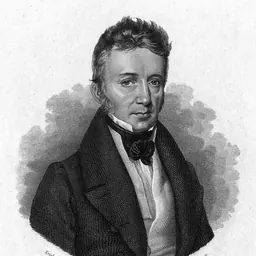
Lived 1817 – 1895 (aged 77). Carl Vogt was a German and Swiss philosopher, zoologist, university teacher, geologist, physiologist and politician.
August Christoph Carl Vogt (; ; 5 July 1817 – 5 May 1895) was a German scientist, philosopher, popularizer of science, and politician who emigrated to Switzerland. Vogt published a number of notable works on zoology, geology and physiology. All his life he was engaged in politics, in the German Frankfurt Parliament of 1848–49 and later in Switzerland.
Early life Street sign in Geneva with a poster denouncing Vogt's theories as white-supremacist, criticising the naming of the street, official buildings etc. after him and the presence of his bust in front of the university Vogt was born in Giessen, the son of , professor of clinics, and Louise Follenius. His maternal uncle was Charles Follen. From 1833 to 1836, he studied medicine at the University of Giessen, and continued his training in Bern, Switzerland, earning his PhD in 1839. He then worked with Louis Agassiz in Neuchâtel.
Life and career In 1847 he became professor of zoology at the University of Giessen, and in 1852 professor of geology and afterwards also of zoology at the University of Geneva. His earlier publications were on zoology. He dealt with the Amphibia (1839), Reptiles (1840), with Mollusca and Crustacea (1845) and more generally with the invertebrate fauna of the Mediterranean (1854). In 1842, during his time with Louis Agassiz, he discovered the mechanism of apoptosis, the programmed cell death, while studying the development of the tadpole of the midwife toad (Alytes obstetricans). Charles Darwin mentions Vogt's support for the theory of evolution in the introduction to his The Descent of Man, and Selection in Relation to Sex (1871).
Vogt was a proponent of scientific materialism and atheism, eager to engage in public debates with philosophical and scientific opponents, such as in his work Köhlerglaube und Wissenschaft of 1855, which was reprinted four times the same year.
Vogt defended the theory of polygenist evolution; he rejected the monogenist beliefs of most Darwinists and instead believed that each race had evolved from a different type of ape. He wrote the White race was a separate species from Negroes. In Chapter VII of his Lectures on Man (1864), he compared the Negro to the White race and described them as “two extreme human types”. The differences between them, he claimed, are greater than those between two species of ape; and this proved that Negroes are a separate species from Whites. He was elected as a member to the American Philosophical Society in 1869. He died in Geneva at the age of 77.
Politics Vogt was active in German politics and was a left-wing representative in the Frankfurt Parliament.
During 1859 and 1860, Vogt engaged in a protracted polemic with Karl Marx, who had accused him "without much evidence, but, as later events showed, correctly, of intriguing in support of Napoleon III. Additionally, Marx took umbrage to the "crude and vulgar" form of materialism being espoused by Vogt at the time, publishing a book in 1860, Herr Vogt, to publicize his views.
After this publication, this issue also was handled in German Marxist/social-democratic papers. Newspaper Der Volksstaat published these passages in April 15. In Der Volksstaats May 10 issue, Engels, with his article "Abermals „Herr Vogt“" ("Once again on Herr Vogt") further commented on the identity of the person named as "Vogt (?)", and claimed it being Carl Vogt. Engels explained:
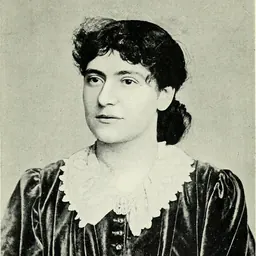
This revelation was later adapted by other Marxists and Marxologists too, and since then being canonized. Marx's daughter, Eleanor Marx, in her biography of her father published after his death, also mentioned this affair. This question was mentioned in numerous Marxist texts, notably, publications of Herr Vogt''' or about Carl Vogt.
Honors
The city of Geneva, Switzerland named a boulevard (Boulevard Carl-Vogt) after Vogt and erected a memorial bust in front of a building of the University of Geneva. In September 2022, the university board of the University of Geneva decided to change the name of a university building named after Carl Vogt due to his racist and sexist theories.
Works
An English version of his Lectures on Man: his Place in Creation and in the History of the Earth was published by the Anthropological Society of London in 1864.
Don’t just read it —
keep it.
Full-length biographies made to live with: read them, listen on the way to work, watch them tonight.
- E-book
- Audio
- Video
Instant download · yours to keep · every purchase keeps this site free
Important facts
People in Carl Vogt's life
Named in this biography and alive at the same time


Related people
Same field, nearest in time



Contemporaries
People whose lives overlapped Carl Vogt's





Frequently asked questions
Who was Carl Vogt?
German-Swiss scientist and politician (1817–1895)
When was Carl Vogt born?
Carl Vogt was born on 5 July 1817 in Giessen.
When did Carl Vogt die?
Carl Vogt died on 5 May 1895 in Geneva.
What was Carl Vogt's occupation?
Carl Vogt was a philosopher, zoologist, university teacher, geologist, physiologist and politician.
What nationality was Carl Vogt?
Carl Vogt was German and Swiss.
Sources & further reading
Cite this page
APA: Biography.guide. (2026). Carl Vogt. https://biography.guide/carl-vogt/
MLA: "Carl Vogt." Biography.guide, https://biography.guide/carl-vogt/.
Chicago: "Carl Vogt." Biography.guide. https://biography.guide/carl-vogt/.
Data last updated: 2026-09-20 · Spot an error? Report a correction.
Page generated 2026-09-27 05:28 UTC