
Moissaye Joseph Olgin
Ukraine-Russian revolutionary, journalist and founder of the Morgen Freiheit
About Moissaye Joseph Olgin
Lived 1878 – 1939 (aged 61). Moissaye Joseph Olgin was an American and Russian linguist, translator, journalist and writer.
Moissaye Joseph Olgin (Yiddish: משה יוסף אָלגין; March 24, 1878 – November 22, 1939) was a Russian-born Jewish American writer, journalist, and translator in the early 20th century. He began his career writing for the Jewish press in support of the Russian Revolution. During the First World War, he moved to the United States and settled in New York City, where he continued his career in journalism. Much of his work was in support of communism, and he was a founding member of the Workers Party. In 1922, he founded The Morning Freiheit, and served as its editor until his death in 1939.
Early life Moissaye Joseph Olgin was born on March 24, 1878, in Buki, Kiev Governorate in the Russian Empire (present-day Ukraine), to Chaim Aaron Novominsky and Tsipe (Gelman) Novominsky, both of whom were of ethnic Jewish origins. His father worked as a lumber camp employee.
Olgin received a traditional education in Hebrew. After a short period of self-study, he began his studies at the University of Kiev in 1900.
He was sympathetic to the causes of the Russian Revolution, and first became active in the underground revolutionary movement during his studies at the University of Kiev. His writings for Jewish and revolutionary publications earned him some fame among the many Russian Jews, who were heavily oppressed by the government of Tsar Nicholas II. He took part in a Jewish revolutionary student group known as "Freiheit" (Freedom).
In 1901 Olgin was elected chairman of the Students Central Committee. The tsarist regime ordered his arrest in April 1903 on a charge of organizing Jewish self-defense groups against anticipated pogroms.
In 1904, Olgin left the University of Kiev and went to Vilno as a member of the Vilno Committee of the General Jewish Labour Bund. There he was arrested but released on bail. He then became a member of the editorial board of the Arbeiter Stimme (Labor's Voice). He was the author of all the proclamations issued by the Central Committee of the Bund during the Revolution of 1905 while at the same time he prepared literary compositions for the illegal Jewish press. While editing newspapers and working with these underground organizations he also wrote books, short stories and literary essays. He also contributed frequently to the Communist Party's English-language newspaper, The Daily Worker, and served as a special correspondent for the Soviet Communist Party's daily, Pravda.
Although a bitter rival of Alexander Bittelman in the heated factional politics of the Jewish Federation in the early 1920s, by the middle of the decade, Olgin had emerged as a supporter of the political faction that was headed by William Z. Foster, Earl Browder, and his former foe.
Olgin made several trips to the Soviet Union. In 1937, he went to Paris as delegation to the International Yiddish Culture Congress which founded the World Alliance for Jewish Culture (YCUF). While in Paris, he addressed the Writers Congress. He was buried in New Montefiore Cemetery near Farmingdale, New York.
Olgin was the author of numerous books and pamphlets in seven languages: English, Russian, German, French, Polish, Hebrew and Yiddish. It is not known whether some of these works were, in fact, translated by others. He wrote verse, essays, literary criticism and sociological studies. His books The Soul of the Russian Revolution and A Guide to Russian Literature and pamphlet Why Communism? achieved sales of nearly half a million in several languages.
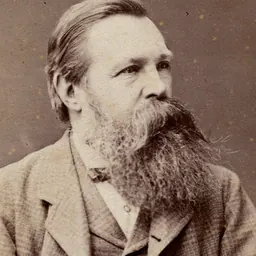
Olgin translated several volumes of Lenin's collected works from Russian into English; Friedrich Engels' The Peasant War in Germany from German into Yiddish; John Reed's Ten Days That Shook the World from English into Yiddish; a volume of short stories from Polish into Yiddish; two volumes of tales of Mendele Mocher Sforim, the father of Jewish literature, from Hebrew into Yiddish; and Jack London's Call of the Wild from English into Yiddish.
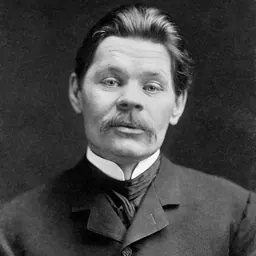
Selected works The Soul of the Russian Revolution. New York: Henry Holt, 1917. A Guide to Russian Literature (1820–1917). New York: Harcourt, Brace and Howe, 1920. The Socialist Party, Last Bulwark of Capitalism. New York: Workers Library Publishers, 1932. Capitalism Defends Itself through the Socialist Labor Party. New York: Workers Library Publishers, 1932. Why Communism? Plain Talks on Vital Problems. New York: Workers Library Publishers, 1933. Maxim Gorky: Writer and Revolutionist. New York: International Publishers, 1933. The Way Out: A Program for American Labor. New York: Workers Library Publishers, 1934. Trotskyism: Counter-Revolution in Disguise. New York: Workers Library Publishers, 1935. Life and Teachings of Friedrich Engels. New York: Workers Library Publishers, 1935. Lenin and the Bolsheviki. New York: Revolutionary Workers League, 1936. — Reprinted from Asia, vol. 17, no. 10 (December 1917). That Man Browder: Communist Candidate for President. New York: Workers Library Publishers, 1936.
Don’t just read it —
keep it.
Full-length biographies made to live with: read them, listen on the way to work, watch them tonight.
- E-book
- Audio
- Video
Instant download · yours to keep · every purchase keeps this site free
Important facts
People in Moissaye Joseph Olgin's life
Named in this biography and alive at the same time


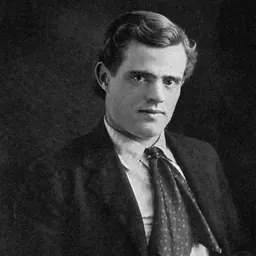

Related people
Same field, nearest in time
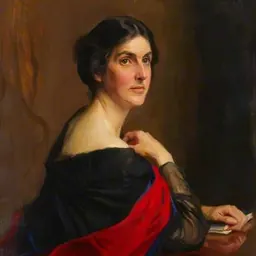

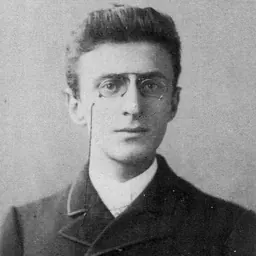
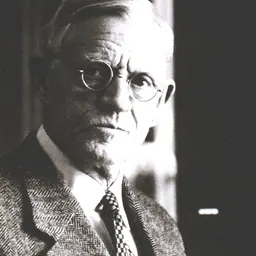
Contemporaries
People whose lives overlapped Moissaye Joseph Olgin's




Frequently asked questions
Who was Moissaye Joseph Olgin?
Ukraine-Russian revolutionary, journalist and founder of the Morgen Freiheit
When was Moissaye Joseph Olgin born?
Moissaye Joseph Olgin was born on 24 March 1878 in Buky.
When did Moissaye Joseph Olgin die?
Moissaye Joseph Olgin died on 22 November 1939 in New York City.
What was Moissaye Joseph Olgin's occupation?
Moissaye Joseph Olgin was a linguist, translator, journalist and writer.
What nationality was Moissaye Joseph Olgin?
Moissaye Joseph Olgin was American and Russian.
Sources & further reading
· Wikipedia: Moissaye Joseph Olgin
· DBpedia: Moissaye Joseph Olgin
Cite this page
APA: Biography.guide. (2026). Moissaye Joseph Olgin. https://biography.guide/moissaye-joseph-olgin/
MLA: "Moissaye Joseph Olgin." Biography.guide, https://biography.guide/moissaye-joseph-olgin/.
Chicago: "Moissaye Joseph Olgin." Biography.guide. https://biography.guide/moissaye-joseph-olgin/.
Data last updated: 2026-09-22 · Spot an error? Report a correction.
Page generated 2026-09-27 05:27 UTC