
About Mohammed bin Ismail Al Amrani
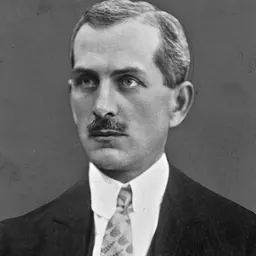
Lived 1921 – 2021 (aged 99). Mohammed bin Ismail Al Amrani was a Yemeni judge, islamic jurist and mufti.
Mohammed bin Ismail Al Amrani (, Muḥammad b. Ismāʿīl al-ʿImrānī; 22 December 1921 – 12 July 2021) was a judge and senior Yemeni contemporary scholar. He was known by the name Judge Al Almrani; his family originated from the city of 'Amran in Yemen. His grandfather, a judge in Amran city, moved and settled in Sanaa (1139 e–1161Hijjri) 1117, the twelfth century of Mohammed's migration — he was the first from his family to be properly educated. Consequently, his descendants maintained the title Amrani since then, but never lived in Amran city.
Biography Judge Muhammad Ali Amrani's grandfather was a student and disciple of the most prominent Shaykh Al-Islam Judge Muhammad Ibn Ali Shawkaani, who has said about Al Amrani that he was the full moon (in Arabia full moon means bright). Judge Al Amrani excelled in all discretionary education/knowledge and became among the famous ones in the Arab region. His most known fatwa was the inadmissibility of the jihad against the Houthis, despite the dissension between him and the Houthis. He was visited by many scholars within Yemen and the Arab world.
He was known as moderate Islamic scholar. He earned respect from both sectarians Zaidi and some of the fanatics (classified as the closest to Shiites and Sinis/Shafaie) and was followed by both. His famous fatwa: “not to consider the Shiites astray of Islam”. He was/is still known as moderate Judge in his approach.
His methodical approach is similar to the late famous scholar and judge Mohammed Ali Shawkaani in the end of the eighteenth century. He was his student and follower. The late judge Mohammed Ali Shawkaani was a famous judge in Imam's Ara. He was involved in politics and criticized Imam's approach, in which he was categorized as enemy of the system and was treacherously killed when he was preaching in Zabid/Yemen first university in the Arab region. Unfortunately, moderates sometimes get killed because of their intellectual independence.
Marital status He was married and had five sons and four daughters. All family members are highly educated, their majors varying in the areas of literature, politics and ideology, but no one followed the ancestors in the judiciary. Al Amrani was an open-minded person. He supported both daughters and sons to have equal opportunity of education.
His students He had many students such as: Mohamad al-Arefe.
Don’t just read it —
keep it.
Full-length biographies made to live with: read them, listen on the way to work, watch them tonight.
- E-book
- Audio
- Video
Instant download · yours to keep · every purchase keeps this site free
Important facts
People in Mohammed bin Ismail Al Amrani's life
Named in this biography and alive at the same time

Related people
Same field, nearest in time





Contemporaries
People whose lives overlapped Mohammed bin Ismail Al Amrani's



Frequently asked questions
Who was Mohammed bin Ismail Al Amrani?
Yemeni judge
When was Mohammed bin Ismail Al Amrani born?
Mohammed bin Ismail Al Amrani was born on 22 December 1921 in Old Sana'a.
When did Mohammed bin Ismail Al Amrani die?
Mohammed bin Ismail Al Amrani died on 12 July 2021.
What was Mohammed bin Ismail Al Amrani's occupation?
Mohammed bin Ismail Al Amrani was a judge, islamic jurist and mufti.
What nationality was Mohammed bin Ismail Al Amrani?
Mohammed bin Ismail Al Amrani was Yemeni.
Sources & further reading
· Wikipedia: Mohammed bin Ismail Al Amrani
· DBpedia: Mohammed bin Ismail Al Amrani
Cite this page
APA: Biography.guide. (2026). Mohammed bin Ismail Al Amrani. https://biography.guide/mohammed-bin-ismail-al-amrani/
MLA: "Mohammed bin Ismail Al Amrani." Biography.guide, https://biography.guide/mohammed-bin-ismail-al-amrani/.
Chicago: "Mohammed bin Ismail Al Amrani." Biography.guide. https://biography.guide/mohammed-bin-ismail-al-amrani/.
Data last updated: 2026-09-20 · Spot an error? Report a correction.
Page generated 2026-09-27 05:18 UTC