
Mohammad Hidayatullah
Vice President of India from 1979 to 1984
About Mohammad Hidayatullah
Lived 1905 – 1992 (aged 86). Mohammad Hidayatullah was an Indian judge, politician, barrister and jurist.
Mohammad Hidayatullah, (; 17 December 1905 – 18 September 1992) was an Indian jurist and statesman who served as interim President of India in 1969. He concurrently served as Chief Justice of India from 1968 to 1970 and then as Vice President of India from 1979 to 1984.
Early life and education
Hidayatullah was born in 1905 in the well-known family of Khan Bahadur Hafiz Mohammed Wilayatullah. His grandfather Munshi Kudartullah was an advocate in Benares. His father was a poet of all-India repute who wrote poems in Urdu and it was probably from him that Justice Hidayatullah got his love for language and literature. Wilayatullah was Gold medallist of Aligarh Muslim University in 1897 - besting famous mathematician Sir Ziauddin Ahmad, a favourite of Sir Syed Ahmed Khan. Wilayatullah served in ICS until 1928 and as a member of the Central Legislative Assembly from 1929 to 1933. Hidaytullah's elder brothers Mohammed Ikramullah (ICS, later Foreign Secretary, Pakistan) and Ahmedullah (ICS, retired as Chairman, Tariff Board) were scholars as well as sportsmen. He on the other hand excelled in Urdu poetry.
After completing primary education at the Government High School of Raipur in 1922, Hidayatullah attended Morris College in Nagpur, where he was nominated as the Phillip's Scholar in 1926. When he graduated in 1926, he was awarded the Malak Gold Medal. Following the trend of Indians studying British law abroad, Hidayatullah attended Trinity College at the University of Cambridge from 1927 to 1930 and obtained B.A. and M.A. Degrees from there. Here he secured the 2nd order of merit and was awarded a gold medal for his performance in 1930. He was called to the Bar from Lincoln's Inn when he was just 25 years old. He was awarded LL.D. (Honoris Causa) from University of the Philippines and D. Litt. (Honoris Causa) from University of Bhopal (now Barkatullah University) and University of Kakatiya. While at Cambridge, Hidayatullah was elected and served as the President of the Indian Majlis in 1929. Also while here, he pursued English and Law Tripos from the renowned Lincoln's Inn. In addition he secured a place of Barrister-at-Law in 1930.
Career
President Dr. Zakir Husain at the swearing in ceremony of Justice M. Hidayatullah, at Rashtrapati Bhavan
After graduation, Hidayatullah returned to India and enrolled as an advocate of the High Court of Central Provinces and Berar at Nagpur on 19 July 1930. He also taught Jurisprudence and Mahomedan Law in the University College of Law at Nagpur and was also the Extension Lecturer in English literature. On 12 December 1942, he was appointed Government Pleader in the High Court at Nagpur. On 2 August 1943, he became the Advocate General of Central Provinces and Berar (now Madhya Pradesh) and continued to hold the said post till he was appointed as an Additional Judge of that High Court in 1946. He had the distinction of being the youngest Advocate General of an Indian state, Madhya Pradesh.
On 27 June 1946, Hidayatullah was appointed as Additional Judge of that High Court of Central Provinces and Berar and on 13 September 1946 he was appointed as permanent judge of said High Court where he served until being elevated to Chief Justice of the Nagpur High Court in 1954 on 3 December 1954, being the youngest Chief Justice of a High Court. In November 1956, he was then appointed as the Chief Justice of Madhya Pradesh High Court.
President of India (1969)
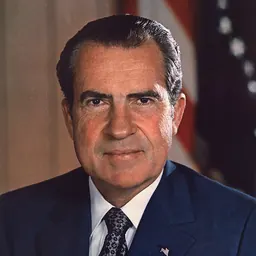
During his term as the Chief Justice of India, the then-President of India, Zakir Husain died suddenly, while still in office, on 3 May 1969. Then Vice President of India Mr. V. V. Giri became the acting President. Later, Giri resigned from both offices as acting president and Vice-President to become a candidate in the 1969 Presidential Election. Hidayatullah then served as the President of India for a short period from 20 July to 24 August. The visit of President of the United States Richard Nixon to India made his presidential term historic.
Vice Presidential election
After his retirement, Hidayatullah was elected as the Vice-President of India by a consensus among different parties and occupied that high office with distinction from 1979 to August 1984. During his tenure as the Vice-President, he won the respect of all concerned for his impartiality and independence.
In 1982, when the then President Zail Singh went to the U.S. for medical treatment, Vice-President Hidayatullah officiated as president from 6 October 1982 to 31 October 1982. Thus, he officiated as acting president twice.
Having served at all of these positions made Hidayatullah unique among other members of Indian history. He became the only person to have served in all three offices of Chief Justice of India, President of India, and the Vice President of India. dealing with the law of obscenity, displayed a flair for literature and is particularly of note.
Career in Nagpur
Before being elevated as a judge to High Court, Hidayatullah was involved in local and state affairs. The following are some of the committee positions he held:
Member of the Nagpur Municipal Committee (1931–1933) Member of the Nagpur University's Executive and Academic Councils (1934–1953) Member of the Nagpur Improvement Trust (1943–1945) Member of the Nagpur Bar Council (1943–1946) Chief Commissioner of the Madhya Pradesh Bharat Scouts and Guides (1950–1953)
Many of these positions, as well as those of High Court Justice were held prior to Indian Independence, they were all considered service to Great Britain, thus Hidayatullah was conferred the honour as an Officer of the Order of the British Empire by King George VI in the 1946 King's Birthday Honours.
Institutions
Hidayatullah was the president of Indian Law Institute, International Law Association (Indian Branch), Indian Society of International Law from 1968 to 1970. He also presided the Indian Red Cross Society in 1982. He was closely associated with Hunger Project of USA, World Association of Orphans and Abandoned Children (Geneva), and Independent Commission on International Humanitarian Issues (1982–84).
The Hidayatullah National Law University at Naya Raipur is named after him.
Books
Democracy in India and the Judicial Process, 1966 by Asia Publishing House (1967). The South-West Africa Case, Published 1967 by Asia Publishing House (1966). Judicial Methods Published for the Institute of Constitutional and Parliamentary Studies by National Publishing House (1970). A Judge's Miscellany, N. M. Tripathi (1972). USA and India: All India Reporter (1977). A Judge's Miscellany (Second Series) N. M. Tripathi(1972). The Fifth and Sixth Schedules to the Constitution of India, Ashok Pub. House My own Boswell (Autobiography) Arnold-Heinemann (1980). Editor, Mulla's Mohammedan Law Constitutional law of India: Bar Council of India Trust (1984). Right to property and the Indian Constitution: Calcutta University (1984). Justice Hidayatullah on commercial laws: Deep & Deep (1982).
Awards and honours
National honours
Foreign honours
Key to the City
Manila, Philippines: Key to the City (1971)
Other awards
Medallion and Plaque of Merit Philconsa, Manila, 1970 and Knight of Mark Twain, 1971; Honoured with "Proud Past Alumni" in the list of 42 members, from "Allahabad University Alumni Association", NCR, Ghaziabad (Greater Noida) Chapter 2007-2008 registered under society act 1860 with registration no. 407/2000. Honorary Bencher of Lincoln's Inn, 1968; President of Honour, Inns of Courts Society, India. War Service Badge, 1948; Shiromani Award, 1986; Architects of India Award, 1987; Dashrathmal Singhvi Memorial Award of the Banaras Hindu University.
Personal life
In 1948, Hidayatullah married Pushpa Shah, who was from a Jain family. Her father's name was A. N. Shah who was chairman of the Income Tax Appellate Tribunal. She was the eldest daughter in her family. She married Hidayatullah on 5 May 1948.
Their son, Arshad Hidayatullah, is a Senior Counsel at the Supreme Court of India.
Don’t just read it —
keep it.
Full-length biographies made to live with: read them, listen on the way to work, watch them tonight.
- E-book
- Audio
- Video
Instant download · yours to keep · every purchase keeps this site free
Important facts
People in Mohammad Hidayatullah's life
Named in this biography and alive at the same time



Related people
Same field, nearest in time


Contemporaries
People whose lives overlapped Mohammad Hidayatullah's





Frequently asked questions
Who was Mohammad Hidayatullah?
Vice President of India from 1979 to 1984
When was Mohammad Hidayatullah born?
Mohammad Hidayatullah was born on 17 December 1905 in Lucknow.
When did Mohammad Hidayatullah die?
Mohammad Hidayatullah died on 18 September 1992 in Mumbai.
What was Mohammad Hidayatullah's occupation?
Mohammad Hidayatullah was a judge, politician, barrister and jurist.
What nationality was Mohammad Hidayatullah?
Mohammad Hidayatullah was Indian.
Sources & further reading
· Wikipedia: Mohammad Hidayatullah
· DBpedia: Mohammad Hidayatullah
Cite this page
APA: Biography.guide. (2026). Mohammad Hidayatullah. https://biography.guide/mohammad-hidayatullah/
MLA: "Mohammad Hidayatullah." Biography.guide, https://biography.guide/mohammad-hidayatullah/.
Chicago: "Mohammad Hidayatullah." Biography.guide. https://biography.guide/mohammad-hidayatullah/.
Data last updated: 2026-09-20 · Spot an error? Report a correction.
Page generated 2026-09-27 05:22 UTC