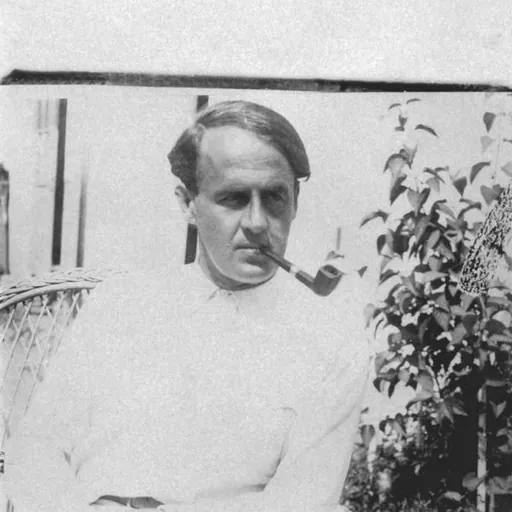
About Mladen Stojanović
Lived 1896 – 1942 (aged 45). Mladen Stojanović was a Yugoslav physician.
Mladen Stojanović (; 7 April 1896 – 1 April 1942) was a Bosnian Serb and Yugoslav physician who led a detachment of Partisans on and around Mount Kozara in northwestern Bosnia during World War II in Yugoslavia. He was posthumously bestowed the Order of the People's Hero.
At the age of fifteen, Stojanović became an activist in a group of student organizations called Young Bosnia, which strongly opposed Austria-Hungary's occupation of Bosnia-Herzegovina. In 1912, Stojanović was inducted into Narodna Odbrana, an association founded in Serbia with the goal of organizing guerrilla resistance to Bosnia-Herzegovina's annexation by Austria-Hungary. Stojanović was arrested by the Austro-Hungarian authorities in July 1914, and although he was sentenced to 16 years' imprisonment, he was pardoned in 1917. He graduated as a Doctor of Medicine after World War I, and in 1929, opened a private practice in the town of Prijedor. In September 1940, he became a member of the Communist Party of Yugoslavia (KPJ).
Following the invasion of Yugoslavia by the Axis powers and their creation of the Independent State of Croatia, Stojanović was arrested at the behest of the Ustaše, Croatia's fascist ruling party. He escaped prison and went to Kozara, where he joined fellow communists that had escaped from Prijedor. The KPJ chose Stojanović to lead the communist uprising in Prijedor. The uprising began on 30 July 1941, although neither Stojanović nor any of the other communists had much control over it at this stage. The Serb villagers of the district seized control of a number of villages and threatened Prijedor, which was defended by the Germans, Ustaše, and Croatian Home Guards. In August 1941, Stojanović was recognised as the principal leader of the Kozara insurgents, who were then organised into Partisan military units. Under Stojanović's direction, the Kozara Partisans began attacking the fascists from the end of September 1941. In early November 1941, all Partisan units in Kozara were merged into the 2nd Krajina National Liberation Partisan Detachment, commanded by Stojanović. By the end of the year, most of Kozaracovering about was controlled by Stojanović's detachment.
On 30 December 1941, Stojanović arrived in the Grmeč district, which was in the zone of responsibility of the 1st Krajina National Liberation Partisan Detachment. The Italian troops operating in that area portrayed themselves as protectors of the Serb people. Stojanović's task was to counter such propaganda and mobilise the Partisans of the 1st Krajina Detachment to fight against the Italians. He stayed in the area until mid-February 1942, by which time the Partisan leadership of Bosnia-Herzegovina considered he had completed his tasks successfully. At the end of February 1942, Stojanović was appointed chief of staff of the Operational Headquarters for Bosanska Krajina—a unified command of all Partisan forces in the regions of Bosanska Krajina and central Bosnia. The Operational Headquarters' main task was to counter the rising influence of the Serb nationalist Chetniks in those regions. On 5 March 1942, Stojanović was severely wounded in a Chetnik ambush. He was taken to a field hospital in the village of Jošavka. Members of the Jošavka Partisan Company defected to the Chetniks on the night of 31 March, and took Stojanović prisoner. The next night, a group of Chetniks killed him. In April 1942, the 2nd Krajina Detachment was named "Mladen Stojanović" in his honour, and a few months later he was posthumously awarded the Order of the People's Hero. After the war, his service to the Partisan cause was commemorated by the construction of a memorial in Prijedor, the naming of streets, public buildings and a park after him, in song and in film.
Early life
Stojanović was the third child and the first son of Serbian Orthodox priest Simo Stojanović and his wife Jovanka. He was born in Prijedor on 7 April 1896. Bosnia-Herzegovina was then occupied by Austria-Hungary; Prijedor was located in Bosanska Krajina, the north-western region of the province. Stojanović's father was the third generation of his family to serve as a Serbian Orthodox priest. He had graduated from a theology faculty, becoming the first in the family to attain a higher level of education. Simo was active in the political struggle for ecclesiastical and educational autonomy for the Serbs in Bosnia-Herzegovina. Mladen Stojanović's maternal grandfather was a Serbian Orthodox priest from Dubica, Teodor Vujasinović; he had participated in Pecija's revolt against the Ottoman Empire.
Stojanović completed his elementary education at the Serbian Elementary School in Prijedor in 1906. In 1907, he finished the first grade of his secondary education at the First Gymnasium in Sarajevo, before he moved to Tuzla, where he would complete the remaining seven grades at the Tuzla Gymnasium. His brother Sreten Stojanovićwho would become a prominent sculptorjoined him at the Tuzla Gymnasium in 1908. In 1911, Mladen Stojanović became a member of the secret association of students of the Tuzla gymnasium called Narodno Jedinstvo (National Unity); its members described it as a youth society of nationalists. It was one of a group of diverse student organisations later called Young Bosnia, which strongly opposed Austria-Hungary's rule over Bosnia-Herzegovina. The first organisation regarded to be part of this group was established in 1904 by Serb students of the Mostar Gymnasium. 1905 saw considerable political unrest among the Serb and Croat students of the Tuzla gymnasium. Although the provincial government imposed the name "Bosnian" on the language of the province (Serbo-Croatian), the students demonstratively termed it as Serbian or Croatian depending on their ethnic affiliation.
Young Bosnia's activists regarded literature as indispensable to revolution, and most of them wrote poems, short stories, or critiques. Stojanović wrote poems, and read the works of Petar Kočić, Aleksa Šantić, Vladislav Petković Dis, Sima Pandurović, Milan Rakić, and later the works of Russian authors. In his final years at the gymnasium, he read Plato, Aristotle, Rousseau, Bakunin, Nietzsche, Jaurès, Le Bon, Ibsen, and Marinetti. National Unity held meetings at which its members presented lectures and discussed current issues concerning the Serbian people of Bosnia-Herzegovina. One of the aims of Young Bosnia was to eliminate the backwardness of their country.
Stojanović and Ilić travelled illegally to Serbia during the summer break of 1912 to receive military training that National Defence organised for its members. They stayed for several days in Belgrade, the capital of Serbia, where they met Gavrilo Princip, another activist of Young Bosnia who was also a member of National Defence. Stojanović and Ilić then spent a month at army barracks in Vranje in southern Serbia, undergoing military training under the command of Vojin Popović, a famous Chetnik guerrilla fighter. When they returned to school, they resumed their activities with National Unity. Its members decided that Muslims should also be drawn into the association. After Trifko Grabež was expelled from the Tuzla gymnasium for slapping a teacher during a quarrel, the association organised a school strike. Most of the students who participated were Serbs; the strike gained little support among students of other ethnicities. The school took disciplinary measures against Ilić and Stojanović, who were regarded as the main organisers of the strike, and Ilić lost his scholarship. At that time, National Unity was one of the most active groups of Young Bosnia.
According to Vid Gaković, who was a member of National Unity in 1914, Stojanović was an ambitious and talented young man. He was determined that his voice would be heard and he liked being the centre of attention. He was severe to younger members of the association, whom he sometimes sharply criticised. Nevertheless, younger students liked being around him. Gaković described him as a tall and handsome man who greatly cared about his appearance; he wore a bow tie and a broad-brimmed hat.
On the morning of 28 June 1914, in Sarajevo, Princip assassinated Archduke Franz Ferdinand of Austriaheir presumptive to the throne of Austria-Hungaryand his wife Sophie. Princip was a member of a group of conspirators, which included Trifko Grabež; the whole group was arrested by the Austrian police after the assassination. Blaming Serbia for the attack, Austria-Hungary declared war a month later, initiating World War I. Shortly after the assassination, Stojanović wrote in his notebook a quote from Giuseppe Mazzini: "There is no more sacred thing in the world than the duty of a conspirator, who becomes an avenger of humanity and the apostle of permanent natural laws." In late 1917, the Austrian authorities pardoned all convicts of the Tuzla group except Ilić. Mladen went to his family in Prijedor. After a medical examination, he was declared unfit for army service due to his surgery and as a result was not drafted into the Austrian army.
He entered the Faculty of Medicine, University of Zagreb, shortly before the disintegration of Austria-Hungary in November 1918. Stojanović continued studying medicine in Zagreb. As a former activist of Young Bosnia, he was offered a King's scholarship but he refused it. In Zagreb, he reunited with his former schoolmate Nikola Nikolić, who had also been a member of National Unity. After his release from the Zenica prison, Nikolić was drafted into the Austrian army and sent to the Russian front where he surrendered to the Russians and participated in the October Revolution. Nikolić's account of the revolution influenced Stojanović to adopt a more leftist stance. During this period, Stojanović's favourite authors were Maksim Gorky and Miroslav Krleža. His professor of anatomy, Drago Perović, arranged for him to visit an anatomical institute in Vienna. Stojanović went there several times in 1921 and 1922 and befriended members of a leftist association of Yugoslav students at the Vienna University. When they held a protest against the king and government of Yugoslavia, Stojanović took part and delivered a speech. Behind the protest stood the Communist Party of Yugoslavia (Komunistička partija Jugoslavije, KPJ).
Stojanović graduated as a Doctor of Medicine in 1926, and he worked for two years as a trainee physician in Zagreb and Sarajevo. He then opened a private practice in Pučišća on the Adriatic island of Brač. In 1929, he returned to Prijedor, where he opened a practice on the first floor of the Stojanović family house, where his mother had lived alone since his father's death in 1926. Stojanović soon became a popular figure in Prijedor; his patients said that simply talking with him was curative. He treated poor people free of charge; he once sent a homeless man to a hospital in Zagreb and paid for his surgery. People from other areas of Bosanska Krajina also went to him for medical treatment. In villages around Prijedor, where brawls were common, rowdies sang about him: In 1936, he was contracted to an iron ore mining company in Ljubija, a town near Prijedor, and would visit the mining company clinic twice a week. He also taught hygiene at the gymnasium in Prijedor. Together with other intellectuals from the town, he gave lectures to the miners at their club in Ljubija. His lectures were usually about medical issues, but he also described the economic and social position of workers in more advanced countries. He socialised with the miners and treated their family members free of charge. Stojanović once bought new kit for all members of the Rudar Ljubija football club. His contracts with the railway company and the mining company were both terminated in 1939. The railway employees protested in Prijedor, and Stojanović's contract with that company was subsequently renewed. According to Babič, a communist from Prijedor introduced him to Stojanović at the beginning of September 1940. Babič stayed for several days at the doctor's house, running the strike. Seeing Stojanović as a communist sympathiser, Babič proposed that he join the KPJ. Stojanović at first declined, saying that he still had bourgeois habits, though he had read much of the Marxist literature. After further conversations with Babič, Stojanović agreed to become a member of the party. and some regarded him as a "salon communist". Stojanović was assigned as a physician to an infantry battalion based in Banja Luka. For several days after the invasion this battalion moved toward Dalmatia, before it completely disintegrated without fighting the enemy, and Stojanović returned to Prijedor. The Royal Yugoslav Army capitulated on 17 April, and the Axis powers proceeded to dismember Yugoslavia. Almost all of modern-day Croatia, all of modern-day Bosnia-Herzegovina, and parts of modern-day Serbia were combined into a puppet state called the Independent State of Croatia (, NDH). which was controlled by the fascist Ustaše led by Ante Pavelić. One of its policies was to eliminate the ethnic Serb population of the NDH through mass killings, expulsions and forced assimilation, and many Serbs fled from the NDH to the German-occupied territory of Serbia. The KPJ, led by Josip Broz Tito, prepared to rise to arms at a favourable moment. In the view of the KPJ, the fight against the Axis and its domestic collaborators would be a common fight of all Yugoslav peoples.
Operation Barbarossa, the Axis invasion of the Soviet Union, began on 22 June 1941. On the same day, the Ustaše began arresting communists and their known sympathisers in the towns of Bosanska Krajina, including Prijedor. The communists had predicted this, and most of them avoided capture by escaping to the villages or hiding in the towns. Stojanović was one of the few communists arrested in Prijedor. He was imprisoned with the Serb hostages on the second floor of a school in the town. They were subjected to forced labour, being led each morning through the town to repair the road to Kozarac. The column of hostages was usually headed by Stojanović carrying a shovel on his shoulder.
On the day of the Axis invasion of the Soviet Union, the Executive Committee of the Communist Internationalheadquartered in Moscowtelegraphed the Central Committee of the KPJ to take all measures to support and alleviate the struggle of the Soviet people, and to organise partisan detachments to fight the Axis in Yugoslavia. The members of the KPJ-led forces were called Partisans, and their supreme commander was Tito.
The Prijedor communists were keen to rescue Stojanović from his imprisonment, but their attempts to bribe the Ustaše to release him failed. They also considered storming the school in which he was kept. He went to the village of Orlovci, several kilometres from Prijedor, where he was accompanied by Rade Bašića young communist who had earlier escaped from the town. Bašić escorted Stojanović toward Mount Kozara ( high),
After Stojanović's escape, the Ustaše arrested his wife, Mira. His son, Vojin, born in 1940, was cared for by Mira's former husband. Mira was released from prison after several months, and she and Vojin went to Dubrovnik. Stojanović's brothers and sisters had lived in Belgrade since before the war.
Yugoslav Partisan
Kozara area
July–August 1941
On the morning of 19 July 1941, Stojanović and Bašić arrived at the camp of the communists and their sympathisers who escaped from Prijedor, situated at Rajlića Kosa above the village of Malo Palančište.
Kozara, located in northern Bosanska Krajina and centred around Mount Kozara, covers about . In 1941, the area had a population of nearly 200,000 people. The villagers were mostly Serbs, and the towns in the areathe biggest of which was Prijedorhad a mixed Bosnian Muslim, Serb, and Croat population. Several villages were inhabited by ethnic Germans or Volksdeutsche. The economy of Kozara was dominated by agriculture, but there were about 6,000 workers employed in a coal mine and several plants. The first communist cells in the area were established shortly before the Axis invasion, mostly in the towns. Kozara had seen four uprisings against the Ottomans during the 19th century. On 27 July, in western Bosanska Krajina, Partisans took the town of Drvar, marking the beginning of the uprising in Bosnia-Herzegovina. At this stage, the insurgents in Kozara were still not organised into military units. Many of them had no firearms.
The leaders of the uprising in Kozara met on 15 August 1941 in the village of Knežica. At the conference, Stojanović was recognised as the principal leader in Kozara; this recognition mostly resulted from his pre-war social status and good reputation among the people. It was concluded that forming a front line was a mistake because it was not consistent with guerrilla warfare. At some point during the conference, Stojanović stressed the importance of keeping as many enemy troops as possible in the area, so that they could not be sent to the Russian front to fight the Red Army. As the five detachments in the area were tied to their specific territories, it was decided that another detachmentwhich could operate anywhere in Kozarashould be formed. It was decided that Stojanović would command this new Kozara Detachment, and Karabegović would be the political commissar. It was promptly formed with about forty men. Carrying a red banner, the Kozara Detachment paraded for a couple of days through villages in the Partisan-held territory. The villagers gathered and Stojanović delivered speeches. possessing 217 rifles altogether. At the end of September, the Kozara Partisans began attacking NDH and German troops, initially targeting weaker elements. These operations gave them military experience and they also captured weapons and ammunition from the enemy. More men joined the Partisans, and two more companies had been formed in Kozara by the end of October. The Partisans gained control over a number of villages. After a reorganization, Partisan units in Kozara were merged into the 2nd Krajina National Liberation Partisan Detachment in early November 1941. Stojanović was appointed commander of this detachment. By mid-November, it consisted of 670 men organised in six companies and armed with 510 rifles, 5 light machine guns, and a heavy machine gun. On 23 October 1941, Partisans under Stojanović's command took Podgradci after five hours of fighting. The Partisans emerged from the operation without significant losses, though NDH propaganda claimed that the rebels in Kozara were destroyed and that Stojanović had been killed. The Kozara Partisans never repeated the mistake of frontal resistance. They lost five men, while 78 Home Guards were killed and around 200 were captured. The Partisans seized 155 rifles, 12 light and 6 heavy machine guns, 4 mortars, 120 mortar rounds, and 19,000 rounds of small arms ammunition. Four companies of the detachment attacked and captured the village on 16 December 1941, taking 134 Home Guards prisoner. Letters written by the Home Guards to their families revealed their extremely low morale. The capture of Turjak opened up the district of Gradiška to the Kozara Partisans. The Home Guards retreated from Podgradci without significant resistance. Soon, most of the district was under Partisan control and Stojanović's detachment controlled most of Mount Kozara and the surrounding Potkozarje region. On 21 December at Lisina, Pucar held a meeting with the communists of Kozara. At the meeting, Stojanović presented a short history of the uprising in Kozara.
On 24 December, the Home Guard's Banja Luka headquarters offered a reward for Stojanović. A Home Guard document described him as the most intelligent and dangerous rebel leader, who planned and carried out attacks in a highly systematic manner. The headquarters was especially concerned about Stojanović's treatment of captured Home Guards: he would give them a communist propaganda speech, offer them food and cigarettes, dress their wounds, and let them go home. According to the headquarters, this treatment rendered these particular Home Guards useless in future operations against the Partisans. This zone also included Drvar, where the uprising in Bosnia-Herzegovina began. The military activities of the Partisans there diminished after the capture of Drvar by Italian troops on 25 September 1941. In the Italians' propaganda, they presented themselves as protectors of the Serbian people against the Ustaše.
Stojanović visited the villages in the area, inspecting individual companies and platoons of the 1st Krajina Detachment. His visits were accompanied by parades of Partisan units and by mass gatherings. Partisan songs were sung, slogans were shouted, and banners were waved. Stojanović gave speeches to the villagers and soldiers. He said that the Italian troops in the area were not protectors of the Serbs, but occupiers and enemies. He branded those who collaborated with the Italians as traitors to the Serbian people. Stojanović's speeches were not well received by some people, who spread rumours that he was not Mladen Stojanović, but a "Turk" (Muslim) impersonator. According to them, Stojanović had been killed by the Ustaše in August 1941 and the communists were using an impersonator to deceive the people. Few people gave credence to these rumours.
At the conference, Stojanović installed Milorad Mijatovića Partisan from Kozaraas the new commander of the 1st Krajina and Petar Vojnović as deputy commander, while Velimir Stojnić and Salamon "Moni" Levi remained as commissar and deputy commissar, respectively. During his tour of Grmeč, Stojanović met the young writer Branko Ćopić, and encouraged him to write poetry about the fight of the Partisans. Stojanović said poetry was more acceptable for the Partisans than prose. "Poetry and revolution," he remarked, "always go hand in hand." The Partisan leadership of Bosnia-Herzegovina considered that Stojanović had successfully countered the Italian propaganda and improved the condition of the 1st Krajina Detachment during his tour. In the Partisan territorial structure, the military-political region of Bosanska Krajina included central Bosnia. At the Skender Vakuf conference, presided over by Pucar, Stojanović and Karabegović, the participants analysed the military and political situation in the region. The increase of Chetnik influencewhich was strongest in southeastern Bosanska Krajina and northwest central Bosnia in the zones of responsibility of the 3rd and 4th Krajina Detachmentswas a big problem for the KPJ. A number of Partisans of these detachments joined the Chetnik side. Only in Kozara had Chetnik influence been held at bay. The unified command was named the Operational Headquarters for Bosanska Krajina, and Stojanović became its chief of staff and deputy commander.
According to Nađ, the split between the Partisans and the Chetniks in Bosanska Krajina and central Bosnia began on 14 December 1941 in the village of Javorani. Lazar Tešanović, the schoolteacher in Javorani, influenced members of the local Partisan unit to join the Chetnik side. Tešanović then organised a Chetnik unit of about 70 to 80 men, According to some sources, they went to Lipovac for pre-arranged negotiations with Tešanović, The Partisans remained pinned down by Chetnik fire until evening; thirteen were killed and eight beside Stojanović were wounded. At nightfall, he and the other wounded were transported to the Partisan field hospital in Jošavka. According to Danica Perović, the physician who attended Stojanović, the Chetniks took his weapons and posted a sentry outside the house. Through a messenger, Radić told Stojanović to write a letter ordering Danko Mitrov to remove all Partisan units from the area around Jošavka. Stojanović, however, wrote a letter encouraging Mitrov to continue the Partisan fight. The next night, a group of Chetniks came to Stojanović, placed him on a blanket, and carried him out of the house. When they approached a nearby stream called Mlinska Rijeka, one of them shot Stojanović twice, killing him. Rade Radić became the commander of the Chetnik detachments in Bosanska Krajina. After the war, Radić was sentenced to death by the Supreme Court of Yugoslavia; he was executed by firing squad in 1945.
Legacy
On 19 April 1942, the headquarters of the 2nd Krajina Detachment changed its name to the 2nd Krajina National Liberation Partisan Detachment "Mladen Stojanović". The Kozara Partisans vowed to avenge Stojanović's death on all the "enemies of the people". The 2nd Krajina Detachment and four companies of the 1st Krajina Detachment liberated Prijedor on 16 May 1942.
Each year in April, Stojanović is commemorated in Prijedor and wreaths are laid at his monument. At the 2012 commemoration, the president of the Partisan War Veterans' Association of Republika Srpska declared:
Mladen was a model person, a revolutionary from his early youth to the end of his life, the most popular figure of the uprising in Kozara, Krajina, and a much wider area, and one of the bravest fighters and leaders of the National Liberation War. That is why his image lives on in the memory together with the glory of the heroic Kozara. whose editor was future Nobel Prize winner Ivo Andrić. For this poem, Stojanović was inspired by the Serbian epic hero Ailing Dojčin. A number of Stojanović's poems are preserved in a notebook that belonged to his closest school friend Todor Ilić. According to the poet Dragan Kolundžija, Stojanović's poems are lyrical miniatures composed in free verse, focused on man and nature, and filled with melancholy. Kolundžija finds that what inspired Stojanović to write poetry is reflected in his verse Krvav je bol (Pain is bloody). Stojanović's poetic inclinations were manifested in his letters to his wife Mira Stojanović, especially when he writes about his patients:
Don’t just read it —
keep it.
Full-length biographies made to live with: read them, listen on the way to work, watch them tonight.
- E-book
- Audio
- Video
Instant download · yours to keep · every purchase keeps this site free
Important facts
People in Mladen Stojanović's life
Named in this biography and alive at the same time

Related people
Same field, nearest in time

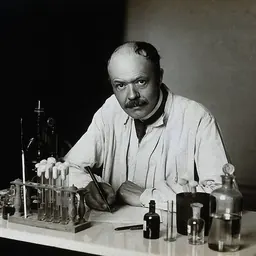
Contemporaries
People whose lives overlapped Mladen Stojanović's


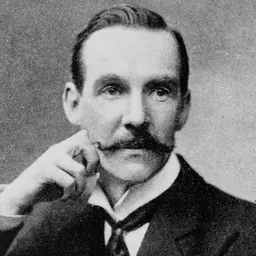


Frequently asked questions
Who was Mladen Stojanović?
Serbian partisan (1896–1942)
When was Mladen Stojanović born?
Mladen Stojanović was born on 7 April 1896 in Prijedor.
When did Mladen Stojanović die?
Mladen Stojanović died on 2 April 1942 in Jošavka Gornja.
What was Mladen Stojanović's occupation?
Mladen Stojanović was a physician.
What nationality was Mladen Stojanović?
Mladen Stojanović was Yugoslav.
Sources & further reading
· Wikipedia: Mladen Stojanović
Cite this page
APA: Biography.guide. (2026). Mladen Stojanović. https://biography.guide/mladen-stojanovic/
MLA: "Mladen Stojanović." Biography.guide, https://biography.guide/mladen-stojanovic/.
Chicago: "Mladen Stojanović." Biography.guide. https://biography.guide/mladen-stojanovic/.
Data last updated: 2026-09-23 · Spot an error? Report a correction.
Portrait: Wikimedia Commons · author & licence
Page generated 2026-09-27 05:07 UTC