
About Miroslav Krleža
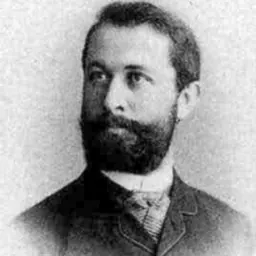
Lived 1893 – 1981 (aged 88). Miroslav Krleža was a Hungarian and Yugoslav writer, poet, journalist, prose writer, essayist and cultural critic.
Miroslav Krleža (; 7 July 1893 – 29 December 1981) was a Croatian writer, widely considered to be the greatest of the 20th century. He wrote notable works in several literary genres, including poetry (The Ballads of Petrica Kerempuh, 1936), theater (Messrs. Glembay, 1929), short story collections (The Croatian God Mars, 1922), novels (The Return of Philip Latinowicz, 1932; On the Edge of Reason, 1938), and an intimate diary. His works often include themes of bourgeois hypocrisy and conformism in Austria-Hungary and the Kingdom of Yugoslavia. Krleža wrote numerous essays on problems of art, history, politics, literature, philosophy, and military strategy, and was known as one of the great polemicists of the century. His style combines visionary poetic language and sarcasm.
Krleža dominated the cultural life of Croatia and Yugoslavia for half a century.
Biography Miroslav Krleža was born in Zagreb, He enrolled in a preparatory military school in Pécs, modern-day Hungary. At that time, Pécs and Zagreb were within the Austro-Hungarian Empire. Subsequently, he attended the Ludoviceum military academy at Budapest. He defected to Serbia, but was dismissed as a suspected spy. During this time, Croatia's principal state publishing house, Nakladni zavod Hrvatske, published his collected works. Supported by Tito, in 1950 Krleža founded the Yugoslav Institute for Lexicography, holding the position as its head until his death. The institute would be posthumously named after him and is now called the Miroslav Krleža Institute of Lexicography.
From 1950 on, Krleža enjoyed the life of a high-profile writer and intellectual, often closely connected to Tito. He also held the post of president of the Yugoslav Writers' Union between 1958 and 1961. In 1962, he received the NIN Award for the novel ("The Banners"), and in 1968 the Herder Prize.
Following the deaths of Tito in May 1980 and Bela Krleža in April 1981, Krleža spent most of his last years in ill health. He was awarded the Laureate Of The International Botev Prize in 1981. He died in his Villa Gvozd in Zagreb on 29 December 1981 and was given a state funeral in Zagreb on 4 January 1982. In 1986, Villa Gvozd was donated to the City of Zagreb. It was opened to the public in 2001, but has been temporarily closed due to the 2020 Zagreb earthquake damage as of 2021.
Works
Krleža's oeuvre can be divided into the following categories:
Poetry Although Krleža's lyric poetry is held in high regard, by common critical consensus his greatest poetic work is Balade Petrice Kerempuha (Ballads of Petrica Kerempuh), spanning more than five centuries and centred on the figure of plebeian prophet Petrica Kerempuh, a Croatian Till Eulenspiegel.
Novels Krleža's novelistic oeuvre consists of four works: The Return of Philip Latinowicz, On the Edge of Reason, The Banquet in Blitva, and The Banners. The first one is a novel about an artist. On the Edge of Reason and The Banquet in Blitva are satires (the latter located in an imaginary Baltic country and called a political poem), saturated with the atmosphere of all-pervasive totalitarianism,
Short stories and novellas The most notable collection of Krleža's short stories is the anti-war book Croatian God Mars,
Plays Krleža's main artistic interest was centered on drama. He began with experimental expressionist plays like Adam i Eva and Michelangelo Buonarroti, dealing with defining passions of heroic figures, but eventually opted for more conventional naturalist plays. The best known is Gospoda Glembajevi ("The Glembays"), a cycle dealing with the decay of a bourgeois family. Golgota is another play, political in nature.
Diaries and memoirs Krleža's memoirs and diaries include Davni dani ("Olden Days") and Djetinjstvo u Agramu ("Childhood in Zagreb"). Other works include Dnevnici ("Diaries") and the posthumously published Zapisi iz Tržiča ("Notes from Tržič") chronicle multifarious impressions.
Selected works
Croatian God Mars (, 1922) Messrs. Glembay (, 1928) The Return of Philip Latinowicz (, 1932) The Ballads of Petrica Kerempuh (, 1936) On the Edge of Reason (, 1938) The Banquet in Blitva (, 1939) (, 1962)
Translations into English:
Krleža, Miroslav. The Banquet in Blitva (Banket u Blitvi, 1939). Translated by Edward Dennis Goy and Jasna Levinger-Goy. Evanston, IL: Northwestern University Press, 2004.
_____. The Cricket Beneath the Waterfall, and Other Stories (Cvrčak pod vodopadom). Various translators; edited by Branko Lenski. New York: Vanguard Press, 1972.
_____. Harbors Rich in Ships: Selected Revolutionary Writings (The Glembays, 1928, and other early texts). Translated by Željko Cipriš. New York: Monthly Review Press, 2017.
_____. Journey to Russia (Izlet u Rusiju, 1925). Translated by Will Firth. Zagreb: Sandorf, 2017.
_____. On the Edge of Reason (Na rubu pameti, 1938). Translated by Zora Depolo. New York: New Directions, 1995.
_____. The Return of Philip Latinowitz (Povratak Filipa Latinovicza, 1932). Translated by Zora Depolo. Evanston, IL: Northwestern University Press, 1995.
Don’t just read it —
keep it.
Full-length biographies made to live with: read them, listen on the way to work, watch them tonight.
- E-book
- Audio
- Video
Instant download · yours to keep · every purchase keeps this site free
Important facts
People in Miroslav Krleža's life
Named in this biography and alive at the same time


Related people
Same field, nearest in time






Contemporaries
People whose lives overlapped Miroslav Krleža's





Frequently asked questions
Who was Miroslav Krleža?
Croatian writer (1893–1981)
When was Miroslav Krleža born?
Miroslav Krleža was born on 7 July 1893 in Zagreb.
When did Miroslav Krleža die?
Miroslav Krleža died on 29 December 1981 in Zagreb.
What was Miroslav Krleža's occupation?
Miroslav Krleža was a writer, poet, journalist, prose writer, essayist and cultural critic.
What nationality was Miroslav Krleža?
Miroslav Krleža was Hungarian and Yugoslav.
Sources & further reading
Cite this page
APA: Biography.guide. (2026). Miroslav Krleža. https://biography.guide/miroslav-krleza/
MLA: "Miroslav Krleža." Biography.guide, https://biography.guide/miroslav-krleza/.
Chicago: "Miroslav Krleža." Biography.guide. https://biography.guide/miroslav-krleza/.
Data last updated: 2026-09-26 · Spot an error? Report a correction.
Page generated 2026-09-27 05:13 UTC