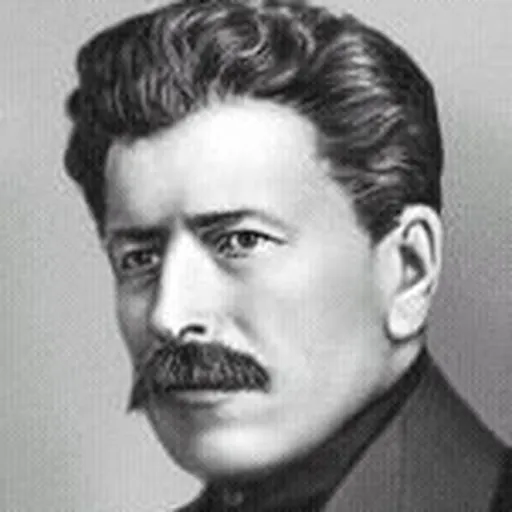
About Mitrofan Grekov
Lived 1882 – 1934 (aged 52). Mitrofan Grekov was a Russian painter.
Mitrofan Borisovich Grekov (Russian: Митрофан Борисович Греков; born: Mitrofan Pavlovich Martyshchenko; 15 June [ O.S. 3 June], 1882 – November 27, 1934) was a Russian and Soviet painter, considered to be the "father of Soviet battle painting".
Biography Born in a Cossack family, at the age of 15, he went to study painting, first at the Odesa Art School (with Kiriyak Kostandi), then 5 years later, after successfully passing the exams, he ended up at the St. Petersburg Academy of Arts, where he studied with Ilya Repin and Franz Roubaud. During his studies, he worked on Roubaud's panoramas "Defense of Sevastopol" and "Battle of Borodino".
In 1911, for the competitive work "Oxen in the Plow" he was awarded the title of artist. From 1912 he served in the Life Guards Ataman Regiment.
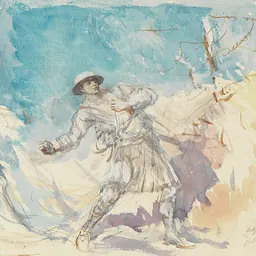
During the First World War he fought for three years at the front, from where he made many sketches. As a result of a serious injury and health problems, he was demobilized in 1917.
During the Russian Civil War, he volunteered for the Red Army in 1920. In the 1920s, he painted the First Cavalry Army of Budyonny and created a series of battle paintings dedicated to the victories of the Reds over the Whites.
In 1927, the first personal exhibition of Mitrofan Grekov was held in Novocherkassk.
In 1930 he became a member of the Association of Artists of Revolutionary Russia (AHRR). In 1931 he moved to Moscow.
He died on November 27, 1934, in Sevastopol, working on the Perekop panorama. He was buried in Moscow at the Novodevichy Cemetery.
Memory
Grekov Odesa Art School, the Rostov art school, and the studio of military artists in Moscow (working since 1934) are named after M. B. Grekov. The House-Museum of Mitrofan Grekov operates in Novocherkassk. The M. B. Grekov Medal was established in 1966 by the Ministry of Culture of the USSR, the Union of Artists of the USSR and the GPU of the SA and the Navy for the best works of fine art on a military-patriotic theme. From 1967 to 1991, one gold and three silver medals were awarded to them on Victory Day. Grekova street in Minsk. The artist's works are kept in the collections of the House-Museum, the State Tretyakov Gallery, etc
Gallery
Don’t just read it —
keep it.
Full-length biographies made to live with: read them, listen on the way to work, watch them tonight.
- E-book
- Audio
- Video
Instant download · yours to keep · every purchase keeps this site free
Important facts
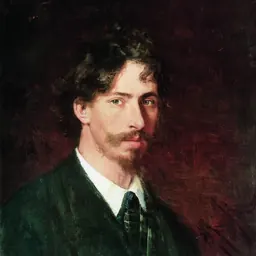
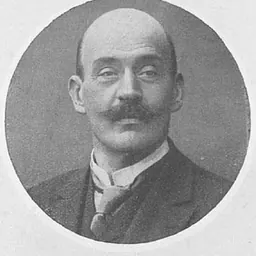
People in Mitrofan Grekov's life
Named in this biography and alive at the same time
Related people
Same field, nearest in time
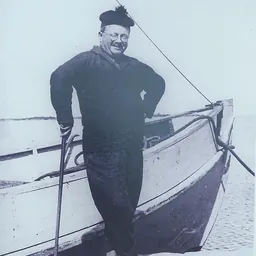

Contemporaries
People whose lives overlapped Mitrofan Grekov's


Frequently asked questions
Who was Mitrofan Grekov?
Russian painter (1882-1934)
When was Mitrofan Grekov born?
Mitrofan Grekov was born on 3 June 1882 in Sharpayevka.
When did Mitrofan Grekov die?
Mitrofan Grekov died on 27 November 1934 in Sevastopol.
What was Mitrofan Grekov's occupation?
Mitrofan Grekov was a painter.
What nationality was Mitrofan Grekov?
Mitrofan Grekov was Russian.
Sources & further reading
Cite this page
APA: Biography.guide. (2026). Mitrofan Grekov. https://biography.guide/mitrofan-grekov/
MLA: "Mitrofan Grekov." Biography.guide, https://biography.guide/mitrofan-grekov/.
Chicago: "Mitrofan Grekov." Biography.guide. https://biography.guide/mitrofan-grekov/.
Data last updated: 2026-09-22 · Spot an error? Report a correction.
Portrait: Wikimedia Commons · author & licence
Page generated 2026-09-27 05:03 UTC