
About Mirosław Hermaszewski
Lived 1941 – 2022 (aged 81). Mirosław Hermaszewski was a Polish military officer, aircraft pilot, astronaut, research Cosmonaut and fighter pilot.
Mirosław Hermaszewski (; 15 September 1941 – 12 December 2022) was a Polish cosmonaut, fighter plane pilot, and Polish Air Force officer. He became the first and, at the time of his death in December 2022, only Polish national to ever go to space when he flew aboard the Soviet Soyuz 30 spacecraft in 1978. He was the 89th human to reach outer space.
Early life and education Mirosław Hermaszewski was born on 15 September 1941 At the time of the massacre, Hermaszewski was only 18 months old; the youngest victim from his family was 1½ years old, while the oldest—Hermaszewski's grandfather—was 90.
Although he has since highlighted the need to depart from nationalist sentiments and to accept responsibility for the genocide, Hermaszewski also condemned discrimination of the Ukrainian nation as a whole based on the actions of the Ukrainian Insurgent Army and the Ukrainian villagers who aided them in the murders. In an April 2015 interview with NaTemat.pl about the massacres, he was quoted as saying:
During their time in orbit, Klimuk and Hermaszewski carried out various geoscience experiments and photographed the Earth – orbiting it 126 times. Over the duration of their stay at the space station, Hermaszewski and Klimuk—sometimes with the aid of Vladimir Kovalyonok and Aleksandr Ivanchenkov, the two other cosmonauts who had already been stationed at Salyut 6 prior to the arrival of the Soyuz 30 mission—carried out a total of eleven different experiments while in space that had been planned internationally as part of the programme.
They landed in the steppes of Kazakhstan, 300 km west of Tselinograd. After the spaceflight, Hermaszewski achieved hero status in the countries of the Eastern Bloc (especially the Polish People's Republic) and was awarded several high honours, including the rarely-given-to-foreigners Hero of the Soviet Union title for his participation in the mission. In 1985, he co-founded the Association of Space Explorers. Hermaszewski later became President of the Polish Astronautical Society (a position he held from 1986 to 1990). In 1982 he advanced to pułkownik military rank. Between 1991 and 1992, Hermaszewski served as second-in-command of the Polish Air Force and Air Defence. In the 2002 Polish local elections, again as a candidate of the social-democratic SLD-UP party, he was elected into the Mazovian Regional Assembly with 10,463 votes. He then became a member of the SLD party and ran once again in Polish parliamentary elections in 2005, with 5,223 votes but no mandate. In 2009, Universitas published his autobiographical story Ciężar nieważkości. Opowieść pilota-kosmonauty ("The Weight of Weightlessness. Story of a Pilot-Cosmonaut") to positive reception from readers, leading to reprints and several expanded versions being published in the decade that followed. In 2018, the conservative ruling Law and Justice party of Poland—mirroring similar efforts from 2007 —tried to vote through a law that would collectively demote all former members of the aforementioned WRON from the early 1980s to the lowest rank of private, including Hermaszewski. The so-called "degradation act" was met with controversy in Polish and foreign media primarily due to the case of Hermaszewski, who was initially included as a member of the WRON without his consent or knowledge. In the end, the proposed law was vetoed by President Andrzej Duda, who used Hermaszewski's case as one of the reasons why the "degradation act" needs to be rewritten.
Personal life
Hermaszewski was interested in aviation and model aircraft from an early age. He was married to Emilia (née Łazar) Hermaszewska from 1966 until his death; together they had two children, Mirosław (born 1966) and Emilia (born 1974). They also had four grandchildren: Julia, Amelia, Emilia, and Stanisław as well as a pet Yorkshire Terrier Giokonda. Hermaszewski's daughter Emilia married politician Ryszard Czarnecki.
During their training and after their joint mission to the Salyut 6 orbital station, Pyotr Klimuk and Mirosław Hermaszewski befriended each other – they stayed in touch and remained close friends ever since. Mirosław also befriended numerous other persons associated with the Soviet space programme during his time in Russia and Kazakhstan, including members of Yuri Gagarin's family and Alexei Leonov. He regularly visited schools and spoke with children of all ages, as well as attending interviews with various media outlets; he has been described as a "modest and likeable person". Hermaszewski said he had an "aesthetic experience" that transformed into a "spiritual experience" while aboard the Soyuz 30 in space, but he viewed faith and religion as an intimate and private matter.
Hermaszewski was highly critical of for-profit spaceflight and viewed space exploration as something that should to be done for science and human progress. In an interview he once stated:
Once, when the Cold War was going on, loads of money was being spent on armaments. When this period passed, some of this money was allocated to space programmes. Cooperation between the USA, Russia and other countries intensified. And there are effects. Financially, one country will definitely not be able to fly to Mars. Political decisions are needed, followed by money. A race to prestige on an "us" or "them" basis will not lead to anything. It must be "we" in a general sense—Earthlings. But there is still no such serious agreement. (Original quote: "Kiedyś, gdy trwała zimna wojna, wielkie pieniądze przeznaczano na zbrojenia.) Gdy ten okres minął, część tych pieniędzy przeznaczono na programy kosmiczne. Zintensyfikowała się współpraca USA, Rosji i innych krajów. I efekty są. Jeden kraj z całą pewnością nie udźwignie finansowo lotu na Marsa. Potrzebne są decyzje polityczne, za którymi idą pieniądze. Wyścig do prestiżu na zasadzie 'my' albo 'oni' do niczego nie doprowadzi. To musi być 'my' w sensie ogólnym — Ziemianie. Ale takiego poważnego porozumienia wciąż nie ma". On 25 June 2025, less than three years after Hermaszewski's death, Uznański-Wiśniewski launched to space as the second Polish person in history. His son-in-law, Czarnecki, informed news media that Hermaszewski died in a Varsovian hospital due to complications resulting from a surgery he had undergone that morning. On 21 December, after Holy Mass in the Field Cathedral of the Polish Army, the cosmonaut was buried at Powązki Military Cemetery in Warsaw. The ceremony was of a state nature with the participation of a Representative Regiment of the Polish Armed Forces; four F-16 fighter jets flew over the necropolis in tribute of the deceased general.
A tombstone monument was unveiled on his grave at 17:20, on 27 June 2024 – the 46th anniversary of Mirosław Hermaszewski's spaceflight.
Cultural significance
In the Polish People's Republic, after the successful landing of Soyuz 30, numerous items of memorabilia were produced – postage stamps, posters, patches, pins, stickers, coins, medals, pennants, badges, and other small symbols – many of which bore the likeness of Mirosław Hermaszewski. In 1978 alone, books about Hermaszewski and his flight were printed in the following numbers: 90,000 copies of Polak melduje z kosmosu, Polska w kosmosie (30,000), Polak w kosmosie (80,000), and Droga Polaka na orbitę (20,000), for a total of 220,000 books. In addition, 92,000 black-and-white postcards, 90,000 copies of two photo-newspapers, and 2,000 sets of photographs, as well as other collectibles were produced. The Czołówka film studio put out four documentary-biographical films about the first Pole in space, all made by Bohdan Świątkiewicz. In Wołów, the town in southwest Poland where Hermaszewski's family was relocated when he was a child, a monument "To the Glory of Polish Aviators and Cosmonauts" was opened in 1985 on the occasion of the 700th anniversary of Wołów receiving its town privileges. The monument is a Lim-5P attack aircraft that was flown by Hermaszewski during his military career. In Vitebsk, present-day northeast Belarus, a monument to cosmonauts Pyotr Klimuk and Mirosław Hermaszewski was opened in 1988. Similarly to the one in Wołów, one of the fighter jets that Hermaszewski flew on is used as a monument in Miastko. It was gifted to the town by the cosmonaut in 1989 and unveiled on the 50th anniversary of the outbreak of World War II; the text on its plaque reads: "To the glory of Polish wings on the 50th anniversary of the outbreak of the Second World War – citizens of Miastko". During his time in space, Hermaszewski wore a digital watch produced by Unitra Warel that was considered an advanced piece of technology for its time and was the first Polish electronic watch. In 2016, the Polish watchmaking company G. Gerlach produced the Kosmonauta – their own modernised version of the design, but updated for the capabilities of contemporary technology. Mirosław Hermaszewski was also honoured by the Russian Sturmanskie brand of wristwatches with a limited edition automatic chronograph series in 2019; although this watch was not styled after the Unitra Warel, it features unique markings with the badge of Polish military pilots on its face as well as the likeness of the first Polish cosmonaut on its reverse. Only 190 units were produced to reflect the 190 hours Hermaszewski spent in the cosmos, each sold in special capsule packaging with an original certificate of authenticity signed by Hermaszewski. Andrzej Pągowski designed a poster for Hermaszewski's 1978 spaceflight, featuring the cosmonaut's likeness. In 2025, he designed a new poster for Sławosz Uznański-Wiśniewski's Ignis mission.
Honours and awards Mirosław Hermaszewski was awarded the Commander's Cross of the Order of Polonia Restituta in 2003 by then-President of Poland Aleksander Kwaśniewski. Commander's Cross of the Order of Polonia Restituta – 2003 Order of the Cross of Grunwald 1st Class – 1978. Medal of the 40th Anniversary of People's Poland Gold Medal of the Armed Forces in the Service of the Fatherland Gold Order of Merit of Lower Silesia – 2013 Janek Krasicki Gold Order – 1978 Cross of Merit (Polish Scouting and Guiding Association) Gold Medal "For Efforts in Strengthening the PRL–USSR Friendship" Scharnhorst Order – East Germany Frombork (1983), and Wołów (2011)
Don’t just read it —
keep it.
Full-length biographies made to live with: read them, listen on the way to work, watch them tonight.
- E-book
- Audio
- Video
Instant download · yours to keep · every purchase keeps this site free
Important facts
People in Mirosław Hermaszewski's life
Named in this biography and alive at the same time




Related people
Same field, nearest in time

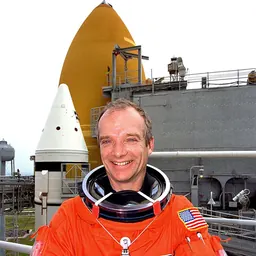
Contemporaries
People whose lives overlapped Mirosław Hermaszewski's
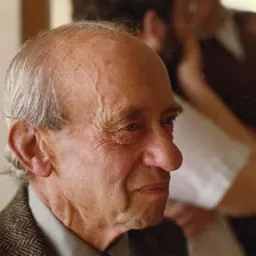
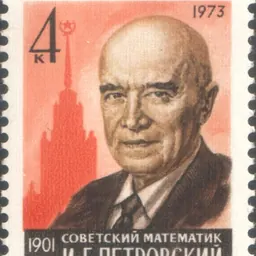


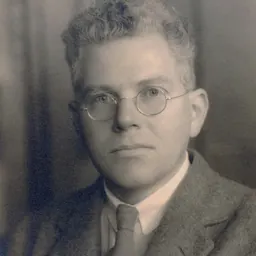
Frequently asked questions
Who was Mirosław Hermaszewski?
Polish cosmonaut (1941–2022)
When was Mirosław Hermaszewski born?
Mirosław Hermaszewski was born on 15 September 1941 in Lipniki, Wołyń Voivodeship.
When did Mirosław Hermaszewski die?
Mirosław Hermaszewski died on 12 December 2022 in Warsaw.
What was Mirosław Hermaszewski's occupation?
Mirosław Hermaszewski was a military officer, aircraft pilot, astronaut, research Cosmonaut and fighter pilot.
What nationality was Mirosław Hermaszewski?
Mirosław Hermaszewski was Polish.
Sources & further reading
· Wikipedia: Mirosław Hermaszewski
· DBpedia: Mirosław Hermaszewski
Cite this page
APA: Biography.guide. (2026). Mirosław Hermaszewski. https://biography.guide/miroslaw-hermaszewski/
MLA: "Mirosław Hermaszewski." Biography.guide, https://biography.guide/miroslaw-hermaszewski/.
Chicago: "Mirosław Hermaszewski." Biography.guide. https://biography.guide/miroslaw-hermaszewski/.
Data last updated: 2026-09-20 · Spot an error? Report a correction.
Page generated 2026-09-27 05:22 UTC