
Miriam Makeba
South African singer and civil rights activist
About Miriam Makeba
Lived 1932 – 2008 (aged 76). Miriam Makeba was an Algerian singer, actor, recording artist, composer, musician and civil rights activist.
Zenzile Miriam Makeba ( , ; 4 March 1932 – 9 November 2008), nicknamed Mama Africa, was a South African singer, songwriter, actress, and civil rights activist. Associated with musical genres including Afropop, jazz, and world music, she was an advocate against apartheid and white-minority government in South Africa.
Born in Johannesburg to Swazi and Xhosa parents, Makeba was forced to find employment as a child after the death of her father. She had a brief and allegedly abusive first marriage at the age of 17, gave birth to her only child in 1950, and survived breast cancer. Her vocal talent had been recognized when she was a child, and she began singing professionally in the 1950s, with the Cuban Brothers, the Manhattan Brothers, and an all-woman group, the Skylarks, performing a mixture of jazz, traditional African melodies, and Western popular music. In 1959, Makeba had a brief role in the anti-apartheid film Come Back, Africa, which brought her international attention, and led to her performing in Venice, London, and New York City. In London, she met the American singer Harry Belafonte, who became a mentor and colleague. She moved to New York City, where she became immediately popular, and recorded her first solo album in 1960. Her attempt to return to South Africa that year for her mother's funeral was prevented by the country's government.
Makeba's career flourished in the United States, and she released several albums and songs, her most popular being "Pata Pata" (1967). Along with Belafonte, she received a Grammy Award for Best Folk Recording for their 1965 album An Evening with Belafonte/Makeba. She testified against the South African government at the United Nations and became involved in the civil rights movement. She married Stokely Carmichael, a leader of the Black Panther Party, in 1968, and consequently lost support among white Americans. Her visa was revoked by the US government when she was travelling abroad, forcing her and Carmichael to relocate to Guinea. She continued to perform, mostly in African countries, including at several independence celebrations. She began to write and perform music more explicitly critical of apartheid; the 1977 song "Soweto Blues", written by her former husband Hugh Masekela, was about the Soweto uprising. After apartheid was dismantled in 1990, Makeba returned to South Africa. She continued recording and performing, including a 1991 album with Nina Simone and Dizzy Gillespie, and appeared in the 1992 film Sarafina!. She was named an FAO Goodwill Ambassador in 1999, and campaigned for humanitarian causes. She died of a heart attack during a 2008 concert in Italy.
Makeba was among the first African musicians to receive worldwide recognition. She brought African music to a Western audience, and popularized the world music and Afropop genres. Despite her cosmopolitan background, she was frequently viewed by Western audiences as an embodiment of Africa: she was also seen as a style icon in both South Africa and the West. Makeba made popular several songs critical of apartheid, and became a symbol of opposition to the system, particularly after her right to return was revoked. Upon her death, former South African President Nelson Mandela said that "her music inspired a powerful sense of hope in all of us."
Early years Childhood and family Zenzile Miriam Makeba was born on 4 March 1932 in the black township of Prospect, near Johannesburg, as the only child of her father and the sixth of her mother. Her Xhosa father, Caswell Makeba, was a teacher; he died when she was six years old. Her Swazi mother, Christina Makeba, was a domestic worker; she had previously separated from her first husband and met and married Caswell shortly afterwards. Makeba later said that before she was conceived, her mother had been warned that any future pregnancy could be fatal. Neither Miriam nor her mother seemed likely to survive after a difficult labour and delivery. Miriam's grandmother, who attended the birth, often muttered , a Xhosa word that means "you brought this on yourself", to Miriam's mother during her recovery, which inspired her to give her daughter the name "Zenzile".
When Makeba was eighteen days old, her mother was arrested and sentenced to a six-month prison term for selling umqombothi, a homemade beer brewed from malt and cornmeal. The family could not afford the small fine required to avoid a jail term, and Miriam spent the first six months of her life in jail. By the time of her mother's release from prison, Makeba's father, who had been having difficulty finding work as a teacher, had obtained a job as a clerk at the Shell Oil Company in Nelspruit (now Mbombela) and the family moved along with him accordingly.
As a child, Makeba sang in the choir of Kilnerton Training Institution in Pretoria, an all-black Methodist primary school that she attended for eight years. Her talent for singing earned her praise at school.
While performing with the Manhattan Brothers in 1955, Makeba met Nelson Mandela, then a young lawyer; he later remembered the meeting, and that he felt that the girl he met "was going to be someone." The album was not commercially successful, and Makeba was briefly dropped from RCA Victor: she was re-signed soon after as the label recognised the commercial possibilities of the growing interest in African culture. Her South African identity had been downplayed during her first signing, but it was strongly emphasised the second time to take advantage of this interest. Makeba made several appearances on television, often in the company of Belafonte. In 1962, Makeba and Belafonte sang at the birthday party for US President John F. Kennedy at Madison Square Garden, but Makeba did not go to the party afterwards because she was ill. Kennedy nevertheless insisted on meeting her, so Belafonte sent a car to pick her up.
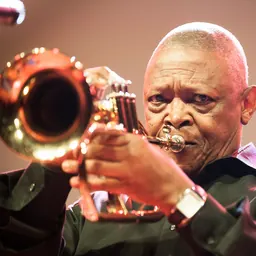
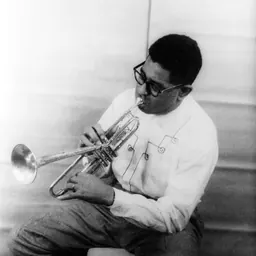
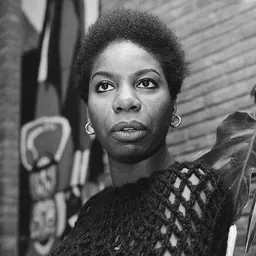
In 1964, Makeba released her second studio album for RCA Victor, The World of Miriam Makeba. An early example of world music, the album peaked at number eighty-six on the Billboard 200. Makeba's music had a cross-racial appeal in the US; white Americans were attracted to her image as an "exotic" African performer, and black Americans related their own experiences of racial segregation to Makeba's struggle against apartheid. Makeba found company among other African exiles and émigrés in New York, including Hugh Masekela, to whom she was married from 1964 to 1966. During their marriage, Makeba and Masekela were neighbours of the jazz musician Dizzy Gillespie in Englewood, New Jersey; they spent much of their time in Harlem. She also came to know actors Marlon Brando and Lauren Bacall, and musicians Louis Armstrong and Ray Charles. Fellow singer-activist Nina Simone became friendly with Makeba, as did actor Cicely Tyson; Makeba and Simone performed together at Carnegie Hall. Makeba was among black entertainers, activists, and intellectuals in New York at the time who believed that the civil rights movement and popular culture could reinforce each other, creating "a sense of intertwined political and cultural vibrancy"; other examples included Maya Angelou and Sidney Poitier. She later described her difficulty living with racial segregation, saying "There wasn't much difference in America; it was a country that had abolished slavery but there was apartheid in its own way." The album dealt with the political plight of black South Africans under apartheid, including several songs critical of the South African government, such as "Ndodemnyama we Verwoerd" ("Watch out Verwoerd", a reference to Hendrik Verwoerd, one of the architects of apartheid), along with Makeba's composition "Nongqongqo" about political prisoners, which explicitly mentioned activists such as Nelson Mandela and Robert Sobukwe. It sold widely and raised Makeba's profile in the US; Belafonte and Makeba's concert tour following its release was often sold out, and the album has been described as the best they made together. Makeba's use of lyrics in Swahili, Xhosa, and Sotho led to her being seen as a representation of an "authentic" Africa by American audiences. In 1967, more than ten years after she first recorded the song, the single "Pata Pata" was released in the US on an album of the same title, and became a worldwide hit. During its recording, she and Belafonte had a disagreement, after which they stopped recording together. Makeba recorded for this label, and later stated that "I've never seen a country that did what Sékou Touré did for artists." Between 15,000 and 20,000 students took part; caught unprepared, the police opened fire on the protesting children, killing hundreds and injuring more than a thousand. Hugh Masekela wrote "Soweto Blues" in response to the massacre, and the song was performed by Makeba, becoming a staple of her live performances for many years. A review in the magazine Musician said that the song had "searingly righteous lyrics" about the uprising that "cut to the bone". Makeba's daughter Bongi, and her three children, lived with Makeba for a period. Bongi, who was a singer in her own right, often accompanied her mother on stage, and contributed to her reputation. However, the relationship between the two grew strained after the death of Bongi's youngest child.
Belgium
Makeba's daughter Bongi died in childbirth in 1985. Makeba was left responsible for her two surviving grandchildren, and decided to move out of Guinea, In the following year, Masekela introduced Makeba to Paul Simon, and a few months later she embarked on Simon's very successful Graceland Tour. The tour concluded with two concerts held in Harare, Zimbabwe, which were filmed in 1987 for release as Graceland: The African Concert.
Return to South Africa, final years and death
Following growing pressure from the anti-apartheid movement both domestically and internationally, in 1990 State President Frederik Willem de Klerk reversed the ban on the African National Congress and other anti-apartheid organisations, and announced that Mandela would shortly be released from prison. Mandela was released in February 1990. He persuaded Makeba to try to return to South Africa; she obtained a six-day visa after months of effort, and entered South Africa using her French passport on 10 June 1990. Her arrival was a considerable event, featuring meetings, interviews, and singing by Brenda Fassie.
Makeba, Gillespie, Simone, and Masekela recorded and released her studio album, Eyes on Tomorrow, in 1991. It combined jazz, R&B, pop, and traditional African music, and was a hit across Africa. Makeba and Gillespie then toured the world together to promote it. In November she made a guest appearance on a US sitcom, The Cosby Show.
On 16 October 1999, Makeba was named a Goodwill Ambassador of the Food and Agriculture Organization of the United Nations. In January 2000, her album, Homeland, produced by the New York City based record label Putumayo World Music, was nominated for a Grammy Award in the Best World Music Album category. She worked closely with Graça Machel-Mandela, the South African first lady, advocating for children suffering from HIV/AIDS, child soldiers, and the physically handicapped. Makeba's second autobiography, Makeba: The Miriam Makeba Story, was published in 2004. In 2005 she announced that she would retire and began a farewell tour, but despite having osteoarthritis, continued to perform until her death. She suffered a heart attack after singing her hit song "Pata Pata", and was taken to the Pineta Grande clinic, where doctors were unable to revive her.Francesco Longanella, medical director of the Pineta Grande Clinic, told Reuters that "[Miriam Makeba] arrived [at the Pineta Grande Clinic] at 11:15 pm [of 9 November 2008], [but that she was] already dead [...] [we] tried to revive her for three quarters of an hour." (Translated from Italian)
Music and image Musical style The groups with which Makeba began her career performed mbube, a style of vocal harmony which drew on American jazz, ragtime, and Anglican church hymns, as well as indigenous styles of music. Commentators also frequently described her in terms of the prominent men she was associated with, despite her own prominence. During her early career in South Africa she had been seen as a sex symbol, an image that received considerably less attention in the US.
Makeba was described as a style icon, both in her home country and the US. She wore no makeup and refused to straighten her hair for shows, thus helping establish a style that came to be known internationally as the "Afro look". According to music scholar Tanisha Ford, her hairstyle represented a "liberated African beauty aesthetic". She was seen as a beauty icon by South African schoolgirls, who were compelled to shorten their hair by the apartheid government. Makeba stuck to wearing African jewellery; she disapproved of the skin-lighteners commonly used by South African women at the time, and refused to appear in advertisements for them. Her self-presentation has been characterised by scholars as a rejection of the predominantly white standards of beauty that women in the US were held to, which allowed Makeba to partially escape the sexualisation directed at women performers during this period. Nonetheless, the terms used to describe her in the US media have been identified by scholars as frequently used to "sexualize, infantalize, and animalize" people of African heritage.
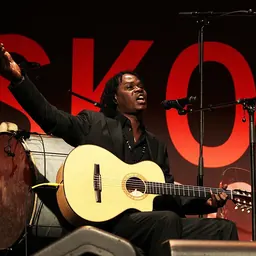
Legacy Musical influence Makeba has been credited with popularising world music, along with artists such as Youssou N'Dour, Salif Keita, Angélique Kidjo, Ali Farka Touré, and Baaba Maal (pictured clockwise from top left). Makeba was among the most visible Africans in the US; as a result, she was often emblematic of the continent of Africa for Americans. Her music earned her the moniker "Mama Africa",
Outside her home country Makeba was credited with bringing African music to a Western audience. She is credited, along with artists such as Youssou N'Dour, Salif Keita, Ali Farka Touré, Baaba Maal and Angélique Kidjo, with popularising the genre of world music. South African singer Lira has frequently been compared with Makeba, particularly for her performance of "Pata Pata" during the opening ceremony of the 2010 Football World Cup. A year later, Kidjo dedicated her concert in New York to Makeba, as a musician who had "paved the way for her success". In an obituary, scholar Lara Allen referred to Makeba as "arguably South Africa's most famous musical export".
Activism Makeba was among the most visible people campaigning against the apartheid system in South Africa,
Awards and recognition
Makeba's 1965 collaboration with Harry Belafonte won a Grammy Award, making her the first African recording artist to win this award. At the South African Music Awards (SAMAs), she received five awards: Best Female Artist and Best adult contemporary african album for her 2000 album Homeland at the eighth ceremony in 2001, along with awards for Best adult contemporary album and Best Jazz Vocal album for her 2003 album Reflections, as well as Best DVD for her live album Live at Bern's Salonger, Stockholm, Sweden, 1966, at the tenth ceremony in 2004. Makeba shared the 2001 Polar Music Prize with Sofia Gubaidulina. They received their prize from Carl XVI Gustaf, the King of Sweden, during a nationally televised ceremony at Berwaldhallen, Stockholm, on 27 May 2002. Rolling Stone placed her 53rd in its list of "The 200 Greatest Singers of All Time" in 2023.
Makeba won the Dag Hammarskjöld Peace Prize in 1986, She also received several honorary doctorates. In 2003, she was awarded South Africa's Order for Meritorious Service, and in the next year, she was voted 38th in a poll ranking 100 Great South Africans. The show was presented as Mama Africa: Celebrating Miriam Makeba at the Barbican in London on 21 November 2009. A documentary film titled Mama Africa, about Makeba's life, co-written and directed by Finnish director Mika Kaurismäki, was released in 2011. On 4 March 2013, and again on International Women's Day in 2017, Google honoured her with a Google Doodle on their homepage. In 2014 she was honoured (along with Nelson Mandela, Albertina Sisulu and Steve Biko) in the Belgian city of Ghent, which named a square after her, the "Miriam Makebaplein". Makeba was named 1967's "woman of the year" by Time magazine in 2020, as one of a list of 100 "women of the year" for the years 1920–2019.
In 2015 the French singer Jain released "Makeba", a tribute. Mama Africa, a musical about Makeba, was produced in South Africa by Niyi Coker. Originally titled Zenzi!, the musical premiered to a sold-out crowd in Cape Town on 26 May 2016. It was performed in the US in St. Louis, Missouri and at the Skirball Center for the Performing Arts in New York City between October and December 2016. The musical returned to South Africa in February 2017 for what would have been Makeba's 85th birthday. American-born African jazz singer Somi wrote a play about Makeba, Dreaming Zenzile, which premiered in 2021, and released a tribute album dedicated to her, Zenzile: The Reimagination of Miriam Makeba (2022). In June 2023, "Makeba" received a resurgence in popularity due to the virality it achieved on TikTok.
Notable songs and albums
This is a list of albums and songs, including covers, by Miriam Makeba that have received significant mention in commentary about her or about the musical and political movements she participated in.
Albums Miriam Makeba (1960) The Many Voices of Miriam Makeba (1962) An Evening with Belafonte/Makeba (1965) Eyes on Tomorrow (1991) Homeland (2000) "Malaika"
Don’t just read it —
keep it.
Full-length biographies made to live with: read them, listen on the way to work, watch them tonight.
- E-book
- Audio
- Video
Instant download · yours to keep · every purchase keeps this site free
Important facts
Family & relationships
People in Miriam Makeba's life
Named in this biography and alive at the same time


Related people
Same field, nearest in time

Contemporaries
People whose lives overlapped Miriam Makeba's



Frequently asked questions
Who was Miriam Makeba?
South African singer and civil rights activist (1932–2008)
When was Miriam Makeba born?
Miriam Makeba was born on 4 March 1932 in Johannesburg.
When did Miriam Makeba die?
Miriam Makeba died on 9 November 2008 in Castel Volturno.
What was Miriam Makeba's occupation?
Miriam Makeba was a singer, actor, recording artist, composer, musician and civil rights activist.
What nationality was Miriam Makeba?
Miriam Makeba was Algerian.
Sources & further reading
Cite this page
APA: Biography.guide. (2026). Miriam Makeba. https://biography.guide/miriam-makeba/
MLA: "Miriam Makeba." Biography.guide, https://biography.guide/miriam-makeba/.
Chicago: "Miriam Makeba." Biography.guide. https://biography.guide/miriam-makeba/.
Data last updated: 2026-09-20 · Spot an error? Report a correction.
Page generated 2026-09-27 05:31 UTC