
About Mikhail Malofeev
Lived 1956 – 2000 (aged 43). Mikhail Malofeev was a Russian military officer.
Mikhail Yuryevich Malofeyev (25 May 1956 – 18 January 2000) was a Russian major general who served in the Russian Ground Forces from 1977 until his death. Initially serving as a platoon commander under the Group of Soviet Forces in Germany, he served in multiple military districts and theatres including service in the First Chechen War, rising through the ranks before becoming a major general in June 1999 and deputy chief of the Combat Training Directorate of the Leningrad Military District a month later.
He was transferred to the North Caucasus in the leadup to the Second Chechen War between October and November 1999, becoming deputy commander of the northern front during the conflict. During the Battle of Grozny, he went missing in the west of the city on 18 January, 2000. The reporting of his disappearance and ultimate fate was conflicted, including claims of his capture and interrogation by Chechen rebels.
Following several days of fighting to retake the area of his disappearance, his body was located and recovered on 23 January, after which he was transported to Vladikavkaz and then Saint Petersburg, with memorial services taking place at both. He was then buried at Nikolskoe Cemetery with full military honors on 28 January. He was posthumously awarded the title Hero of the Russian Federation on 9 February, which was presented to his wife, Svetlana Malofeyeva, at a ceremony in the Grand Kremlin Palace on 23 February.
Early life and military career Mikhail Yuryevich Malofeyev was born on 25 May 1956 in Nakhodka, Primorsky Krai, Russia, In the spring of 1995 he went to Chechnya as an assistant to the commander of the division's 129th Guards Motor Rifle (Peacekeeping) Regiment, deployed to take part in the First Chechen War. At this time the regiment was involved in desultory fighting on the Terek ridge. After spending several weeks there, he returned with the regiment when it was rotated out of the combat zone. Malofeyev was promoted to deputy division commander, overseeing the reorganization of the 45th Guards into the 138th Separate Guards Motor Rifle Brigade, becoming the first commander of the latter in December 1997. Under his command the 138th was evaluated as one of the best units of the Leningrad Military District. Promoted to major general in June 1999, Malofeyev became deputy chief of the Combat Training Directorate of the Leningrad Military District a month later. He was transferred to the North Caucasus between October and November 1999. and head of the combat training department of the 58th Guards Combined Arms Army in the North Caucasus Military District.
Grozny
Background
In August, 1999 Islamist forces invaded the Republic of Dagestan from Chechnya. A major bombing campaign on Chechnya occurred from late August to late September, resulting in the displacement of an estimated 100,000 Chechens. In a two week period in September that year, four apartment bombings occurred in the cities resulting in the deaths of 307 people. Russian authorities quickly blamed Chechnya for the bombings, despite having no evidence to support that claim or any Chechens taking responsibility for them.
On 22 September, Deputy Interior Minister lieutenant general Igor Zubov declared that approximately 30,000 Russian troops had surrounded Chechnya and were ready to invade if ordered while also ruling out an offensive at the time. On 1 October, the land war began, with Russian forces reaching the Terek River on 5 October, crossing it in mid-October and surrounding Grozny by December. Despite pledging that Russia would not storm Grozny and would avoid protracted guerrilla warfare like the First Chechen War, Russian forces assaulted Grozny and met stiff resistance from Chechen rebels, resulting in gruelling guerrilla warfare.
Using their knowledge of the city, the Chechens turned Grozny into a death-trap for the Russian forces, attacking and then disappearing into sewers and bunkers. One Russian officer said in late January that approximately 20 conscripts from a single regiment were killed by Chechens who had flanked them by using the sewer system to attack them from behind.
Disappearance Malofeyev disappeared on the first day of a renewed Russian assault on Grozny on 16 January.
Initial reporting from both sides of the conflict as to his fate following his disappearance were contradictory.
Chechen reporting In a televised announcement on 20 January, Chechen warlord Shamil Basayev claimed that Malofeyev had been captured, stating that they had captured him while he was leading a reconnaissance patrol into Grozny on 18 January. They also stated that he was smuggled through Russian lines to a "secret location" outside of Grozny to be questioned. According to the Chechens, he had been captured when his unit was ambushed at night by Chechen fighters who had used the sewer system to reach their position. On around 22 January, Chechen commander Baudi Bakuyev stated that the Russian military would soon be receiving a video tape proving that Malofeyev was still alive.
Russian reporting The Russian Ministry of Defence failed to acknowledge Malofeyev's disappearance until after the announcement from Basayev, stating that he had been missing since 18 January.
Unnamed Russian military sources stated on 20 January that he had been wounded by sniper fire in an ambush in north-western Grozny and were not sure whether he had been killed or captured.
The Russian government had previously claimed that Staropromyslovsky, the area he was visiting at the time, had already been captured a month prior. Kazantsev stated told Interfax "[Malofeyev] behaved as a hero and, when an assault team of the Interior [Ministry] troops tarried, led a small group forward so that the main forces could act,” and that he "was wounded in his head. The bandits opened grenade-thrower and mortar fire, and a wall collapsed over the heads of the general's group." Malofeyev was buried in the Nikolskoe Cemetery with full military honors on 28 January.
He was posthumously awarded Russia's highest honor, the title of Hero of the Russian Federation, on 9 February for "courage and heroism displayed during the liquidation of illegal armed formations in the North Caucasus." His wife, Svetlana Malofeyeva, accepted the award on his behalf in a ceremony in the Grand Kremlin Palace on 23 February.
Commemoration The school that Malofeyev graduated from is named in his honor, and in 2006 a memorial plaque was placed on the wall of the school. A stamp was issued by Russian Post in 2014 dedicated to Malofeyev. An electric train was named for him in 2017. In September 2020 a bust of Malofeyev was installed on the base of the 138th Guards Motor Rifle Brigade next to the building that his office was located in.
Don’t just read it —
keep it.
Full-length biographies made to live with: read them, listen on the way to work, watch them tonight.
- E-book
- Audio
- Video
Instant download · yours to keep · every purchase keeps this site free
Important facts
People in Mikhail Malofeev's life
Named in this biography and alive at the same time
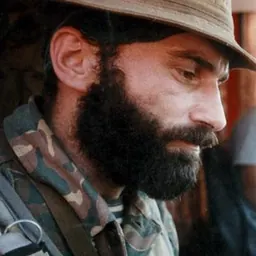
Related people
Same field, nearest in time
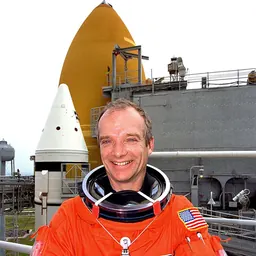
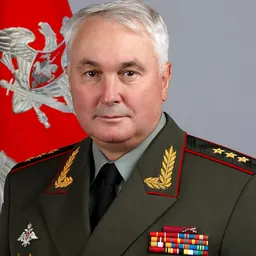

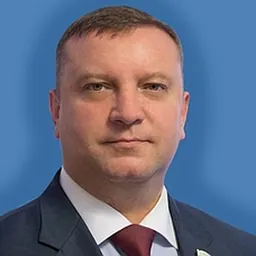

Contemporaries
People whose lives overlapped Mikhail Malofeev's

Frequently asked questions
Who was Mikhail Malofeev?
Russian Major General (1956-2000)
When was Mikhail Malofeev born?
Mikhail Malofeev was born on 25 May 1956 in Lomonosov.
When did Mikhail Malofeev die?
Mikhail Malofeev died on 17 January 2000 in Grozny.
What was Mikhail Malofeev's occupation?
Mikhail Malofeev was a military officer.
What nationality was Mikhail Malofeev?
Mikhail Malofeev was Russian.
Sources & further reading
Cite this page
APA: Biography.guide. (2026). Mikhail Malofeev. https://biography.guide/mikhail-malofeev/
MLA: "Mikhail Malofeev." Biography.guide, https://biography.guide/mikhail-malofeev/.
Chicago: "Mikhail Malofeev." Biography.guide. https://biography.guide/mikhail-malofeev/.
Data last updated: 2026-09-20 · Spot an error? Report a correction.
Page generated 2026-09-27 05:22 UTC