
About Mike Hasenfratz
Lived 1966 – 2024 (aged 58). Mike Hasenfratz was an athlete.
Michael Edgar Hasenfratz (June 19, 1966 – November 24, 2024) was a Canadian ice hockey referee. He worked in the National Hockey League (NHL) from the 2000–01 season until his retirement following the 2014–15 season, officiating 705 regular season games. He wore uniform number 30 until the 2011–12 season, wearing number 2 for the remainder of his career. He previously worked 18 years in the Western Hockey League (WHL), refereed at two Memorial Cups, and was a linesman at the 1991 World Junior Ice Hockey Championships. He received the Allen Paradice Memorial Trophy as the WHL's official of the year in the 1999–2000 season.
Early life Michael Edgar Hasenfratz was born on June 19, 1966, in Regina, Saskatchewan. He was the son of Agnes and Tony Hasenfratz, and had two sisters. Attending Dr. Martin LeBoldus High School, he played golf and football. He also played minor ice hockey in Regina, where his father organized tournaments.
Officiating career Hasenfratz began refereeing minor hockey at age 13, and began working as a linesman in the Western Hockey League (WHL) at age 16. He subsequently quit playing hockey, and also officiated in senior ice hockey, and the Saskatchewan Junior Hockey League. then attended the annual National Hockey League (NHL) training camp for the best young officials in 1990. Rated as one of the top linesmen by the Canadian Amateur Hockey Association, he was chosen to officiate at the 1991 World Junior Ice Hockey Championships hosted in Saskatchewan.
Switching from being a linesman, Hasenfratz began the 1990–91 WHL season as a referee. In 1991, he relocated to British Columbia to become a full-time official and worked western division games in the WHL.
The NHL had since named Hasenfratz to its referee training program, where he worked at least one week per month under direct NHL supervision while officiating minor league games. In 1993, the ten trainees, including Hasenfratz, all declined offers to be replacement referees if the NHL officials went on strike. Not wanting to be a strikebreaker, he was determined to instead earn his way into the NHL. He continued to work games in the WHL in addition to games in the International Hockey League. Hasenfratz respected the strike by NHL officials, since "they fought for what [he] wanted to have in the future". In 1997, the NHL dropped Hasenfratz from its trainee program. He contemplated retirement, but chose to continue in hopes of working at the 2001 Memorial Cup in Regina. He refereed the 1998 WHL All-Star Game in Regina, and received the Allen Paradice Memorial Trophy as the league's official of the year in the 1999–2000 season.
National Hockey League Hasenfratz made his NHL debut during the October 21, 2000, game between the New York Islanders and the Washington Capitals at the MCI Center. His other crew members included referee Paul Stewart, and linesmen Gord Broseker and Pat Dapuzzo. Hasenfratz's first playoff assignment was game two of the 2002 Western Conference quarterfinals between the Vancouver Canucks and the Detroit Red Wings. He was assigned as the standby official for the game, filling in for an injured Greg Devorski.
Hasenfratz worked game three of the 2008 Eastern Conference quarterfinals between the New York Rangers and the New Jersey Devils, in which an incident between Rangers forward Sean Avery and Devils goaltender Martin Brodeur led to an immediate adjustment of the NHL's unsportsmanlike conduct rule. The adjustment became known as "the Avery Rule".
Prior to the start of the 2009–10 season, Hasenfratz discovered he had an aortic aneurysm. It devolved into an aortic dissection that required emergency surgery. He had open-heart surgery at the Cleveland Clinic. In a subsequent surgery, excess fluid was drained near his heart which caused a collapsed lung. He declined to retire from refereeing and receive a disability pension. Upon returning to the NHL, he changed to uniform number 2, to signify getting a second chance after two surgeries, and for having the "world's second-best job, right after playing". His crew members included referee Mike Leggo, and linesmen Tim Nowak and Derek Amell. He missed the 2014–15 season due to health issues before retiring, after officiating 705 regular season games. He also briefly worked as a private investigator.
His father was disappointed when Hasenfratz resigned from the police to pursue an officiating dream. He achieved the goal in July 2000, but his father died earlier in the year in February.
Married three times, Hasenfratz had a daughter and a son.
Hasenfratz died on November 24, 2024, in Fort Myers, Florida, at age 58.
Don’t just read it —
keep it.
Full-length biographies made to live with: read them, listen on the way to work, watch them tonight.
- E-book
- Audio
- Video
Instant download · yours to keep · every purchase keeps this site free
Important facts
People in Mike Hasenfratz's life
Named in this biography and alive at the same time
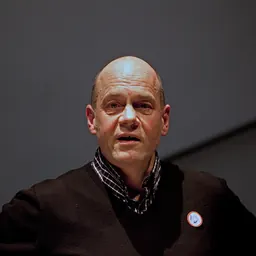


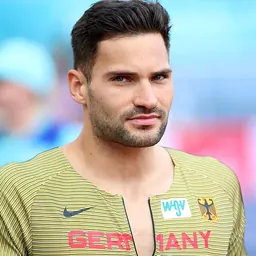


Related people
Same field, nearest in time



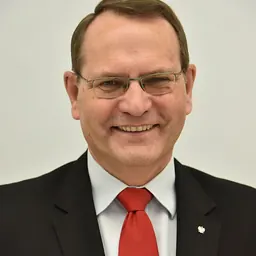
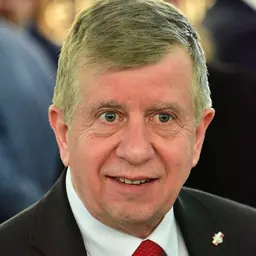
Contemporaries
People whose lives overlapped Mike Hasenfratz's


Frequently asked questions
Who was Mike Hasenfratz?
Canadian ice hockey official
When was Mike Hasenfratz born?
Mike Hasenfratz was born on 19 June 1966.
When did Mike Hasenfratz die?
Mike Hasenfratz died on 25 November 2024.
What was Mike Hasenfratz's occupation?
Mike Hasenfratz was an athlete.
Sources & further reading
Cite this page
APA: Biography.guide. (2026). Mike Hasenfratz. https://biography.guide/mike-hasenfratz/
MLA: "Mike Hasenfratz." Biography.guide, https://biography.guide/mike-hasenfratz/.
Chicago: "Mike Hasenfratz." Biography.guide. https://biography.guide/mike-hasenfratz/.
Data last updated: 2026-09-20 · Spot an error? Report a correction.
Page generated 2026-09-27 05:25 UTC