
About Mihkel Lüdig
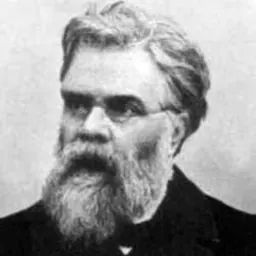
Lived 1880 – 1958 (aged 78). Mihkel Lüdig was a Russian and Estonian conductor, composer, choir director, organist and music educator.
Mihkel Lüdig ( – 7 May 1958) was an Estonian composer, organist and choir conductor. As a composer, he particularly worked on a cappella choral songs. Lüdig is considered one of the major organisers of large-scale musical events in 20th century Estonia. He was born in Vaskrääma, studied at both Moscow and St. Petersburg conservatories, and was a student of Nicolai Soloviev.
Events Lüdig initiated and led a number of events: the Singing Day of Pärnu in 1903; the opening of new building of Vanemuine in 1906; the Music Day of Tartu in 1909; the seventh Estonian Song Festival in 1910; the opening of Endla in 1911.
Business Lüdig was among the founders of Esto-Muusika, the most successful music supply business in Estonia of the time, and the short-lived monthly journal , edited by .
Career In 1918–1924, Lüdig worked as an organist of the Kaarli kirik.
In 1920–1922, Lüdig was an organ teacher in the Tallinn Higher School of Music, one of whose founders he had been in 1919. Lüdig was also a director of the school in 1919–1923.
In 1925, Lüdig moved to Argentina, hoping to find better work. However, the rumours of lack of organists in Buenos Aires turned out to be severely overblown, so his career there began at the post of an inn pianist; later he also conducted for a local German male choir. In 1929, Lüdig moved back to Estonia. Until 1932, he taught organ playing and played it himself in Tallinn; then, he moved to Pärnu and became a conductor of the Endla society. In 1934–1958 — until his death — he lived and worked in Vändra.
The choral song "Dawn" ("Koit") created by Mihkel Lüdig is traditionally the opening song of Estonian song festivals.
Personal life
Mihkel Lüdig was born as the second child in a family that later had a total of 18 children.
His wife was a soprano Mathilde Lüdig-Sinkel (1882–1953), who moved to Germany in 1939, later to the USA. His son Peeter Paul Lüdig (1906 - 1983), who was a pianist, organist and conductor, also left in 1939 for Germany, later he also lived in the USA.
He died in Vändra.
Awards:
1955 Estonian SSR people's artist
Don’t just read it —
keep it.
Full-length biographies made to live with: read them, listen on the way to work, watch them tonight.
- E-book
- Audio
- Video
Instant download · yours to keep · every purchase keeps this site free
Important facts
People in Mihkel Lüdig's life
Named in this biography and alive at the same time
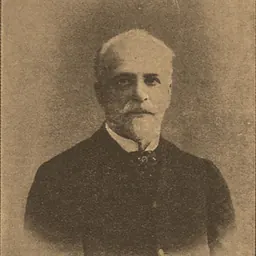
Related people
Same field, nearest in time
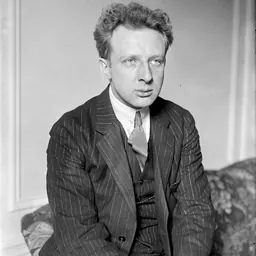


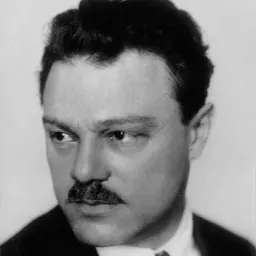

Contemporaries
People whose lives overlapped Mihkel Lüdig's

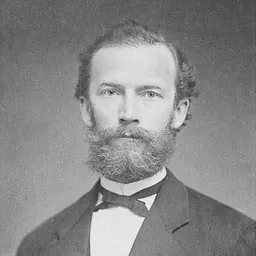



Frequently asked questions
Who was Mihkel Lüdig?
Estonian composer (1880–1958)
When was Mihkel Lüdig born?
Mihkel Lüdig was born on 27 April 1880 in Tahkuranna Rural Municipality.
When did Mihkel Lüdig die?
Mihkel Lüdig died on 7 May 1958 in Vändra, Tallinn.
What was Mihkel Lüdig's occupation?
Mihkel Lüdig was a conductor, composer, choir director, organist and music educator.
What nationality was Mihkel Lüdig?
Mihkel Lüdig was Russian and Estonian.
Sources & further reading
Cite this page
APA: Biography.guide. (2026). Mihkel Lüdig. https://biography.guide/mihkel-ludig/
MLA: "Mihkel Lüdig." Biography.guide, https://biography.guide/mihkel-ludig/.
Chicago: "Mihkel Lüdig." Biography.guide. https://biography.guide/mihkel-ludig/.
Data last updated: 2026-09-20 · Spot an error? Report a correction.
Page generated 2026-09-27 04:57 UTC