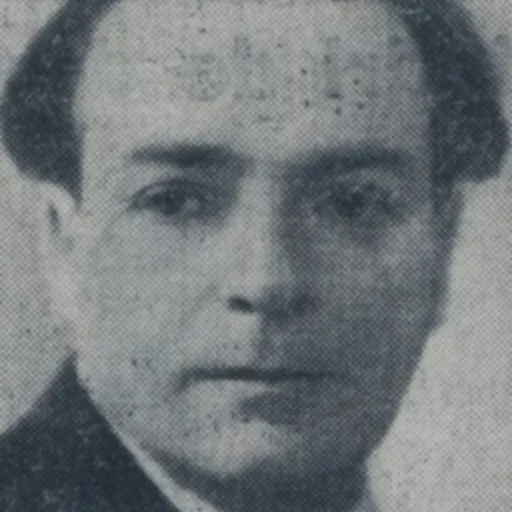
About Mihail Celarianu
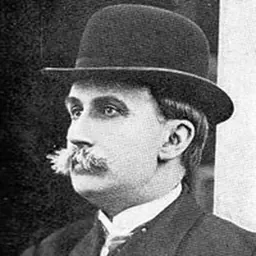
Lived 1893 – 1985 (aged 92). Mihail Celarianu was a Romanian children's writer, translator and poet.
Mihail Celarianu or Celerianu (August 1, 1893 December 5, 1985) was a Romanian poet and novelist. Though he wrote his first poems at the age of twelve, and had them published at thirteen, he was initially trained as a musician at the Bucharest Conservatory. He then contemplated a medical career, and studied for a degree in Paris, but returned hurriedly to still-neutral Romania upon the start of World War I; his early literary contribution include some rousing up support for the Entente Powers. The Ententist campaign was successful, and Romania declared war in 1916. Celarianu volunteered to serve in the Romanian Army, seeing action with the infantry at Predeal Pass, before being accepted into an auxiliary position by the Air Corps. His experiences influenced his autobiographical novels, as well as a play.
Celarianu was a late recruit of the Romanian Symbolist movement. He befriended and emulated the Symbolist doyen, Alexandru Macedonski, becoming his posthumous son-in-law and keeper of his archive. In tandem, he worked alongside fellow writer-clerks such as Ion Minulescu and Felix Aderca, first at the Arts and Religious Affairs Ministry, and later at the Labor Ministry. Publishing volumes of Symbolist poetry which drew notice and won him awards presented by the Romanian Writers' Society, he made his debut as a novelist with a work which poked fun at his own bureaucratic career. It was hailed in his lifetime as an important contribution to Romanian humor, and likened to works by the country's classical satirist, Ion Luca Caragiale. At that stage in his career, he joined the Sburătorul group of modernists, being welcomed by its leader, Eugen Lovinescu, as a "seraph" of Romanian poetry. In 1936, Celarianu expanded modernism into the realm of erotic literature, publishing the controversial novel Femeia sângelui meu ("The Woman in My Blood"); as a result, he became one of the "pornographers" singled out by traditionalist moral crusaders, including Nicolae Iorga.
Before and during World War II, Celarianu returned to more conventional prose, publishing in the realm of children's literature. Like Lovinescu and Tudor Arghezi, between whom he networked, he opposed Ion Antonescu's government from liberal positions; immediately after the anti-Antonescu coup of 1944, he joined the new left-leaning leadership of the Writers' Society, serving as general secretary of that syndicate to 1949. The Romanian communist regime tolerated him as a fellow traveler, and, from the 1960s, allowed a more complete recovery of the entire Sburătorul movement. Well-received as a translator of 19th- and 20th-century French literature, Celarianu continued to write poetry of his own, returning with a new collection in 1966, when he was aged 73. He put out poetry and memoirs down to February 1985—though much of his output remained unpublished by the time of his death; by then, he had destroyed his large-scale biographical novel, having also misplaced his lifelong diaries.
Biography Early life and military service The future poet was born at Calea Plevnei 232, in downtown Bucharest, capital of the Romanian Kingdom. His birth date was recorded as August 1, 1893, though some sources have July 30. He was the third of eight children born to Constantin Celarianu, an Army officer, and his wife Antoaneta (née Pricup). The family's more distant origins were in the southwestern Romanian region of Oltenia, specifically in Celaru, Romanați County (later absorbed into Dolj County). He spent his childhood in Bucharest, at a new Celarianu home on Teleajen Street; he was encouraged by his parents to do gardening work on the family plot, and was passionate about singing and reading. At that moment in his life, Celarianu was studying medicine in Paris (1912–1914) Celarianu became involved with those Romanian nationalists who suggested an alliance with the Entente Powers—against the neutralists and Germanophiles. His feelings were expressed in the poem Cînt Războinic ("War Song"), which was put to music by Traian Justinian Popovici and performed for the public in October 1915. The young man enlisted for duty after Romania entered the war in 1916. He was originally an infantryman with the 6th Regiment, seeing action in the Battle of Predeal Pass. Weeks later, Celarianu was among those who witnessed Macedonski's final moments. As he reported, the dying man acknowledged him as a "good boy" and a "talented youth". Theirs was a "happy marriage", despite his only collecting a small salary as a clerk.
Sburătorul and obscenity scandal
Celarianu was also a regular customer of the Oteteleșeanu Restaurant and, following a suggestion by Tudor Vianu, Camil Baltazar similarly praised Celarianu as "anointed by God", a "true poet" of "somber and cloistered internalized vision." According to Grigorie, Lovinescu's pronouncement also reflected Celarianu's "multiple affinities" with the Sburătorists take on modernist poetry. The same critic notes thematic links with Symbolists such as Macedonski and Dimitrie Anghel, but also argues that the Celarianu's "floral poetry" became "profoundly personal" in Flori fără pace. Magazines that published his work include Flacăra, Viața Românească, Revista Fundațiilor Regale, and later România Literară. winning its annual prize later that same year. Critic George Călinescu observed that, overall, he had a tinge of "humanitarian sadness", evoking Georges Duhamel. Rotaru censured the work as "comedy of a rather facile kind", "mostly based on the illiteracy of suburbanite scoundrels, whose letters, pieced together, form the substance of [his] composition."
Celarianu's work was meanwhile defended by the columnists at Facla, who argued that his Easter story, carried by Viața Literară in May 1935, was the only remarkable work out of "several kilograms of paschal literature". Fellow novelist N. Crevedia recalls seeing him at one or several Sburătorul sessions, where he appeared "as prudish as a girl." This did not prevent Celarianu from being identified as a pornographer by 1930s moral crusaders. The controversy relates to his 1936 novel Femeia sângelui meu ("The Woman in My Blood"), which he considered largely (though not fully) autobiographical, Explicit episodes detail the sexual awakening of young girls and unsatisfied homemakers, as well as a threesome between the Romanian protagonist, Glineanu, and two French prostitutes. By himself, Celarianu wrote another children's book, the 1939 Isprăvile lui Stan cel cuminte ("Stan the Wise and His Adventures"); later that year, he won another SSR prize.
World War I experiences are central to Celarianu's 1940 novel, Diamant verde ("Green Diamond"), He himself returned to publishing in 1944 He found two stories to be evocative of Sholem Aleichem.
In August 1944, a successful anti-German and anti-Antonescu coup signaled a leftward shift in Romanian politics. On September 24, the SSR was reformed, with Victor Eftimiu and N. D. Cocea taking over. That same day, Celarianu and Eugen Jebeleanu were among those included on the syndicate's steering committee. From October, the poet was secretary of the Democratic Writers' Union, a reconstructed SSR headed by Eftimiu, which grouped fellow travelers of the Romanian Communist Party (PCR). On August 3, Celarianu appeared on Radio Romania to lecture about Macedonski as a "social writer". A month later, he and Eftimiu, alongside Arghezi, Baltazar, Mihai Beniuc, Scarlat Callimachi, Ion Jalea and Mihail Sadoveanu, paid homage to the Soviet writer Ilya Ehrenburg, who was visiting Bucharest; these festivities were organized by the Romanian Society for Friendship with the Soviet Union. In October, he joined Furtună, Alexandru Cazaban, Dumitru Corbea, Gala Galaction, Hilda Jerea and Zaharia Stancu on a SSR tour of factories, seeking to "raise the cultural level of the masses." He also returned to social hygiene in the new climate of communist rule—his story, Antonică cel curat ("All-clean Tony"), appeared in a Sănătatea Poporului issue of September 1948.
Under communism Celarianu served as SSR secretary to 1949, During communism, he lived at a villa on Iancului Highway 52, Celarianu personally handled her burial in the Macedonski grave, at Bellu cemetery, also setting aside a place for himself. Stancu, who visited the location in 1970, noted that: "[Celarianu] had written his name on the cross, but, thankfully for our literature, he still lives." In April 1965, interventions by Alexandru A. Philippide and Adrian Marino resulted in Celarianu's poetry being featured by Steaua magazine.
Celarianu returned as a poet in 1966, with Inima omenească ("The Human Heart"), comprising poetic cycles that he had left unpublished over the previous decades. According to Grigorie, these "completed [his] image as a poet of the internal ecstasy, of beatified states, [...] with visible tendencies of escaping into the fantastic and the miraculous." As argued by essayist Alexandru George, Celarianu, alongside Baltazar, Stancu, and Simion Stolnicu, was unreasonably derisive of his erstwhile mentor, helping to transmit into posterity a "distorted" portrait of Lovinescu.
Throughout much of his life, Celarianu had written diaries, which he lost, as well as the 600-page novel, Cutremurul, which depicted figures such as Anghel, Arghezi, Minulescu and George Coșbuc under their real names, but which he had destroyed while in a state of "spiritual depression". being survived for a while by his elder brother, the general.
Don’t just read it —
keep it.
Full-length biographies made to live with: read them, listen on the way to work, watch them tonight.
- E-book
- Audio
- Video
Instant download · yours to keep · every purchase keeps this site free
Important facts
People in Mihail Celarianu's life
Named in this biography and alive at the same time


Related people
Same field, nearest in time




Contemporaries
People whose lives overlapped Mihail Celarianu's

Frequently asked questions
Who was Mihail Celarianu?
Romanian poet and novelist
When was Mihail Celarianu born?
Mihail Celarianu was born on 1 August 1893 in Bucharest.
When did Mihail Celarianu die?
Mihail Celarianu died on 5 December 1985.
What was Mihail Celarianu's occupation?
Mihail Celarianu was a children's writer, translator and poet.
What nationality was Mihail Celarianu?
Mihail Celarianu was Romanian.
Sources & further reading
Cite this page
APA: Biography.guide. (2026). Mihail Celarianu. https://biography.guide/mihail-celarianu/
MLA: "Mihail Celarianu." Biography.guide, https://biography.guide/mihail-celarianu/.
Chicago: "Mihail Celarianu." Biography.guide. https://biography.guide/mihail-celarianu/.
Data last updated: 2026-09-22 · Spot an error? Report a correction.
Portrait: Wikimedia Commons · author & licence
Page generated 2026-09-27 05:04 UTC