
About Michał Kulesza
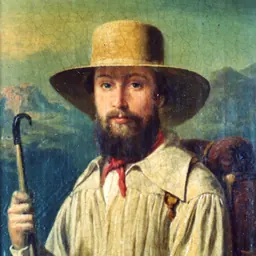
Lived 1799 – 1863 (aged 63). Michał Kulesza was a Polish and Russian painter.
Michał Kulesza (; 26 November 1799 – 6 November 1863) was a Romantic painter. He was among the first lithographers in the area of the former Grand Duchy of Lithuania, ruled by Russia for almost all of his life. His frequent theme, sites linked to the Grand Duchy's history, reflected the growing Lithuanian and Polish ethnic activism in the area. He lived and worked in today's southern Lithuania, south-eastern Belarus, and north-eastern Poland, and travelled around in search of new subjects for his oil paintings and lithographs. A leading landscape painter of his period, Kulesza created images that are now among the sparse visual records of the region in the first half of the 19th century.
Biography Michał Kulesza was born in Vilnius, then the capital of Russia's Vilna Governorate. Two encyclopedic sources give the year of his birth as 1799, a few authors list 1800 without the month or day. He lived and worked in a multi-ethnic area, although he called himself a "Polish painter" when he published his work in France, he referred to the Polish–Lithuanian Commonwealth and from his last name Kulesza, it can not be judged on his ethnicity, as it may be both Polish, as well as old Lithuanian spelling. It is not known how many languages, and how often, he spoke. He attended the notable Cistercian grade school in Troškūnai, his artistic training started in preparatory middle-and-high school (gymnasium) back in his birthplace when he took classes with the neoclassicist painter Jonas Damelis. He then continued at the Imperial University of Vilnius, where Jan Rustem began to teach lithography in 1819, from which he received a PhD in art in 1829. and was arrested in that connection in 1823, like his younger fellow student and future writer Józef Ignacy Kraszewski, who later helped publicize Kulesza's paintings, but unlike his other subsequently famous fellow student and co-conspirator Adam Mickiewicz, who was deported to Siberia. thumb Tsar's palace turned to noble girls' school He left Vilnius to take a teaching position at Kražiai Gymnasium in 1837. While plans were being drawn up to close the venerable school, he was transferred to teach painting at a high school in Hrodna two years later. In 1844 he took a position at the Institute for Noble Maidens recently opened in Białystok where he remained for the rest of his life. Among the urban and rural landscapes, including the images of the Neman flowing toward the horizon that critics extolled, a frequent theme in Kulesza's Romantic paintings were sites linked to the history of the Grand Duchy of Lithuania, which reflected the growing Lithuanian and Polish ethnic activism in the area. Several of his other paintings depict the interiors of churches, he made portraits, and also painted stage sets for Count Pusłowski's private theater at his palace in Kosava. His paintings were often made into lithographs for sale or publication. They decorated noble and middle-class homes in his lifetime,
Kulesza would travel in the vicinity of the places where he lived and farther away in search of new subjects for his Romantic paintings, which are now among the sparse images of the region in the early 19th century. He contributed to the celebrated series of pictures of Vilnius conceived by Jan Kazimierz Wilczyński that started coming out in 1845 and published his own lithographic portfolios in Paris in 1850 and 1852.
"Sts. Boris and Gleb's Church in Kalozha, Hrodna" The subject of the 1840s tempera, lithographed later, is one of the oldest north European Eastern Orthodox churches, built in Kalozha (formerly Kolozha) in Hrodna, now in Belarus. At the time, an art critic admired its harmony and saw the composition and color execution of the river vanishing in the foggy distance as a vehicle of deep sadness, an expression of the inertia, "dull heaviness," that permeated the provinces. In a modern interpretation, its focus is on the broader significance of what it depicts. The attractive darker outline of the church soaring on the steep embankment stands out against the sky, the fastidious composition of the landscape is enlivened with people in the picture's front plane, who underscore the human relevance of the pleasant location and the majestic glory of the historical temple.
Don’t just read it —
keep it.
Full-length biographies made to live with: read them, listen on the way to work, watch them tonight.
- E-book
- Audio
- Video
Instant download · yours to keep · every purchase keeps this site free
Important facts
People in Michał Kulesza's life
Named in this biography and alive at the same time

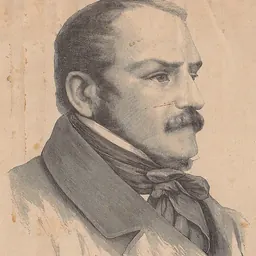

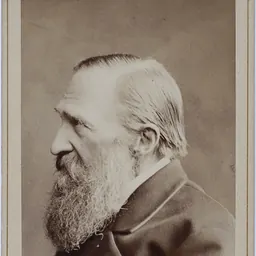
Related people
Same field, nearest in time

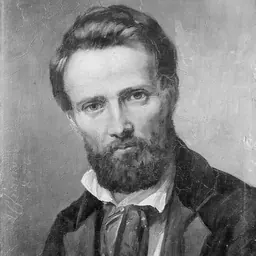
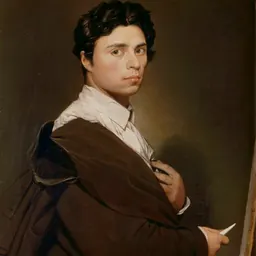
Contemporaries
People whose lives overlapped Michał Kulesza's





Frequently asked questions
Who was Michał Kulesza?
Polish-Lithuanian painter (1799-1863)
When was Michał Kulesza born?
Michał Kulesza was born on 26 November 1799 in Vilnius.
When did Michał Kulesza die?
Michał Kulesza died on 6 November 1863 in Białystok.
What was Michał Kulesza's occupation?
Michał Kulesza was a painter.
What nationality was Michał Kulesza?
Michał Kulesza was Polish and Russian.
Sources & further reading
Cite this page
APA: Biography.guide. (2026). Michał Kulesza. https://biography.guide/michal-kulesza/
MLA: "Michał Kulesza." Biography.guide, https://biography.guide/michal-kulesza/.
Chicago: "Michał Kulesza." Biography.guide. https://biography.guide/michal-kulesza/.
Data last updated: 2026-09-20 · Spot an error? Report a correction.
Page generated 2026-09-27 05:21 UTC