
About Michael von Kienmayer
Lived 1756 – 1828 (aged 72). Michael von Kienmayer was an Austrian military leader and military officer.
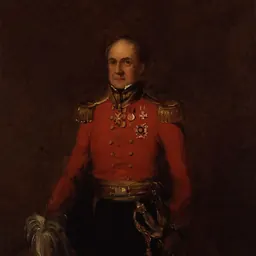
Michael von Kienmayer (17 January 1756 – 28 October 1828) was an Austrian general. Kienmayer joined the army of the Habsburg monarchy and fought against the Kingdom of Prussia and Ottoman Turkey. During the French Revolutionary Wars, he continued to make his reputation in the cavalry and became a general officer. In the War of the Second Coalition and the Napoleonic Wars he commanded both divisions and corps. He was appointed Proprietor (Inhaber) of an Austrian cavalry regiment in 1802 and held this honor until his death. Later he was the governor of Galicia, Transylvania, and Moravia.
Early career Kienmayer began his military career in 1774 as a cadet in the imperial Austrian Puebla de Portugalo Infantry Regiment # 26. In 1775 he was promoted second lieutenant in the Jung-Modena Dragoon Regiment # 8. As a member of the Barco Hussar Regiment # 35, he participated in the War of the Bavarian Succession in 1778.
During the Austro-Turkish War, Kienmayer excelled in a skirmish against a force of Turks that attacked the Austrian outposts in April 1788. Later that year, he served under Prince Josias of Saxe-Coburg-Saalfeld in the siege of Khotyn Fortress and was promoted major in November. He fought in the Battle of Focșani on 21 July 1789 and received a promotion to Oberst-Leutnant in recognition of a successful raid carried out afterward. After the Battle of Rymnik in September, Coburg sent Kienmayer to carry the victory dispatch to Emperor Joseph II. He quickly returned to the front and executed another successful cavalry raid in November, capturing a senior Turkish officer. Promoted to Oberst (colonel), he assumed command of the Levenehr Dragoon Regiment # 19. He was also awarded the Military Order of Maria Theresa, Austria's highest honor for valor, on 21 December 1789 for bravery in the face of the enemy. He fought in Pál Kray's division at Sulzbach-Rosenberg on 17 August. This action came shortly before the Battle of Amberg when Archduke Charles re-assumed command of the army. He led an infantry-cavalry brigade in Friedrich von Hotze's division at the Battle of Würzburg on 3 September. The following day he led a brilliant cavalry raid, capturing a large supply depot at Wertheim am Main and a small flotilla of munitions boats. His column formed the northern wing of an attempted thrust at Jean Moreau's left flank. Events compelled Archduke John to convert the plan into a direct advance on Munich.
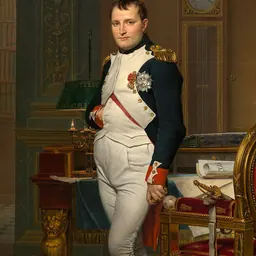
At the Battle of Hohenlinden on 3 December 1800, Kienmayer's corps formed the Austrian right flank. His troops drove in the French outposts and soon found themselves grappling with Paul Grenier's three divisions. His troops, particularly those led by Schwarzenberg, pushed forward aggressively. However, the leader of the Right-Center column, Ludwig Baillet de Latour, only gave weak support to Kienmayer's wing. Meanwhile, Moreau's generals pulled off an envelopment of Johann Kollowrat's Left-Center column. After Kollowrat's luckless corps was crushed, Moreau turned on the Austrian Right column, which still battled valiantly in the northern sector. Kienmayer gave orders to retreat, and he and his generals brought their troops off intact, though Archduke Ferdinand lost 500 prisoners. During the chaotic retreat after Hohenlinden, Antoine Richepanse mauled Kienmayer's rear guard at Frankenmarkt on 17 December, inflicting 2,650 casualties on the Austrians.
In 1802, he became proprietor of Kienmayer Hussar Regiment # 8 and held the position during his lifetime.
The battle plan called for Kienmayer to clear Tellnitz village of French troops and grab the high ground to the west of the Goldbach stream. First, the Austrians encountered 300 French skirmishers on a vineyard-covered knoll at 8:00 am. Stout resistance forced Kienmayer to commit both battalions of the 2nd Szekler Grenz Infantry Regiment before the knoll fell. Utilizing the vineyards, ditches, and rough ground around Tellnitz, the 1,000 men of the 3rd Line Infantry Regiment fought all five Austrian infantry battalions to a standstill. At last, the Russian 7th Jägers charged in column and cleared the French from the village. By this time French reinforcements arrived on the scene and the 108th Line recaptured the village. However, the French carried their luck too far and a few squadrons of the numerous Austrian hussars charged. After losing several hundred casualties, including many prisoners, the French abandoned Tellnitz and retreated across the Goldbach. At 9:30 am, Buxhowden's Austro-Russians were finally able to deploy across the Goldbach. One historian writes,
Had they [the Allies] been able to rapidly dislodge the 3rd Line from Tellnitz, the story of Austerlitz would have been somewhat different. Instead, the gallant resistance of the French badly snarled the Allied advance, and made them vulnerable to the French counterattack on the Pratzen ... Certainly the Austrian tactics contributed to the French success at Tellnitz. While the spirit of the soldiers cannot be questioned, an examination of the casualties suffered in the attacks against Tellnitz satisfies this point, their piecemeal attacks can be justly criticized.
Later in the battle, Kienmayer stubbornly covered Buxhowden's withdrawal after the French breakthrough on the Pratzen Heights forced the Allies into a disorganized retreat.
War of the Fifth Coalition Kienmayer led the II Reserve Corps in the War of the Fifth Coalition in 1809. This 9,000-man formation comprised five battalions of grenadiers and 12 squadrons each of cuirassiers and heavy dragoons. His troops fought under Johann von Hiller's orders at the Battle of Landshut on 21 April. During the retreat, he also led his corps at the Battle of Ebersberg on 3 May.
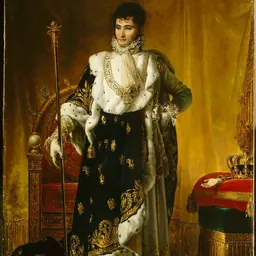
After rejoining the main army, Archduke Charles merged Kienmayer's command with the I Reserve Corps and reassigned him. He fought with distinction at the Battle of Aspern-Essling on 21–22 May, where he commanded 5,770 troopers and 24 artillery pieces of a reserve cavalry division. While the main armies battled on the Danube, light Austrian forces raided the French-allied Kingdom of Saxony, provoking King Jérôme Bonaparte to bring his Kingdom of Westphalia army into the field. In June, Archduke Charles appointed Kienmayer to form the XI Corps from the raiding forces plus reinforcements. The French tried to catch Kienmayer in a pincer, with Jérôme advancing from Leipzig and Jean-Andoche Junot moving from Frankfurt am Main. Kienmayer outmaneuvered them, defeating Junot at the Battle of Gefrees on 8 July. He then turned on Jérôme, who beat a hasty retreat, evacuating Saxony altogether. This notable success was negated by Napoleon's victory at the Battle of Wagram on 5–6 July.
For his victory, Kienmayer was elevated to the rank of General of Cavalry on 3 August 1809. Further recognition came in April 1810, when the emperor bestowed upon him the Commander's Cross of the Military Order of Maria Theresa. He served as deputy to the commander in Hungary from 1809 to 1813. He did not hold an active command in the campaigns of 1813 and 1814. Instead, he commanded the province of Galicia. From 1814 to 1820, he held military authority over Transylvania. He commanded Moravia from 1820 to 1826, when he retired from the army. He died in Vienna on 28 October 1828.
Don’t just read it —
keep it.
Full-length biographies made to live with: read them, listen on the way to work, watch them tonight.
- E-book
- Audio
- Video
Instant download · yours to keep · every purchase keeps this site free
Important facts
People in Michael von Kienmayer's life
Named in this biography and alive at the same time



Related people
Same field, nearest in time

Contemporaries
People whose lives overlapped Michael von Kienmayer's




Frequently asked questions
Who was Michael von Kienmayer?
Austrian general (1756–1828)
When was Michael von Kienmayer born?
Michael von Kienmayer was born on 17 January 1756 in Vienna.
When did Michael von Kienmayer die?
Michael von Kienmayer died on 18 October 1828 in Vienna.
What was Michael von Kienmayer's occupation?
Michael von Kienmayer was a military leader and military officer.
What nationality was Michael von Kienmayer?
Michael von Kienmayer was Austrian.
Sources & further reading
· Wikipedia: Michael von Kienmayer
· DBpedia: Michael von Kienmayer
Cite this page
APA: Biography.guide. (2026). Michael von Kienmayer. https://biography.guide/michael-von-kienmayer/
MLA: "Michael von Kienmayer." Biography.guide, https://biography.guide/michael-von-kienmayer/.
Chicago: "Michael von Kienmayer." Biography.guide. https://biography.guide/michael-von-kienmayer/.
Data last updated: 2026-09-20 · Spot an error? Report a correction.
Page generated 2026-09-27 05:26 UTC