
Michael Bialoguski
Polish-Australian medical practitioner, musician and intelligence agent
About Michael Bialoguski
Lived 1917 – 1984 (aged 67). Michael Bialoguski was an Australian conductor.
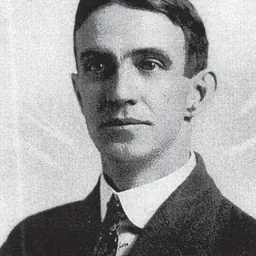
Dr. Michael Bialoguski at the Petrov Royal Commission, Darlinghurst, 08/10/1954
Michael Bialoguski (19 March 191729 July 1984) was a Polish-Australian medical practitioner, musician and intelligence agent, who played a significant part in the 1954 Petrov Affair.
Biography Michael Bialoguski was born to Polish Jewish parents in 1917 in Kiev, then part of the Russian Empire and now the capital of Ukraine. When he was three years old, Bolshevik forces were on the point of shooting him and his entire family, when his father bribed them with his gold watch; they were forced to flee immediately, and made their way to Wilno, Poland (now Vilnius, Lithuania). He attended school there, studied violin at the Vilnius Conservatorium, receiving a diploma in 1935, He was jailed by the invading Soviet forces in 1939. It was at this time that he had his first experience of conducting an orchestra, that of a musical comedy troupe. In 1951 in Sydney he met Vladimir Petrov, who had recently arrived from the Soviet Union to take up his post as third secretary at the Soviet Embassy in Canberra. They cultivated each other's friendship, spending much time together, drinking and visiting prostitutes in Kings Cross. Bialoguski played a double game for some time, appearing to be spying on Petrov's behalf while simultaneously spying on Petrov himself for ASIO. After the death of Joseph Stalin in 1953 and the execution of Lavrentiy Beria, Bialoguski and Ron Richards were able to persuade Petrov that it was not safe for him to return. In return for a promise of safety and a substantial amount of cash, Petrov defected in April 1954. His wife Evdokia was initially unaware he had taken this action; although she was recalled, she did not want to leave her husband, but knew that to remain in Australia against her government's wishes would have placed her sister Tamara in danger back home. In the end, amid extraordinary scenes at Sydney and Darwin airports, she too defected. Bialoguski was a witness for ASIO at the subsequent Royal Commission on Espionage, which commenced the following month. The Leader of the Opposition, Dr. Herbert Vere Evatt, LLD, who appeared at the Royal Commission to defend his staff members whose names had been dragged into the affair, characterised the whole episode as "The Petrov-Bialoguski Affair".
Later musical activities Bialoguski had maintained his passion for music, and sought conducting lessons from Sir Eugene Goossens, then based in Sydney, but was rebuffed. Earlier, in 1949, Goossens had invited him to accept a position as a violinist in the Sydney Symphony Orchestra, of which he was the chief conductor. In 1964 Bialoguski and his wife moved permanently to England. Although continuing to make his living from medicine, he still strove to become a conductor, but was met with continual knockbacks. Sir Adrian Boult suggested he should stay with medicine. He applied for entry to the conducting courses at the Royal Academy of Music and Royal College of Music, but was rejected on account of his age. He did some private conducting training with Ernest Read in London. Then, unable to secure any regular conducting engagements back in the UK, he spent his life savings on hiring the New Philharmonia Orchestra for a single concert at the Royal Albert Hall on 29 April 1969, which he conducted, to lukewarm reviews. The concert included Beethoven's 4th Symphony and Chopin's Piano Concerto No. 2 with the pianist Fou Ts'ong as soloist.
He also formed the Commonwealth Philharmonic Orchestra, which he conducted at the Albert Hall and in Westminster Abbey.
He married Nonie Piper, a model who appeared in the film Bitter Springs (1950).
Michael Bialoguski died in Surrey in 1984, aged 67. He was survived by his third wife and three children.
He was played by Slawomir Wabik in the 1987 TV mini-series The Petrov Affair and by Gary Deirmendjian in the 2010 television movie I, Spry.
He appears in Andrew Croome's historical novel about the Petrov Affair, Document Z (2009).
Don’t just read it —
keep it.
Full-length biographies made to live with: read them, listen on the way to work, watch them tonight.
- E-book
- Audio
- Video
Instant download · yours to keep · every purchase keeps this site free
Important facts
People in Michael Bialoguski's life
Named in this biography and alive at the same time





Related people
Same field, nearest in time


Contemporaries
People whose lives overlapped Michael Bialoguski's

Frequently asked questions
Who was Michael Bialoguski?
Polish-Australian medical practitioner, musician and intelligence agent
When was Michael Bialoguski born?
Michael Bialoguski was born on 19 March 1917.
When did Michael Bialoguski die?
Michael Bialoguski died on 29 July 1984.
What was Michael Bialoguski's occupation?
Michael Bialoguski was a conductor.
What nationality was Michael Bialoguski?
Michael Bialoguski was Australian.
Sources & further reading
· Wikipedia: Michael Bialoguski
Cite this page
APA: Biography.guide. (2026). Michael Bialoguski. https://biography.guide/michael-bialoguski/
MLA: "Michael Bialoguski." Biography.guide, https://biography.guide/michael-bialoguski/.
Chicago: "Michael Bialoguski." Biography.guide. https://biography.guide/michael-bialoguski/.
Data last updated: 2026-09-26 · Spot an error? Report a correction.
Page generated 2026-09-27 05:13 UTC