
About Meta Forkel-Liebeskind
Lived 1765 – 1853 (aged 87–88). Meta Forkel-Liebeskind was a linguist, translator and writer.
Meta Forkel-Liebeskind (22 February 1765 – ) was a German translator, writer, and member of the Göttingen intellectual circle. She maintained close ties to Georg Forster and embraced the Enlightenment and republican ideals of the Mainz Republic.
Forkel-Liebeskind was one of the so-called , a group of five academically active women during the 18th and 19th century, daughters of academics at Göttingen University, alongside Philippine Engelhard, Caroline Schelling, Therese Huber, and Dorothea Schlözer.
Life and career
Education Born in Göttingen, Forkel-Liebeskind was the first daughter and second surviving child of , a pastor and university professor, and his wife Sophia Magdalena Wedekind (née Morrien). Her older brother was .
She received private lectures from her father, who placed particular emphasis on her education. Forkel-Liebeskind showed an early talent for languages, and her father partly tailored her lessons to her interests. This unusual education for women of her time and the work of her father as a professor at the University of Göttingen gave her access to the intellectual circles of the Enlightenment.
First marriage and early writings After marrying the musicologist Johann Nikolaus Forkel in 1781 and the birth to their son in 1782 Forkel-Liebeskind moved to Einbeck, the birth city of her mother. In Einbeck she began writing and published anonymously her Originalbrief einer Mutter von 18 Jahren (1783), followed by her first novel Maria (1784). After the publications she moved back to Göttingen. Because of her good English and French, Forkel-Liebeskind started translating her first works from English to German, such as the first two volumes of Geschichte der Königin Elisabeth von England and Skizze der Regierung Georg III. From 1789 until 1792 Forkel-Liebeskind worked as a translator for him especially on historical works and travel literature. While Forkel-Liebeskind was translating the texts, Forster would supervise the work, revise it, add a preface and publish it under his name. Ludwig Ferdinand Huber, and Caroline Schelling.
After her son (Adalbert) was born (2 October 1792) Forkel-Liebeskind moved back to Mainz (19 October 1792) to live with Caroline Michaelis-Böhmer. During the Siege of Mainz (1793) by the Prussian and Austrian armies Forkel-Liebeskind she attempted to flee but got caught and imprisoned at Königstein Fortress. According to Liebeskind, the women were kept in prison because they were meant to serve as hostages in a planned exchange for the Mainz citizens who had been taken to France by the French authorities. After approximately four months of imprisonment, she was released through the intervention of her husband, Johann Nikolaus Forkel and the Frederick William II of Prussia.
Later years and second marriage accompanied Forkel-Liebeskind to Göttingen before they traveled over Lübeck to Riga where Liebeskind started his career as a high-ranking jurist and civil servant in the Prussian and later Bavarian judicial administration. She was divorced from Johann Nikolaus Forkel on 11 February 1794 and married in August of the same year. After their time in Riga they moved together to Königsberg (August 1794), Ansbach (September 1797), Bamberg (April 1807), Munich (Dezember 1807), Landshut (April 1827) and Eichstätt (1838).
During her second marriage, Forkel-Liebeskind largely remained in the traditional role of an official’s wife. The only known exception was her work for Johann Friedrich Cotta’s cultural journal Morgenblatt für gebildete Stände between 1812 and 1821, where she headed the section “Korrespondenznachrichten für München” (“Correspondence News from Munich”).
In 1837 Forkel-Liebeskind started having serious health problems, after which no further records of her life are known. Although some sources claim that she died in Eichstätt in 1853 this but cannot be confirmed by sources and both the date and place are considered incorrect.
Don’t just read it —
keep it.
Full-length biographies made to live with: read them, listen on the way to work, watch them tonight.
- E-book
- Audio
- Video
Instant download · yours to keep · every purchase keeps this site free
Important facts
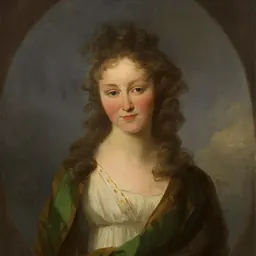
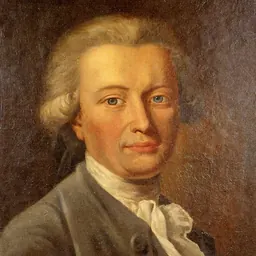
People in Meta Forkel-Liebeskind's life
Named in this biography and alive at the same time




Related people
Same field, nearest in time


Contemporaries
People whose lives overlapped Meta Forkel-Liebeskind's





Frequently asked questions
Who was Meta Forkel-Liebeskind?
German writer and translator
When was Meta Forkel-Liebeskind born?
Meta Forkel-Liebeskind was born on 22 February 1765 in Göttingen.
When did Meta Forkel-Liebeskind die?
Meta Forkel-Liebeskind died in 1853 in Eichstätt.
What was Meta Forkel-Liebeskind's occupation?
Meta Forkel-Liebeskind was a linguist, translator and writer.
What nationality was Meta Forkel-Liebeskind?
Meta Forkel-Liebeskind's recorded nationality: Kingdom of Hanover.
Sources & further reading
· Wikipedia: Meta Forkel-Liebeskind
· DBpedia: Meta Forkel-Liebeskind
Cite this page
APA: Biography.guide. (2026). Meta Forkel-Liebeskind. https://biography.guide/meta-forkel-liebeskind/
MLA: "Meta Forkel-Liebeskind." Biography.guide, https://biography.guide/meta-forkel-liebeskind/.
Chicago: "Meta Forkel-Liebeskind." Biography.guide. https://biography.guide/meta-forkel-liebeskind/.
Data last updated: 2026-09-26 · Spot an error? Report a correction.
Page generated 2026-09-27 05:14 UTC