
About Melville J. Herskovits
Lived 1895 – 1963 (aged 67). Melville J. Herskovits was an American anthropologist, writer, university teacher and educator, known for African studies and African-American studies.
Melville Jean Herskovits (September 10, 1895 – February 25, 1963) was an American anthropologist who helped to first establish African and African Diaspora studies in American academia. He is known for exploring the cultural continuity from African cultures as expressed in African-American communities. He worked with his wife Frances (Shapiro) Herskovits, also an anthropologist, in the field in South America, the Caribbean and Africa. They jointly wrote several books and monographs.
Early life, family and education Born to Jewish immigrants in Bellefontaine, Ohio, in 1895, Herskovits attended local public schools. He served in the United States Army Medical Corps in France during World War I.
Afterward, he went to college at the University of Chicago, earning a Bachelor of Philosophy in 1920. He moved to New York City for graduate work, earning his M.A. and Ph.D. in anthropology from Columbia University under the guidance of the German-born American anthropologist Franz Boas. This subject was in its early decades of being developed as a formal field of study. Herskovits's dissertation The Cattle Complex in East Africa investigated theories of power and authority in Africa as expressed in the ownership and raising of cattle. He studied how some aspects of African culture and traditions were expressed in African-American culture in the 1900s.
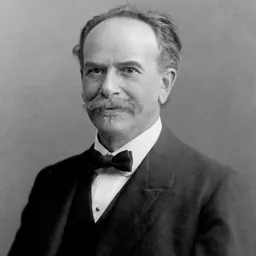
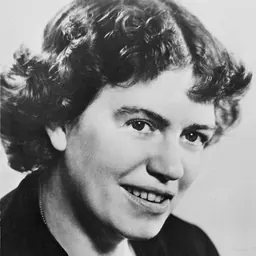
Among his fellow students were future anthropologists Katherine Dunham, Ruth Benedict, Margaret Mead, Elsie Clews Parsons, and Frances Shapiro. He and Shapiro married in Paris, France, in 1924. They later had a daughter, Jean Herskovits, who became a historian.
Career In 1927, Herskovits became a full-time anthropologist at Northwestern University in Evanston, Illinois.
In 1934, Herskovits and his wife Frances spent more than three months in the Haitian village of Mirebalais, the findings of which research he published in his 1937 book Life in a Haitian Valley. In its time, this work was considered one of the most accurate depictions of the Haitian practice of Vodou. They meticulously detailed the lives and Vodou practices of Mirebalais residents during their three-month stay. They conducted field work in Benin, Brazil, Haiti, Ghana, Nigeria and Trinidad. In 1938, Herskovits established the new Department of Anthropology at Northwestern.
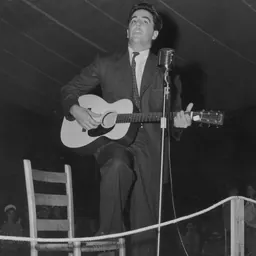
In the early 1940s, Herskovits and his wife Frances met Barbara Hadley Stein, who was in Brazil to do research on the abolition of slavery there. She introduced to them Stanley J. Stein, a graduate student in Latin American history at Harvard University. With advice from Herskovits, Stein and Stein started recording Jongo songs, which in 2013 received scholarly attention. Herskovits also influenced Alan Lomax, who collected African-American songs.
In 1948, Herskovits founded the first major interdisciplinary American program in African studies at Northwestern University, with the aid of a three-year $30,000 grant from the Carnegie Foundation, followed by a five-year $100,000 grant from the Ford Foundation in 1951. The Program of African Studies was the first of its kind at a United States academic institution. The goals of the program were to "produce scholars of competence in their respective subjects, who will focus the resources of their special fields on the study of aspects of African life relevant to their disciplines." In 1957, Herskovits founded the African Studies Association and was the organization's first president.
After World War II, Herskovits publicly advocated independence of African nations from the colonial powers. He strongly criticized American politicians for viewing African nations as objects of Cold War strategy. Frequently called on as an adviser to government, Herskovits served on the Mayor's Committee on Race Relations in Chicago (1945) and the U.S. Senate Foreign Relations Committee (1959–60).
Legacy and honors The Melville J. Herskovits Library of African Studies at Northwestern University was named in his honor; it is based on his collection of materials as chairman of the department. The Herskovits Prize (Melville J. Herskovits Award) is an annual award given by the African Studies Association to the best scholarly work (including translations) on Africa published in English in the previous year.
Works The Cattle Complex in East Africa, PhD Dissertation, 1923 (published as a book in 1926) "The Negro's Americanism", in Alain Locke (ed.), The New Negro, 1925 On the Relation Between Negro-White Mixture and Standing in Intelligence Tests, 1926 The American Negro, 1928 Rebel Destiny, Among the Bush Negroes of Dutch Guiana, 1934, with Frances Herskovits Suriname Folk Lore, 1936, with Frances Herskovits Life in a Haitian Valley, 1937 Dahomey: An Ancient West African Kingdom (2 vols), 1938 Economic Life of Primitive People, 1940 The Myth of the Negro Past, 1941 Trinidad Village, 1947, with Frances Herskovits Man and His Works: The Science of Cultural Anthropology, 1948 Les bases de L'Anthropologie Culturelle, Paris: Payot, 1952 Dahomean Narrative: A Cross-Cultural Analysis, 1958, with Frances Herskovits Continuity and Change in African Culture, 1959 The Human Factor in Changing Africa, 1962 Economic Transition in Africa, 1964
Don’t just read it —
keep it.
Full-length biographies made to live with: read them, listen on the way to work, watch them tonight.
- E-book
- Audio
- Video
Instant download · yours to keep · every purchase keeps this site free
Important facts
People in Melville J. Herskovits's life
Named in this biography and alive at the same time





Related people
Same field, nearest in time

Contemporaries
People whose lives overlapped Melville J. Herskovits's

Frequently asked questions
Who was Melville J. Herskovits?
American anthropologist (1895–1963)
When was Melville J. Herskovits born?
Melville J. Herskovits was born on 10 September 1895 in Bellefontaine.
When did Melville J. Herskovits die?
Melville J. Herskovits died on 25 February 1963 in Evanston.
What was Melville J. Herskovits's occupation?
Melville J. Herskovits was an anthropologist, writer, university teacher and educator.
What was Melville J. Herskovits known for?
Melville J. Herskovits was known for African studies and African-American studies.
What nationality was Melville J. Herskovits?
Melville J. Herskovits was American.
Sources & further reading
· Wikipedia: Melville J. Herskovits
· DBpedia: Melville J. Herskovits
Cite this page
APA: Biography.guide. (2026). Melville J. Herskovits. https://biography.guide/melville-j-herskovits/
MLA: "Melville J. Herskovits." Biography.guide, https://biography.guide/melville-j-herskovits/.
Chicago: "Melville J. Herskovits." Biography.guide. https://biography.guide/melville-j-herskovits/.
Data last updated: 2026-09-20 · Spot an error? Report a correction.
Page generated 2026-09-27 05:22 UTC