
About Mekonnen Welde Mikael
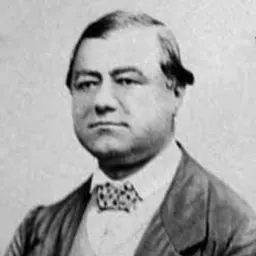
Lived 1852 – 1906 (aged 53). Mekonnen Welde Mikael was a politician.
Ras Makonnen Wolde Mikael Wolde Melekot (8 May 1852 – 21 March 1906), known simply as Ras Makonnen, was an Ethiopian military commander, provincial governor and diplomat, and the father of the future Emperor Haile Selassie. Through his mother, a daughter of Negus Sahle Selassie of Shewa, he was a first cousin of Emperor Menelik II, at whose court he was raised from the age of fourteen. He rose through a series of campaigns in the 1870s and 1880s to become, in January 1887, governor of Harar, a post he held until his death, and the Russian poet and traveller Nikolai Gumilev later called him one of the greatest leaders of Abyssinia.
As governor, Makonnen built a hospital and schools in Harar, encouraged the extension of the railway, imported the region's first printing press, and helped the French develop the port of Djibouti, while also extending imperial authority east and south into the Ogaden. The historian Tim Carmichael describes him as fair and just toward his subjects, with the exception of the Somali, and credits him with promoting relations between Harar's Christian and Muslim communities. In 1895 and 1896 he commanded Ethiopian forces against the invading Italians, taking part in the sieges of Amba Alagi and Mekelle before fighting at Adwa, where he was wounded twice and, by tradition, saved by his son Yilma, whom he afterward legitimised.
Makonnen's contact with the European residents of Harar made him Ethiopia's leading envoy of the period. He travelled twice to Rome over the Treaty of Wuchale and its aftermath, in 1897 helped fix Ethiopia's boundary with British Somaliland, and in 1898 helped suppress a rebellion in Tigray, of which he was briefly made governor alongside Harar. Later tradition holds that Menelik rewarded him by naming him heir to the throne, though the historian Richard Caulk has questioned whether Menelik seriously intended this. From 1899 Makonnen also coordinated operations with the British against the Somali leader Sayyid Mohammed Abdullah Hassan, and in 1902 he led Ethiopia's delegation to the coronation of Edward VII in London, receiving the KCMG and honours from Russia, France, Italy and the Ottoman Empire.
In the 1890s Makonnen built the church of Kulubi Gabriel after vowing to do so if peace could be restored to the Charchar region, and he died there in 1906 of typhus contracted while travelling to Addis Ababa at Menelik's summons; the shrine he founded later became one of Ethiopia's largest pilgrimage sites. His equestrian monument in Harar, erected in 1959, was destroyed by rioters in June 2020 amid unrest that followed the killing of the singer Hachalu Hundessa.
Biography
Ras Makonnen Wolde Mikael Wolde Melekot was born in Derefo Maryam near Ankober, in what was then in the province of Menz to his mother Woizero Tenagnework Sahle Selassie and his father Dejazmach Wolde Mikael Wolde Melekot, who was the governor of the provinces Menz and Doba (which are located in Semien Shewa) His maternal lineage is ethnically Amhara with a Solomonic genealogy, his mother was a daughter of Sahle Selassie of Shewa.
In 1865, at the age of 14 his father took him to the court of Negus Menelik, then ruler of Shewa, where he engaged in military training and imbibed the skills of statecraft. During these years he took a common-law wife, who bore him a son, Yilma. In 1876 he left her to marry Yeshimebet Ali, then eleven years old, the daughter of Woizero Wolete Giyorgis and Dejazmach Ali Abba Gifar of Wollo; she bore him Tafari, the future Haile Selassie, in 1892 and died on 14 March 1894. Makonnen did not marry again in the ordinary sense, though in 1901, at the urging of Empress Taytu Betul, who hoped through the match to gain some influence over him, he entered a brief union with her niece, Woizero Mentewab Wale. The marriage was never consummated and was annulled in 1902.
In 1876, Makonnen was awarded the rank of Balambaras and by 1881 commanded 1,000 well armed troops. In the same year he served in a campaign against the Arsi Oromo who were disrupting trade caravans from Tadjoura. He served in the Battle of Embabo, and fought against the Arsi for a second time. Makonnen lead the troops that captured the Amir's field cannons during the Battle of Chelenqo. Borelli's account was later disputed by the historian Richard Caulk, an American scholar of Harari history, who described Makonnen's occupation of the city as conducted in an "exemplary" manner and argued that Harar was spared the pillage usually associated with Ethiopian warfare of the period. By contrast, the historian Tim Carmichael describes Makonnen as fair and just toward his subjects apart from the Somali, crediting him with promoting relations between Harar's Christian and Muslim communities. Makonnen had ordered the primary mosque of Harar to be replaced by an Orthodox Church, according to the historian Raymond Jonas. The French traveler Charles Michel notes that "the first years of the Abyssinian occupation were far from prosperous" as the Abyssinians "took for themselves what could have any value", while "the soldiers, several thousand in number, chased the Hararis from their dwellings to install themselves in their place, and devastated everything around them." Trade and traders were driven away from the city and markets were held instead in the remote countryside.
At Harar, Makonnen enjoyed good relations with expatriates, including Capuchin missionaries and a growing number of Europeans enroute to the capital. From there he learned as much as possible about the outside world. He especially appreciated Russians due to their shared Orthodox faith, and unlike other western Europeans, did not have colonial pretensions. Makonnen also had a passion for firearms and was heavily involved in the local arms trade, he imported weapons, some of whom he shipped to Shewa, others he used to subdue or extract tribute from the nearby Somalis. Makonnen pushed the expansion of the empire to the east and south of Harar, conquering the territories of the Issa and the Gadabuursi. In 1890, more reinforcements from Addis Ababa allowed Makonnen to occupy all of the Ogaden by 1891.
Conditions in the city rapidly improved once the soldiers left for service in the Ogaden. The Harari nobility was allowed some participation in the city's government, as running of the city was entrusted to the Amir's nephew, Ali. However ravaging and additional atrocities against the populace by the Abyssinians did not cease, the Harari people soon revolted and Makonnen marched into town with his troops, cowed the population, and imprisoned Ali. Once in the town, the troops went wild, demolished and looted homes, tyrannized the population, and killed several people. According to historian Norman Bennett, Makonnen may have aroused an insurrection to obtain absolute power in Harar. He successively replaced Ali with two other Harari viceroys, Yusuf Berkhedle and Haji Abdullahi Sadiq.
Diplomat Due to his familiarly with the Europeans, he was soon made to lead Ethiopian missions aboard. His first trip took place in 1889 to witness Rome's formal ratification of the Treaty of Wuchale which provided a welcome opportunity to buy modern weapons and ammunition. On his way home in 1890, he stopped in Jerusalem, where he purchased land on behalf of the Ethiopian government, and the Greek patriarch presented him with a gold crucifix in which a sliver of the True Cross was embedded. In April of that year, after arriving in Addis Ababa, he was promoted to the rank of Ras.
Back at home, Makonnen took part in debates about Article 17 of the Treaty of Wuchale, condemning Italy's position. In 1892, Ras Makonnen was summoned to Shewa because of Italian intrigue in Tigray, an insurrection in Gojjam, and an attempted palace coup. Makonnen spent much of the next 2 years participating in internal and external debates about Article 17. In the meantime his well equipped troops in Harar underwent raiding expeditions throughout the Somali lowlands to capture sheep and cattle to restock highland herds decimated by the rinderpest epidemic.
Ras Makonnen's troops played an important role at the Battle of Adwa, his men spent much of the battle mauling Matteo Albertone's Brigade on the slopes of Enda Keret, then occupying Mount Gusoso between Albertone's and Dabormida's position. His forces then turn on Dabormida Brigade, allowing the Oromo cavalry to decimate it while attempting to withdraw. Makonnen himself was wounded twice in the fighting. His life was reportedly saved by Yilma, the son born to him before his marriage to Yeshimebet Ali, whom he formally legitimised afterward. The historian Richard Caulk has cautioned that later accounts overstated Makonnen's personal role at Adwa, noting that he served in the advance guard and as a negotiator rather than as the campaign's central figure.
After Adwa, Makonnen led a campaign to the gold-mining districts around Asosa, west of the Blue Nile, reaching as far as Fazogli on the Sudanese border before returning to Addis Ababa in May 1898. He had already helped negotiate, in 1897, the Anglo-Ethiopian treaty fixing the boundary with British Somaliland. That October he was made governor of Tigray in addition to Harar and, with Ras Mikael of Wollo, captured Tigray's rebellious governor, Ras Mengesha Yohannes, delivering him to Menelik in early 1899. Some accounts hold that Menelik rewarded Makonnen's service by declaring him heir to the throne; Caulk considers this unlikely and unsupported by Haile Selassie's own memoirs, though he notes the rumour circulated among contemporary Europeans. From about 1899 Makonnen coordinated joint operations with the British against the Somali leader Sayyid Mohammed Abdullah Hassan, continuing until a truce in 1905, and in these years he also built a hospital and schools in Harar, encouraged the coming of the railway, helped the French develop the port of Djibouti, and imported the region's first printing press. Star of the Russian Order of St. Anne, Star of the French Legion d'Honneur (Third Republic), Star of the Order of the Crown of Italy, Star of the Ottoman Order of Osmania.
In early 1906 the governor of Italian Eritrea, Ferdinando Martini, was on an official visit to Ethiopia. Menelik II summoned Ras Makonnen to Addis Ababa. While travelling from Harar to Addis Ababa, Ras Makonnen came down with typhus. His officers brought him to Kulubi, where he died as daylight broke after having given his son Tafari Makonnen a whispered benediction. Menelik was said to be very distraught after hearing about the death of his cousin and intensely grieved for three days. by Antun Augustinčić, a Croatian sculptor active in former Yugoslavia and the United States. In June 2020 the equestrian Monument to Ras Makonnen was toppled and destroyed by Oromo mobs who participated in Hachalu Hundessa riots, following the death of Hachalu Hundessa. It is alleged the Harari Regional state police officers supported its removal. The event was also followed by smashing of the Statue of Ras Makonnen Wolde Mikael's son and Ethiopian leader Haile Selassie in Wimbledon park, UK. Referring to a statue in Addis Ababa of Menelik II, Hachalu told Oromia Media Network (OMN) said that people should remember that all the horses seen mounted by old rulers leaders belonged to the people.
Don’t just read it —
keep it.
Full-length biographies made to live with: read them, listen on the way to work, watch them tonight.
- E-book
- Audio
- Video
Instant download · yours to keep · every purchase keeps this site free
Important facts
Family & relationships
People in Mekonnen Welde Mikael's life
Named in this biography and alive at the same time




Related people
Same field, nearest in time





Contemporaries
People whose lives overlapped Mekonnen Welde Mikael's





Frequently asked questions
Who was Mekonnen Welde Mikael?
Ethiopian prince of Shewa (1852–1906)
When was Mekonnen Welde Mikael born?
Mekonnen Welde Mikael was born on 8 May 1852 in Shewa.
When did Mekonnen Welde Mikael die?
Mekonnen Welde Mikael died on 21 March 1906 in Kulubi.
What was Mekonnen Welde Mikael's occupation?
Mekonnen Welde Mikael was a politician.
What nationality was Mekonnen Welde Mikael?
Mekonnen Welde Mikael's recorded nationality: Ethiopian Empire.
Sources & further reading
· Wikipedia: Mekonnen Welde Mikael
· DBpedia: Makonnen Wolde Mikael
Cite this page
APA: Biography.guide. (2026). Mekonnen Welde Mikael. https://biography.guide/mekonnen-welde-mikael/
MLA: "Mekonnen Welde Mikael." Biography.guide, https://biography.guide/mekonnen-welde-mikael/.
Chicago: "Mekonnen Welde Mikael." Biography.guide. https://biography.guide/mekonnen-welde-mikael/.
Data last updated: 2026-09-20 · Spot an error? Report a correction.
Page generated 2026-09-27 05:22 UTC